
 |
Gray’s Mountain Feist |
|
He is not recognized by the F.C.I. |
Origin |
U.S.A. | |
Translation |
Francis Vandersteen | |
En français, cette race se dit |
 |
Gray’s Mountain Feist |
Diese Norm ist in deutscher Sprache sichtbar |
 |
Gray’s Mountain Feist |
En español, esta raza se dice |
 |
Gray’s Mountain Feist |
In het Nederlands, wordt dit ras gezegd |
 |
Gray’s Mountain Feist |
|
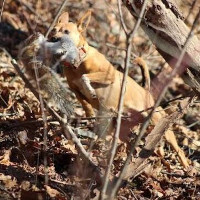
The Gray’s Mountain Feist is a specialized line of hunting dogs with a strong prey drive, developed by Marcus Gray in 2005 from Mountain Feist stock. These athletic, small-to-medium-sized dogs (weighing approximately 5.5 to 13.5 kg) are primarily bred to tree small game (such as squirrels); they are distinguished by their high intelligence and exceptional stamina. They are passionate hunting dogs that require intense physical and mental activity. Marcus Gray, a wildlife biologist and conservationist, began breeding his own line of "Feist" dogs in 2005; these dogs are now known as the Gray’s Mountain Feist. Even more so than other Feist breeds, the Gray’s Mountain Feist is specifically bred for hunting. These dogs are not suited to a sedentary life as mere household pets and are not meant to remain idle all day; they need plenty of physical and mental stimulation to prevent boredom. The Gray’s Mountain Feist requires an owner capable of providing ample exercise and mental challenges. As hunting dogs, Gray’s Mountain Feists are among the best. These dogs are masters at chasing squirrels. They possess a particularly powerful prey drive—even stronger than that of other Feist varieties. Gray’s Mountain Feists are renowned for their intelligence, versatility, and unwavering loyalty to their owners. Endowed with a strong hunting instinct, they excel at tasks requiring agility and quick reflexes. Despite their small size, they are fearless and tenacious hunters, capable of tracking game and treeing it with remarkable efficiency. One of their most striking characteristics is their exceptional ability to tree game. When they spot prey, they bark enthusiastically while circling the trunk, thereby alerting hunters to the animal's presence. This trait, combined with keen senses and unwavering determination, makes them valuable allies for small-game hunters in the dense forests of the Appalachians. |



 English (United Kingdom)

Comments