
 |
White Husky |
||
FCI standard Nº 270 |
|||
Origin |
Siberia | |
Translation |
Francis Vandersteen | |
En français, cette race se dit |
 |
Husky blanc |
Diese Norm ist in deutscher Sprache sichtbar |
 |
Weißer Husky |
En español, esta raza se dice |
 |
Husky blanco |
In het Nederlands, wordt dit ras gezegd |
 |
Witte Husky |
|
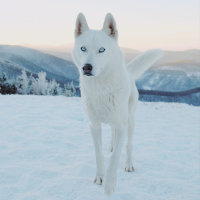
The white Husky is not a distinct breed, but rather a rare and striking color variant of the standard Siberian Husky. White Siberian Huskies are perfectly normal Siberian Huskies. The American Kennel Club recognizes all-white Siberian Huskies and permits their registration. They are highly energetic working dogs that thrive on pack life; to flourish, they require plenty of outdoor exercise, mental stimulation, and consistent training. The white Siberian Husky is a majestic example of Arctic beauty, boasting a pure white coat that shimmers in the sunlight like spun silk and eyes with icy glints reminiscent of frozen waters. As it moves nimbly through the snow, the white Husky exudes power and grace, reflecting its sled-dog heritage. The white Husky is a rare color variant of the Siberian Husky. It is called a "white Husky" because—as you might have guessed—its coat is entirely white. Although some Siberian Huskies may appear all-white, a close inspection of their fur often reveals touches of black, brown, or gray. The white Husky, however, is immaculately white, with a black nose. You will not find a more loving and affectionate dog than the white Husky. Deeply attached to humans, they love nothing more than showering their owners with kisses and cuddles. While they may appear imposing and boisterous, they are far from it in reality—especially when they have received proper training and socialization. They are safe around children, even very young ones, and are just as affectionate toward other dogs in the household. This breed is characterized by high energy levels. Descended from Arctic sled dog lineages that also engaged in hunting and herding, it is no surprise that they love staying active. Huskies need a home that offers plenty of opportunities for exercise and play. A high-fenced outdoor play area is essential, as they are known for wandering off if they aren't sufficiently stimulated. The Husky’s sociable nature means they tend to make friends with everyone they meet, including strangers. Don't count on your Husky to act as a guard dog for your property; given the chance, they might even invite strangers in to watch a movie and share some popcorn. While Siberian Huskies can be trained to coexist with cats from a young age, keep in mind that they possess an innate instinct—a sort of built-in GPS—driving them to chase squirrels, birds, hamsters, and, of course, cats. If your Husky gets bored while spending most of their time in the yard, expect the landscape to gradually start looking like the surface of Mars. Huskies love digging craters, but you can prevent your yard from becoming a disaster zone by setting up a designated area where they can dig to their heart's content. Have you ever heard of "doggy karaoke"? It is a well-known trait of the Siberian Husky. These dogs don't just bark; they "talk," yodel, howl, whine, mumble, chatter, and even make signature sounds like the famous "woo-woo". |



 English (United Kingdom)

Comments