
 |
Manchurian Spitz |
|
He is not recognized by the F.C.I. |
Origin |
Manchuria and Siberia region | |
Translation |
Francis Vandersteen | |
En français, cette race se dit |
 |
Spitz de Mandchourie |
Diese Norm ist in deutscher Sprache sichtbar |
 |
Mandschurischer Spitz |
En español, esta raza se dice |
 |
Spitz de Manchuria |
In het Nederlands, wordt dit ras gezegd |
 |
Mantsjoerije-spits |
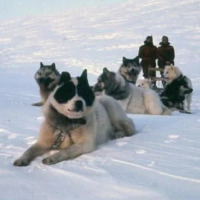
| The "Manchurian Spitz" is not recognized by any major kennel club; it is a Spitz-type dog variety—now extinct or virtually unknown—originating from the Manchuria and Siberia region. This dog played a historic role in the creation of the legendary Argentine Polar Dog (*Perro Polar Argentino*). Developed in the 1950s by the Argentine Army, this breed was initially intended for sled pulling and survival in extremely cold polar climates. Crossbreeding with the Siberian Husky, Alaskan Malamute, and Greenland Dog resulted in robust working dogs for military bases in Antarctica. As a typical Spitz, the Manchurian Spitz contributed traits suited to intense cold, such as a dense, insulating coat, erect ears, and a sturdy build. The Argentine Polar Dog was completely withdrawn from Antarctica in the 1960s to comply with environmental protocols. Relocated to warmer climates far from their native environment, these dogs largely succumbed to canine diseases and eventually went completely extinct in 1994. |



 English (United Kingdom)

Comments