
 |
West Australian Terrier |
|
He is not recognized by the F.C.I. |
Origin |
Scotland <> Australia -> U.S.A. | |
Translation |
Francis Vandersteen |
A brief presentation of the West Australian Terrier |
| The West Australian Terrier is a lively, happy, playful dog that makes an excellent pet. They have lots of energy and love children, making them ideal family companions. Their long coat will insulate them in cold climates and repel heat in warm climates, so they adapt easily to any environment. They shed very little, so can be compatible with allergy sufferers. West Australian Terriers are intelligent, enthusiastic dogs that are easy to train, as long as they are rewarded in proportion to their work. |
History of the West Australian Terrier |
| The West Australian Terrier is a recent hybrid breed, so little is known about its history. That said, there's no doubt that its two charming parent breeds have combined to form an intelligent, charming and energetic dog. |
A little of the West Highland White Terrier |
||
| The West Highland White Terrier is closely related to other Terrier breeds that originated in Scotland around the same time, in the 1800s. Originally known as Roseneath Terriers or Poltalloch Terriers, they were officially named West Highland White Terriers in 1909. Westies were bred to hunt small animals such as rats, foxes and otters. Famous for their white coats and adorable appearance, these dogs were recognized by the American Kennel Club in 1908. The first Westie to win the Westminster Kennel Club show was a dog named Wolvey Pattern of Edgerstoune, in 1942. Over the years, these adorable dogs have conquered many hearts and homes, becoming one of the most popular breeds in the United States. | ||
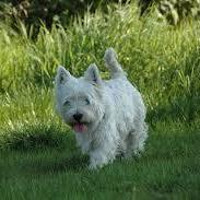 |
||
| Standard of the West Highland White Terrier |
A little of the Australian Terrier |
| The Australian Terrier (Aussie) was originally known as the Rough Coated Terrier, but was renamed the Australian Terrier in 1897. It was created in Tasmania by crossing other Terrier breeds, including Skye and Yorkshire Terriers, among others. These hardy dogs were used by European settlers to hunt vermin and snakes. They also served as guard dogs and were faithful companions in the backcountry. They began appearing in the United States in the 1940s and were recognized by the American Kennel Club in 1960. Always happy to be in the spotlight, they have become show dogs, fantastic earth dogs and fun pets. |
 |
| Standard of the Australian Terrier |
Appearance of the West Australian Terrier |
| The West Australian Terrier is a small, compact dog whose body is longer than its legs. They have long, wiry coats of various colors, including white, white and blue, white and tan, blue and tan, white and red, red or sable. This dog may inherit the thick double coat of its Aussie Terrier parents, or the fine undercoat of the Westie. Some dogs may have a longer coat around the neck and chest, rather like a lion's mane, a trait inherited from the Aussie. The eyes are dark, round or oval. The ears are small and pointed, and may be fringed with longer hair. Its jaw is strong and its teeth meet in a scissor bite. Paws are round with thick pads and dark nails. These dogs have a high set tail that they hold above their body, usually straight but sometimes curving over their back. |
Temperament of the West Australian Terrier |
| The West Australian Terrier is a proud, confident and playful dog. These dogs are alert and active, always ready to take part in any activity they can find. They need social interaction and can become anxious if left alone for too long. They are intelligent dogs, so it's important to make sure they get plenty of exercise. If left to their own devices, they can become destructive and bark. Australian Terriers are known to love digging, so it's likely that your West Australian Terrier will inherit this characteristic. Keeping your dog active and busy will prevent him from becoming mischievous. West Australian Terriers are friendly and generally get on well with other dogs, although males prefer to be the alpha and can become competitive with other male dogs. Good socialization of the puppy from birth will alleviate this type of problem. As their parents were bred for hunting, these dogs have a strong urge to hunt. They can be taught to get along with cats, but they are not good companions for other small animals. They are excellent companions for children, who will appreciate their playful energy. Just make sure children learn to be gentle with these dogs, as their small size makes them delicate when it comes to roughhousing. West Australian Terriers are intelligent and therefore easy to train. In fact, they learn so quickly that you may find yourself teaching them things by accident. Be sure to set clear, consistent limits with your dog to avoid perpetuating bad habits. These dogs like to think for themselves, so training is most effective when rewards are used. These dogs make good watchdogs, barking at anything unfamiliar. However, they will quickly relax once they realize there is no imminent threat. |
Needs and activities of the West Australian Terrier |
| The West Australian Terrier is an active breed that needs daily walks to prevent it from becoming mischievous and noisy in your home. Around 45 minutes a day should be enough. These dogs are happy to walk on a leash or run in a safe, fenced-in area. It's not a good idea to put your West Australian Terrier outside and leave him to his own devices, as he has a tendency to dig holes and even find escape routes. They are independent, but don't like to be left alone for long periods. They adapt well to all living environments, provided they get enough exercise. They can live comfortably in any climate. Because they are so intelligent, these dogs do well in obedience and agility trials and make fantastic earth dogs. |
Maintenance of the West Australian Terrier |
| Despite their long coats, West Australian Terriers are low-maintenance when it comes to grooming. They shed very little, but it's best to brush them weekly to prevent their long coats from matting. If they have long hair around the eyes and ears, it may need trimming to keep them neat and tidy. They don't tend to smell bad, so wash them only if necessary. Australian Terriers' coats can become dull if bathed too frequently, and the same is true of the West Australian Terrier. Fortunately, it's usually easy to brush away any dirt or debris that clings to their coats. Be sure to check your dog's ears about once a week for any signs of inflammation, as their long hair can trap unwanted dirt and moisture inside. Toenails should be trimmed monthly to keep them at a reasonable length, and weekly brushing of teeth will prevent bad breath and tartar build-up. |



 English (United Kingdom)

Comments