
 |
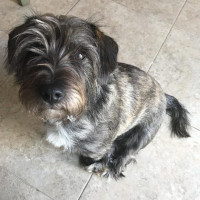
West of Argyll Terrier |
|
He is not recognized by the F.C.I. |
Origin |
Scotland <> Great Britain -> U.S.A. | |
Translation |
Francis Vandersteen |
A brief presentation of the West of Argyll Terrier |
| The West of Argyll Terrier is a hybrid of a West Highland White Terrier and a Beagle. It's a small dog with a rough, dense coat that can be white, black, brown, fawn, cream or brindle. It weighs between 7 and 11.5 kilos and can measure up to 38 centimeters. They are very independent, self-confident and lively. They are stubborn dogs that will need a lot of patience and consistency to be trained. They are also very gentle and playful, and adapt well to life in an apartment, although they need daily walks. |
History of the West of Argyll Terrier |
| The West of Argyll Terrier was developed in the 1990s by crossing a West Highland White Terrier with a Beagle. |
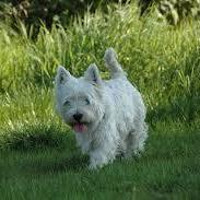
A little of the West Highland White Terrier |
||
| The West Highland White Terrier, better known as the Westie, has its origins in Scotland, where these dogs were used to hunt medium-sized game and get rid of vermin. The Westie is related to the Dandie Dinmont, Scottish, Cairn and Skye Terrier. The breed is thought to have originated around the 17th century, descended from a small breed of land dogs that the King of France had received from James I of Argyllshire. These Terriers are said to be all white due to an accident in the 19th century. Colonel Malcolm de Poltalloch was fox-hunting with his Terriers and mistakenly shot one of his beloved Westies. This caused great distress and the colonel decided to breed only white dogs to avoid confusing them with foxes. This breed was known as the Poltalloch Terrier or Roseneath Terrier. In 1906, the Kennel Club of England recognized the breed as the West Highland White Terrier, and the American Kennel Club followed suit in 1908. | ||
 |
||
| Standard of the West Highland White Terrier |
A little of the Beagle |
| Greek documents dating back to 400 BC mention dogs that resemble Beagles. Beagles are also thought to be related to small hunting dogs that were brought to England by the Romans in order to crossbreed them with English hunting dogs. Beagles are also thought to be descended from the now extinct Talbot hounds, which were brought to England in 1066 by William the Conqueror. This breed was very popular in England from its earliest days, especially the very small dogs, called Glove Beagles because they could be held in a gloved hand. Elizabeth I was known to own several small Beagles. These dogs helped in the hunt, but quickly lost popularity as they were not very fast. It's thanks to Irish and English farmers, who used the dogs to hunt rabbits and hares, that they didn't disappear. The Beagle as we know it today was developed during the 19th century. At that time, the English worked to improve the breed's appearance, and it was also imported to America, where efforts were also made to improve its appearance. In England, larger dogs were bred to hunt foxes, and American breeders developed smaller Beagles to hunt rabbits. The American Kennel Club recognized the breed in 1884. |
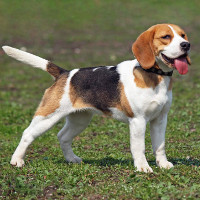 |
| Standard of the Beagle |
Appearance of the West of Argyll Terrier |
| The West of Argyll Terrier is a small dog that can weigh between 7 and 11.5 kilos and measure up to 38 centimeters. They have a robust, compact body and a shaggy appearance. Their coat is double, with a soft, dense undercoat and a rough outer coat. The coat is short to medium-length and can be white, black, brindle, brown, cream, fawn or multicolored. They have a heavy, slightly rounded skull, with a broad, flat muzzle of medium length. Their muzzle is very hairy, giving the impression of a moustache. Its ears are folded to one side, and its eyes are large and brown. The nose is broad, rounded and black. |
Temperament of the West of Argyll Terrier |
| The West of Argyll Terrier is an independent, self-confident and courageous little dog. These dogs are moderately intelligent and very stubborn, so training them will take time. You'll need to be patient and consistent, and use positive reinforcement to get the best results. This hybrid gets on well with other dogs and can be gentle with children if properly trained from infancy. In addition, children should be taught how to interact with dogs appropriately. The West of Argyll Terrier is a very active dog that loves to play. It is also quite noisy and tends to bark in the presence of strangers. Nevertheless, they are very gentle and affectionate pets. If you leave him alone, provide him with plenty of toys to distract him, as he can become a little anxious. |
Needs and activities of the West of Argyll Terrier |
| The West of Argyll Terrier is an active dog and prone to weight gain, so daily physical activity is a must. A daily 30-minute walk will keep him healthy and happy, while leaving him time to play and run off-leash in a dog park or yard. These dogs also love to swim, so trips to the beach or lake are welcome; having a plastic pool at home is also a fun activity to offer. These dogs are not very comfortable in cold climates, but are better suited to warmer climates. They adapt well to apartment living, provided they have some daily outdoor activity. |
Maintenance of the West of Argyll Terrier |
| The West of Argyll Terrier is a moderate shedder, with a dense, hard coat. We recommend brushing every other day with a long-hair brush to remove loose hair and avoid tangles and knots. You may also need to trim the hair around his ears, eyes and paws to avoid blockages and infections. They're moderately smelly, so give him a bath when necessary. Remember that you should always brush him before bathing, and use a veterinarian-approved dog shampoo. Clean his ears every week with an ear cleaning solution and a cotton ball or cloth. You'll also need to trim his nails once or twice a month, depending on their length. Brush his teeth at least two or three times a week to eliminate tartar build-up, bacteria and bad breath. |



 English (United Kingdom)

Comments