Westie-Laso

He is not recognized by the F.C.I.

Origin
Scotland <> Tibet -> U.S.A.
Translation
Francis Vandersteen

A brief presentation of the Westie-Laso

The offspring of two bearded dogs of similar size, the Westie-Laso is an intelligent, relatively well-tempered hybrid breed descended from the West Highland White Terrier and the Lhassa Apso. Although its parents come from two almost opposite countries, Scotland and Tibet, the Westie-Laso has inherited many characteristics common to both breeds, including a high level of playfulness, above-average affection and moderate tolerance of other dogs. Like both its parents, the Westie-Laso is also highly intelligent, but sometimes chooses to use it as it pleases, which means it tends to be stubborn when it doesn't feel like listening. Although they are also somewhat independent, they do require a certain amount of maintenance to keep their teeth and coat clean and healthy. Overall, they are good family pets that adapt well to small spaces, given their size and need for exercise.

History of the Westie-Laso

The Westie-Laso doesn't have a particularly clear history, but its two parent breeds have established themselves more prominently.


A little of the West Highland White Terrier

        
The West Highland White Terrier, like many other Terriers of Scottish origin, dates back to the 17th century, but much of its history and what is widely known today comes from improvements made in the late 19th century by Colonel Edward Donald Malcolm, who deliberately bred pure white dogs to prevent them being mistaken for foxes on fox hunts, one of the reasons they were bred in the first place. Despite their size, they were bred to be brave, robust little dogs, capable of helping to hunt aggressive prey such as badgers and foxes, hence their propensity to be trained to dig and bark. Around the turn of the 20th century, when they were introduced to America, they gained great popularity and also became companion dogs with exceptional hunting, tracking and agility skills.
Standard of the West Highland White Terrier


A little of the Lhassa Apso

The Lhassa Apso goes back much further in history and is widely recognized as one of the oldest companion breeds. It is thought to have originated from a mountain wolf pup thousands of years ago. The Lhassa Apso was revered by Tibetan monks, who isolated it from other breeds and used it as a guardian of their temples for centuries. In the early 1900s, they made their way to England and finally to America in 1933, as a gift from the 13th Dalai Lama to Mr and Mrs Suydam Cutting of New Jersey, a globetrotter and the first white Christian to enter the forbidden city of Lhasa. A few years later, in 1935, the breed was recognized by the American Kennel Club and its popularity in the U.S.A. began to rise steadily.
Standard of the Lhassa Apso

Appearance of the Westie-Laso

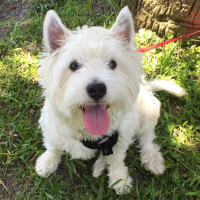
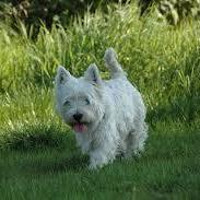
The Westie-Laso is a small dog, measuring less than 30.5 centimeters and weighing less than 9 kilos, with a long, straight coat that can come in a wide variety of colors thanks to its kinship with the Lhassa Apso, a short muzzle and often exaggerated eyebrows and whiskers. Despite their small size, many are strongly built, with surprisingly muscular legs and chest. They have round, dark, sparkling, inquisitive eyes, ears that can be pricked, tilted or folded, and a short to medium tail that often carries a little extra down.

Temperament of the Westie-Laso

On the whole, Westie-Lasos are considered to have a fairly strong temperament, but they are complex dogs that can often change mood quickly depending on the situation. At home and with the family, they're quite affectionate and playful, and can even become comical, especially with those they're comfortable with. But given their ancient hereditary functions as hunters and guardians, they can become very protective of food, toys and even their masters, and are often skeptical of strangers, whom they will greet with a plethora of barks. Because they can tend to be a little stubborn, training them as early as possible will help to ensure the best possible results in terms of overall behavior, although barking is often the last thing to be eliminated by training, if at all. If socialized from the outset, this breed can coexist with other pets in the home, but its protective and sometimes moody behavior can be a problem if not addressed. On the whole, Westie-Lasos don't need much exercise, but they do need a good dose of mental stimulation, and if they don't get enough, they can become destructive.

Needs and activities of the Westie-Laso

The Westie-Laso is not a particularly energetic dog, which makes it a good pet for people with limited living space, but it still needs 30 to 45 minutes of exercise a day and around 10 km of walking a week. More than anything, owners need to provide them with mental stimulation to prevent them from becoming bored, frustrated or even destructive. Spoiling toys, games that appeal to their problem-solving skills and creative play are all useful in keeping this breed happy and physically and mentally healthy, especially as they tend to focus on their hunting and guarding duties by barking profusely.

Maintenance of the Westie-Laso

Westie-Laso maintenance depends largely on the amount of Lhassa Apso hair it inherits. If it's a dog with a thick, long coat, you'll need to give it almost daily attention by combing and brushing to prevent it from tangling, matting or clogging. Many owners who are faced with more rigorous maintenance routines start their dog young to make the process easier and more comfortable later on, and/or take their dog to the groomer regularly to keep his coat shorter and easier to maintain, which doesn't exempt them from doing daily routines at home or taking a bath every two weeks. For those who own a dog with a coat closer to that of the West Highland White Terrier, maintenance is a little easier. Although they don't shed frequently, they will still need to be brushed, but more likely weekly than daily. They also need regular trimming of feet, ears and eyes to keep them clean and comfortable. Regardless of their coat, Westie-Laso teeth need to be closely monitored and regularly brushed whenever possible, as their brachycephalic facial structure is prone to dental problems. As with any other breed, toenails also need to be monitored and trimmed to prevent splitting and breaking.

Comments

Latest page updates

  • Telomian

    Telomian He is not recognized by the F.C.I. Origin Malaysia Translation Francis Vandersteen A brief presentation of the Telomian The Telomian is a very rare breed of dog, and the only one native to Malaysia to have been bred outside the country. They were originally bred by the indigenous people of Malaysia to combat parasites such as snakes, rats,...
  • King Wheaten -- Cavalier King Charles Spaniel X Irish Soft Coated Wheaten Terrier

    King Wheaten He is not recognized by the F.C.I. Origin Great Britain <> Ireland -> U.S.A. Translation Francis Vandersteen A brief presentation of the King Wheaten The King Wheaten is a small dog with a heart this big and a playful disposition. Borrowing the energy and soft-coated waves of the Irish Soft Coated Wheaten Terrier and the size and...
  • Spanierd -- English Springer Spaniel X German Shepherd

    Spanierd He is not recognized by the F.C.I. Origin Great Britain <> Germany -> U.S.A. Translation Francis Vandersteen A brief presentation of the Spanierd The Spanierd is a hybrid dog. Its parent breeds are the English Springer Spaniel and the German Shepherd. They have an affable personality. He's known for entertaining family and friends with his...
  • Alaskan Goldenmute -- Alaskan Malamute X Golden Retriever

    Alaskan Goldenmute He is not recognized by the F.C.I. Origin U.S.A. <> Great Britain -> U.S.A. Translation Francis Vandersteen This breed is also known as Alaskan GoldenGoldenmuteAlaskan Gold Retriever     A brief presentation of the Alaskan Goldenmute The Alaskan Goldenmute is a descendant of two great dog breeds: the Alaskan Malamute and the Golden...
  • French pointing dog Pyrenean type

    French pointing dog Pyrenean type FCI standard Nº 134 Origin France Translation Mrs. Peggy Davis Group Group 7 Pointing Dogs Section Section 1.1 Continental Pointing Dogs « Braque » Type Working With working trial Acceptance on a definitive basis by the FCI Tuesday 18 January 1955 Publication of the official valid standard Tuesday 01 August 2023 Last...
  • French pointing dog Gascogne type

    French pointing dog Gascogne type FCI standard Nº 133 Origin France Translation Mrs. Peggy Davis Group Group 7 Pointing Dogs Section Section 1.1 Continental Pointing Dogs « Braque » Type Working With working trial Acceptance on a definitive basis by the FCI Monday 17 January 1955 Publication of the official valid standard Tuesday 01 August 2023 Last...
  • Vucciriscu

    Vucciriscu He is not recognized by the F.C.I. Origin Sicily Translation Francis Vandersteen En français, cette race se dit Vucciriscu Diese Norm ist in deutscher Sprache sichtbar Vucciriscu En español, esta raza se dice Vucciriscu In het Nederlands, wordt dit ras gezegd Vucciriscu This breed is also known as Sicilian Vucciriscu Sicilian Butcher...

© 2026 Groupe Milouchouchou ASBL. Tous droits réservés. En savoir plus

Protected by Copyright01
We use cookies

We use cookies on our website. Some of them are essential for the operation of the site, while others help us to improve this site and the user experience (tracking cookies). You can decide for yourself whether you want to allow cookies or not. Please note that if you reject them, you may not be able to use all the functionalities of the site.

Ok