
 |
Pomchi |
|
He is not recognized by the F.C.I. |
Origin |
Germany <> Mexico -> U.S.A. | |
Translation |
Francis Vandersteen |
A brief presentation of the Pomchi |
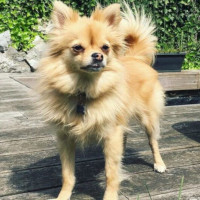
| Pomchis, as their name suggests, are a mix of Pomeranians and Chihuahuas. The combination of these two toy dog breeds results in a small, portable pet that's gentle and affectionate, but also bold and lively. Pomchis are ideal pets for apartment-dwellers or the elderly, as they are primarily pets that don't require an extended exercise program. As a specific cross-breed dog, this cross is quite unexpected in terms of temperament and appearance, but one might expect it to have a combination of traits from its parents. Pomchis generally have the body of a Pomeranian and the face of a Chihuahua. The Pomchi tends to be a nervous dog, and if socialization is not properly implemented, it can become aggressive towards strangers and even owners. So it's vital to expose him to lots of people, other pets, different places and situations. |
History of the Pomchi |
| The history of this graceful crossbreed is short, recent and poorly documented. Pomchis originated in the USA and are probably the result of an accidental mix of a Pomeranian and a Chihuahua. Because both dog breeds are very popular and in demand as pets, due to their small size and affectionate nature, it's not surprising that the result of such a cross ended up creating an interesting and desirable pet. Nevertheless, enthusiasts plan to breed Pomchis for seven generations, in order to improve the crossbreed and, eventually, to consider them as a purebred dog. |
A little of the German Toy Spitz / Pomeranian |
||
| Pomeranians are the smallest Spitz-type dogs. They feature the classic coat, erect ears, pointed muzzle and curved tail that give them that much-loved foxy look. Although they are much smaller, they are in fact closely related to breeds such as Samoyede and Keeshond. Pomeranians were first bred in a historic place called Pomerania, on the shores of the Baltic Sea, around the 18th century. A dog with a truly noble background, it was Queen Victoria of England who shone with them during her reign. Many experts believe that it was only thanks to Queen Victoria's efforts that the breed was reduced to around 50% of its original size, due to her desire for ever-smaller Pomeranians. They are currently classified in the Kennel Club Services group and are regularly used as therapy pets due to their intelligence and docile nature. | ||
 |
||
| Standard of the German Toy Spitz / Pomeranian | ||
A little of the Chihuahua |
||
| Chihuahuas originate from the state of Chihuahua, Mexico, and are either descended from an ancient Toltec dog breed, the Techichis, or were introduced to China from South America. | ||
 |
||
| Standard of the Chihuahua |
Appearance of the Pomchi |
| Pomchis have an alert, intelligent expression. They owe their fox-like appearance to their Pomeranian parent, and may or may not have a double coat, depending on the Pomeranian's contribution. If they have an undercoat, it is soft and very thick. Their coat can be short or long, and of different colors: light brown (most common), dark brown, cream, fawn, white, bronze, gray, sable, black (less common). Pomchis have round heads, with larger-than-average round eyes and pointed furry ears. They have a muscular hindquarters like the Chihuahua, with short, strong legs. Pomchis generally weigh no more than 3 kg and measure up to 25 cm. |
Temperament of the Pomchi |
| Pomchis are generally said to have a big personality in a little bundle of fur. They're lively, curious and alert. Pomchis are energetic and fun-loving, very friendly and people-oriented. They make excellent pets, indeed. However, they also tend to be quite nervous and anxious, which can degenerate into aggression, as they are bold and fearless. This trait should be avoided through appropriate early socialization and training. Pomchis are brilliant if well behaved, approachable and loving. They are undoubtedly loyal to their owners and can make excellent watchdogs, as they are vocal and energetic. Pomchis can suffer from separation anxiety and should therefore not be left alone for long periods. Because they are small and fragile, they should not be left unsupervised with younger children who have not learned to handle and interact with dogs carefully and responsibly. Not only is this dangerous for the animal, but it can also be a risk for the child, as if the dog gets too worked up, it could react more aggressively. They are therefore best suited to families with older children, or no children at all. |
Needs and activities of the Pomchi |
| The Pomchi is a fairly active dog, and although it will do most of its exercise at home, it will still need a daily walk. They should be trained and socialized from 12 weeks of age to ensure they become well-balanced dogs. Walks and play in dog parks are ways of ensuring they get used to meeting other dogs and people. Pomchi love to play games and will respond well to challenging tasks that exercise their inquisitive nature. Is are ideal for apartment living or a house with a yard will provide them with space to explore. These active little dogs learn quickly and respond best to good but firm teaching, and as long as it's fun, they'll want to please. |
Maintenance of the Pomchi |
| The Pomchi has a long or dense coat and is a medium shedder, so a beautiful coat will require daily brushing to avoid tangling. Your pet may need to consult a professional groomer to have it trimmed and kept in good condition. This should only be done every two or three months. Grooming is an ideal time to check your dog for cuts or abrasions, and to check his ears for inflammation, to avoid inflammation caused by dust or foreign bodies such as seeds. Gently wipe the ears with a damp cloth, taking care to avoid the delicate inner ear. Using a mild dog shampoo when bathing your dog will help prevent any allergic reaction and preserve the skin's natural protective oils. Train your dog to brush his teeth, as these small dogs are prone to teething problems. Start with small sessions to get them used to it, and build up from there. Making it fun with lots of praise and attention will make it easier for you. Finally, all that's left to do is clip their nails and they're ready to go. |



 English (United Kingdom)

Comments