 |
Weeranian |
|
He is not recognized by the F.C.I. |
Origin |
Great Britain <> Germany -> U.S.A. | |
Translation |
Francis Vandersteen | |
This breed is also known as |
Pom Westie
|
A brief presentation of the Weeranian |
| The Weeranian is a hybrid dog. Its parent breeds are the West Highland White Terrier and the Spitz Toy / Pomeranian. Weeranians are small dogs, generally measuring less than 30.5 centimeters when fully grown. It is likely to weigh around 7 kilos. It's a gentle, cheerful little dog. His coat is generally long and may be slightly curly. He will need moderate grooming to maintain a healthy coat. He's perfect with singles, seniors and families with children. He's happy in an apartment or house with or without a fenced yard. The Weeranian will be a happy companion for any family. |
History of the Weeranian |
| The Weeranian is a relatively recent hybrid breed. Although little is known about the history of the Weeranian, we can nevertheless study its parent breeds to understand the origins of the hybrid breed. |
A little of the West Highland White Terrier |
||
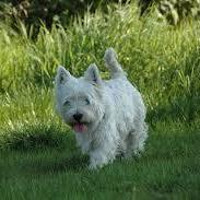
| The Westie, as the West Highland White Terrier is often called, originated in Scotland. It is one of many Terrier breeds from the region that can be related. At one time, all Terriers were grouped into a single breed, but various breeds were separated according to their individual characteristics. The Westie was bred to hunt vermin, in addition to foxes and badgers. Legend has it that the Westie wasn't always white. Indeed, it is said that Colonel Malcolm of Poltallach shot his beloved wheat-colored Westie mistaking it for a fox. Never to make such a mistake again, he bred the Westie into a white dog. The Westie was first registered with the English Kennel Club in 1906; it's not known how the West Highland White Terrier came to America. | ||
 |
||
| Standard of the West Highland White Terrier | ||
A little of the German Toy Spitz / Pomeranian |
||
| The Spitz Toy / Pomeranian has always been a very popular dog. Mozart, Michelangelo, Issac Newton and church reformer Martin Luther are all said to have owned a Spitz Toy / Pomeranian in their lifetime. The Spitz Toy / Pomeranian was also a popular dog among the nobility. Queen Victoria owned several Spitz Toy / Pomeranians, and is even said to have contributed to making the Spitz Toy / Pomeranian the small dog it is today. The American Kennel Club registered the first Spitz Toy / Pomeranian in 1888. Although we don't know how the Spitz Toy / Pomeranian was introduced to America, we do know that the breed has always been very popular. | ||
 |
||
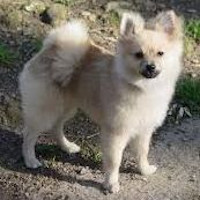
| Standard of the German Toy Spitz / Pomeranian |
Appearance of the Weeranian |
| The Weeranian is a small dog. It will weigh no more than 7 kilos at maturity. It is also likely to measure less than 30.5 centimeters. Females are slightly smaller than males. Her coat will be long, and may be curly or straight. The color of its coat depends largely on the breed of the dominant parent, but it can be white, red, black, fawn or brown. It may have long hair on the face, especially around the eyes. It may inherit the ruff of the parent Spitz Toy / Pomeranian breed. Its ears are generally erect. His tail is of medium length and often straight. It will also have long hair on its tail. Its legs are short and its paws are small and delicate. |
Temperament of the Weeranian |
| The Weeranian is a gentle, affectionate and energetic little dog. It's usually a pleasure to be with them at any time. Never shy, the Weeranian never meets a stranger. He's a lively little dog who proves fun for everyone he comes into contact with. They are ideal for singles, the elderly and couples with children. They are easier to train than many other breeds. In fact, he's eager to please his master. You may find the Weeranian following you from room to room, just so he can join in the fun. He's not prone to separation anxiety, but he shouldn't be left alone for long periods. He's happiest when he gets lots of attention from his loving family. Children are particularly fond of the Weeranian. They also tend to get on well with other dogs and pets. |
Needs and activities of the Weeranian |
| The Weeranian doesn't need much activity to stay happy and healthy. He'll enjoy a trip to the dog park and will certainly appreciate interaction with other dogs. He'll happily accompany you on short, brisk walks around the neighborhood. The Weeranian will love to play freely in the yard, but should never be allowed to wander unsupervised outside a fenced-in area. Even when he's allowed to play inside the fence, don't leave him for long periods. He's meant to live indoors with his family. What's more, he's a very small dog, and predators can take advantage of his small size. You can provide him with toys that stimulate mental activity while offering physical play. This will prevent him from becoming bored and destructive. |
Maintenance of the Weeranian |
| The Weeranian requires a moderate amount of maintenance. Its long coat tends to tangle if not brushed regularly. It needs weekly brushing to remove dead hairs and skin flakes. Pay particular attention to his coat, as it tends to tangle. Bathe him every six to eight weeks. Use an all-natural shampoo to avoid irritating his skin. Brush his teeth two or three times a week to prevent tartar build-up and bad breath; however, if you want to prevent tooth decay, brush his teeth every day. Trim her nails every two or three weeks. A good rule of thumb is to listen when he walks on a tiled floor. If you hear his nails clicking as he walks, it's time to trim them. |



 English (United Kingdom)

Comments