 |
Afghan Sheepdog |
|
He is not recognized by the F.C.I. |
Origin |
Afghanistan <> Belgium -> Afghanistan | |
Translation |
Francis Vandersteen |
A brief presentation of the Afghan Sheepdog |
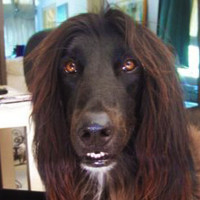
| The Afghan Sheepdog is a cross between an Afghan Greyhound and a Belgian Sheepdog. Just as these two dogs are large, the Afghan Sheepdog is also large, standing around 76 centimeters tall and weighing around 20.5 kilos. It has a long, thick, straight coat that can be black and brown, brown and white or light brown. The Belgian Sheepdog is a herding dog and the Afghan Sheepdog is a sporting dog, both with great energy, so your Afghan Sheepdog will probably be the same. He loves the cold because of his heritage in the mountains of Afghanistan and needs plenty of space to run around. |
History of the Afghan Sheepdog |
| As the Afghan Sheepdog is a new breed, its history is not well known. What is known is that the Afghan Sheepdog was crossed between an Afghan Greyhound and a Belgian Sheepdog in Afghanistan in an attempt to get the best of both breeds in one dog. |
A little of the Afghan Hound |
||
| The history of the Afghan Greyhound goes back to the Greyhounds of ancient Egypt, which were used by nomads to hunt gazelle and rabbits for food. However, they were not recognized by the American Kennel Club (AKC) until 1926. They originated in the mountains of Afghanistan, where they were protected from the cold by their thick coats and great energy. They spent many years living in isolation in the mountains before being recognized as excellent sighthounds. The Afghan Greyhound was first known as the Persian or Barukhzy Greyhound in the 1900s, when it arrived in England. | ||
 |
||
| Standard of the Afghan Hound | ||
A little of the Belgian Shepherd dog |
||
| The Belgian Shepherd used to be known as the Groenendael, which was used for herding and guarding. In fact, it was originally known as the Continental Shepherd, and was later listed under many different names such as Dutch Shepherd, German Shepherd, Briard, Beauceron, Malinois, Tervuren, and Laekenois. Their origins date back to the 1800s, but they were not officially recognized by the AKC until 1912. The name Groenendael came later, after the kennel that had been breeding these dogs since 1893. During the First World War, Belgian Shepherds were used as draught dogs, messengers and sentries, after having been successfully used as police dogs for many years. | ||
 |
||
| Standard of the Belgian Shepherd dog |
Appearance of the Afghan Sheepdog |
| The Afghan Sheepdog is a tall, slender, fast dog with a thick, long coat and curled tail that resembles the Greyhound. The Belgian Sheepdog has a long black coat, a strong, sturdy body and strongly muscled legs. They have large, thick, padded feet and an intelligent, alert expression. The Afghan Sheepdog is a large, long-haired dog with a long muzzle and long legs. Its body is well muscled and strong, but also very supple and graceful. Its long coat is generally straight and glossy, but can be wavy in some dogs. There are several colors: brown and white, black and brown, light brown or tan. |
Temperament of the Afghan Sheepdog |
| Although the Afghan Sheepdog is charming and independent, it can also be silly and aloof. He gets on well with older children if he's grown up with them, but he still needs to be supervised. Although a friendly dog, he can sometimes be stubborn and aloof, and needs time to get to know people before he gets used to them. The Afghan Sheepdog dislikes strangers and tends to bark or growl at what it considers a threat to itself or its family. He's an intelligent dog who can easily learn what you teach him, but only if he wants to. His stubborn side can make training difficult, so you need to be firm and make him understand who's boss from the start. Afghan Sheepdogs need to be socialized from an early age so they can get along with other animals. Otherwise, he'll be shy and may even become aggressive. |
Needs and activities of the Afghan Sheepdog |
| Afghan and Belgian Sheepdogs can be stubborn and wary of strangers. It's a good idea to include socialization in their activity time, including walks around the neighborhood, visits to the dog park or participation in a dog class or sport. Your dog doesn't necessarily need to be socialized with people and other dogs every day, but you'll want to include socialization at least two or three times a week. You'll need a large, fenced-in backyard so he can run and play when he's home. Plan to spend at least 45 minutes a day with your dog exercising or playing ball. |
Maintenance of the Afghan Sheepdog |
| While the Afghan Sheepdog is hypoallergenic and doesn't shed much, the Belgian Sheepdog sheds seasonally. Both the Afghan Sheepdog and the Belgian Sheepdog require a lot of maintenance to keep their coats and skin healthy. We therefore recommend brushing them at least twice a week with a stiff bristle brush. Otherwise, they'll lose more hair and become tangled and matted. They can be bathed if necessary, but are generally well cared for. Professional trimming is recommended if you live in a hot climate. You should also check their ears for wax and debris, trim their nails and brush their teeth regularly. |



 English (United Kingdom)

Comments