
 |
American French Bull Terrier |
|
He is not recognized by the F.C.I. |
Origin |
U.S.A. <> France -> U.S.A. | |
Translation |
Francis Vandersteen | |
This breed is also known as |
French Bull Terrrier |
A brief presentation of the American French Bull Terrier |
| The American French Bull Terrier is a specific crossbreed or hybrid dog, with one set of parents being the American Pit Bull Terrier and the other parent the French Bulldog. Both breeds are stocky or solid and are very powerful dogs. The American French Bull Terrier has a muzzle like the American Pit Bull Terrier, but is shorter in stature due to the influence of the other parent, the French Bulldog. Their coat is easy to care for, smooth and short. The American French Bull Terrier is eager to please and has a lot of enthusiasm. They are good with other animals, especially children. The hybrid dog has the best qualities of both parent breeds and continues to be refined. They make an attractive, loyal and devoted dog, easy to train, obedient and often clowning around during fun family times. |
History of the American French Bull Terrier |
| Although little documentation can be found on the history of the American French Bull Terrier or even when it began, we can look at the history of the parent dogs from which the hybrid breed originated. The new American French Bull Terrier hybrid takes advantage of the great qualities that both breeds have to offer, and will undoubtedly become very popular in the future. |
A little of the American Pit Bull Terrier |
||
| The ancestors of the American Pit Bull Terrier arrived in the United States in the mid-1800s, brought by Irish immigrants from Boston. They were originally bred to be a fighting dog, but when bull baiting was banned in England in 1835, they were no longer bred to fight. Although there is some confusion between the American Pit Bull Terrier and the Staffordshire Bull Terrier, both being very similar, the breed flourished and became very popular. In 1898, the United Kennel Club was formed with the intention of providing registration and fighting guidelines for the breed. The AKC does not recognize the American Pit Bull Terrier, only the American Staffordshire Terrier, which was added to the list in 1936. Today, the American Pit Bull Terrier has become a wonderful companion and working dog. | ||
 |
||
| Presentation of the American Pit Bull Terrier | ||
A little of the French Bulldog |
||
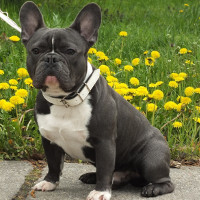
| The French Bulldog is a small to medium-sized dog bred primarily as a companion dog. Speculation still exists as to the true origin of this attractive dog, with some saying it comes from the Toy Bulldog brought to France by the lacemakers of Nottingham at the time of the Industrial Revolution. Others think it's descended from the Chincha Bulldog that lived in ancient Peru. Whatever you believe, the French Bulldog first appeared in America in 1896 at the Westminster Kennel Club in New York. It was first registered by the American Kennel Club in 1898 in the non-sporting group. Later, in 1912, the British accepted the breed. | ||
 |
||
| Standard of the French Bulldog |
Appearance of the American French Bull Terrier |
| The American French Bull Terrier has a solid blocky look to its appearance and has a solid brick head that is generally very broad between the cheeks. The jaws are powerful with teeth that form a scissor bite. The muzzle is straighter than the shortened muzzle of the parent French Bulldog, allowing easier breathing and none of the health risks of the parent dog. The neck is strong and muscular, flowing into a deep chest. This dog carries many of the characteristics of the American Pit Bull Terrier but has been softened by the influence of the French Bulldog. Although muscular in appearance, the American French Bull Terrier is agile and strong for its size. The tail tapers to a point. The eyes are round and deep, while the ears have a triangular shape that is held straight with the tips tilted. The front legs are strong and straight, with wide, rounded paws. This is an attractive hybrid, producing a dog eager to please, with a gentle nature. |
Temperament of the American French Bull Terrier |
| The American French Bull Terrier is a hybrid dog that is good with children and other pets. It is easy to train and learns basic commands such as sit, stay and come easily. It's important with all dog breeds to socialize your young puppies early and start training them young. These dogs respond to constant training in patience and love to be praised. They are sensitive to the mood of their people, so if you become impatient during training, take a break or you risk confusing them. They are true people dogs, and although they look tough and strong, they are gentle and pleasant dogs. Daily exercise is necessary to keep your dog fit and healthy, and to use up some energy before settling down for the night. They make excellent watchdogs, barking to let you know that strangers are about to defend the owner valiantly if need be, but are not aggressive unless threatened. They are more likely to lick your visitors than harm them. The American French Bull Terrier gets on well with the domestic cat and is happy to play mummy with any strays you bring home. Words to describe this breed are friendly, loyal, obedient, clownish, stubborn, brave and intelligent. |
Needs and activities of the American French Bull Terrier |
| American French Bull Terriers love family play and will happily join in games of fetch, tug-of-war, running and swimming. They love to go for walks, and teaching them to heel is easy as long as you start young. Taking the dog out into the community will help socialize them with other dogs and people, and they love meeting new contacts. If you have a well-fenced yard, the dog will be happy to follow his humans around and help them when needed, even if their help isn't needed, they'll offer it. As companion dogs, they get a bit lonely if left for long periods without company. |
Maintenance of the American French Bull Terrier |
| The coat of the American French Bull Terrier is easy to care for, regular brushing followed by rubbing with a soft chamois cloth or towel will keep this coat looking like velvet. Only bathe if necessary, as the coat is almost self-cleaning. The American French Bull Terrier will shed, albeit minimally, which regular brushing will keep under control. Getting your dog used to regular grooming will help you control his health. When you brush him, you can check for cuts and abrasions or spot parasites like ticks that may have latched on to your dog. It's a good time during grooming to turn your dog's ears over and check for any build-up of debris blocking the ear canal. Never push anything into the ear canal as you could damage it, simply wipe it gently with a damp sponge or cloth. Check the eyes for infection and teach your dog to accept brushing. By carrying out these health checks, you can be alerted to any health problem and benefit from treatment before it gets out of hand. |



 English (United Kingdom)

Comments