
 |
Bluetick Rat Terrier |
|
He is not recognized by the F.C.I. |
Origin |
U.S.A. -> U.S.A. | |
Translation |
Francis Vandersteen |
A brief presentation of the Bluetick Rat Terrier |
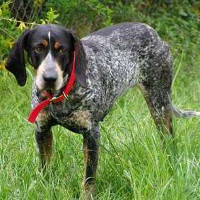
| A Bluetick Rat Terrier is a gentle, easy-going, inquisitive hybrid of a Bluetick Coonhound and a Rat Terrier. These dogs are intelligent, highly trainable human companions. Bluetick Rat Terriers require a lot of exercise and affection from their owners. They have a relatively long lifespan of 13 to 17 years, weigh 17.5 to 27 kilos and stand 48 to 58.5 centimeters tall. Bluetick Rat Terriers generally look like tall, lean dogs with Terrier-like characteristics. As their name suggests, they often have a melted or blue spotted coat, but can also inherit a white and black coat with tan markings from their Rat Terrier parent breed. Because the Bluetick Rat Terrier is a relatively new hybrid breed, it is not completely stabilized in appearance and personality, and is not recognized by the American Kennel Club's list of purebred dogs. |
History of the Bluetick Rat Terrier |
| The product of these two breeds, the Bluetick Rat Terrier, is a relatively new hybrid with no exact date of origin. Although its personality and appearance have not been fully stabilized, it is known to be relaxed, gentle and inquisitive. It is not currently recognized by the AKC. Therefore, Bluetick Rat Terrier breeders should be thoroughly researched if you're considering buying a puppy from them, although this breed can more often be found in adoption and rescue centers. |
A little of the Bluetick Coonhound |
||
| The Bluetick Coonhound originated in the southern United States and is descended from the Grand Bleu de Gascogne, also known as the French Staghound, and the English Foxhound. It was classified as an English Coonhound and used for tracking and hunting. However, in the mid-1940s, American breeders in Louisiana and Tennessee began to breed it to be larger and better at cold flight. Finally, the Bluetick Coonhound was recognized by the United Kennel Club in 1946, but only recently by the AKC in 2009. | ||
 |
||
| Presentation of the Bluetick Coonhound | ||
A little of the Rat Terrier |
||
| The Bluetick Rat Terrier's other parent breed, the Rat Terrier, is an American breed and a mix of many Terriers, including Fox Terriers and other European Terriers. It was bred in the early 1900s to hunt and kill pests on farms. It was then crossed with Beagles, Whippets and Greyhounds to improve the breed's speed and sense of smell. The Rat Terrier's genetic diversity makes it a very healthy breed. However, the use of chemical pesticides led to a decline in the breed after the 1950s. Today, the Rat Terrier is not very popular, but it is a beloved companion dog known for its robust health and affectionate behavior. | ||
 |
||
| Presentation of the Rat Terrier |
Appearance of the Bluetick Rat Terrier |
| A Bluetick Rat Terrier generally looks like a tall, lean dog with some Terrier facial features. They are medium-sized dogs with long legs and muscular hindquarters. Their average weight is 17.5 to 27 kilos and their average height is 48 to 58.5 centimeters. Their coat is reminiscent of its Bluetick Coonhound parent breed: marbled or spotted blue, or black and white with ochre markings. As a rule, it is short, dense and coarse. Bluetick Rat Terriers have a gentle but alert expression, triangle-shaped ears, a rectangular muzzle and round eyes that are generally dark brown. They also have a tapered, medium-length tail and sturdy, rounded paws with durable pads. |
Temperament of the Bluetick Rat Terrier |
| The Bluetick Rat Terrier is known as a gentle, lovable pet. They are home- and people-oriented dogs who love being with family. They crave affirmation, as well as mental stimulation and physical exercise. As such, they require a little attention and playful participation from their owners. On the other hand, Bluetick Rat Terriers are hesitant around strangers, human or otherwise, but will warm up quickly if given the chance. In general, they are a calm, gentle breed. However, they become very excited when small animals or children awaken their hunting instinct, or when tempted by an attractive scent. As a result, they may be better suited to families with older children. Bear in mind that Bluetick Rat Terriers are descendants of the most trainable Terrier breed, and early training and socialization can help develop a very well-adapted pet. Also note that Bluetick Rat Terriers are occasional barkers and very sensitive to environmental or routine changes. |
Needs and activities of the Bluetick Rat Terrier |
| The Bluetick Rat Terrier is a playful, athletic breed that requires mental and physical stimulation to stay happy and healthy. They should have a long walk a day or a vigorous play session with their owner or other dogs. Consequently, this breed would be happy in any climate if it had people to socialize with and space to run around, such as a suburban or rural household with a large enclosed yard. Bear in mind, however, that Bluetick Rat Terriers are prone to roaming and chasing smaller animals, so they should always be supervised if off-leash. Although owners must exercise diligence when exercising their Bluetick Rat Terriers outdoors, they are primarily indoor dogs. As such, Bluetick Rat Terriers like to relax with their owners and family indoors. |
Maintenance of the Bluetick Rat Terrier |
| Bluetick Rat Terriers are moderate shedders and require occasional grooming. They are not hypoallergenic and therefore not suitable for owners with allergies. Owners can reduce shedding and keep their pet's coat looking great with occasional brushing and monthly bathing. As ear infections are a common concern for this breed, owners should pay particular attention to inspecting and cleaning out wax build-up with each wash. Like all breeds, Bluetick Rat Terriers should have their teeth brushed daily and their nails trimmed once or twice a month to prevent painful overgrowth or nail fractures. |



 English (United Kingdom)

Comments