
 |
Brittany Beagle |
|
He is not recognized by the F.C.I. |
Origin |
France <> Great Britain -> U.S.A. | |
Translation |
Francis Vandersteen |
A brief presentation of the Brittany Beagle |
| The Brittany Beagle is a hybrid between the Brittany Spaniel and the Beagle. Both related breeds have a long history as hunting companions and are strongly prey-oriented. The Beagle is slightly more vocal than the Brittany Spaniel, and you can always expect your Brittany Beagle to do a fair amount of vocalizing. Both parent breeds are medium-sized, although the Brittany Spaniel is taller and generally leaner than the Beagle. Your Brittany Beagle will resemble both parents in appearance, but may lean more towards one breed than the other. No parent breed tolerates being left alone, and your Brittany Beagle must be part of the daily family action to stay mentally and emotionally healthy. |
History of the Brittany Beagle |
| The Brittany Beagle is a hybrid of two hunting dogs, the Brittany Spaniel and the Beagle. Its history is unknown at present, and the hybrid is considered a modern, engineered dog. Beagles are scent hounds and are well known for their vocal nature. The Brittany Spaniel is a less vocal pointing dog, although it shares ancestry with Spaniels. Owners can better understand their Brittany Beagle by reviewing the history of its parent breeds. |
A little of the Brittany Spaniel |
||
| The Brittany Spaniel is a French dog similar to the Welsh Spaniel, although the breed is considered a Pointer and not a water dog like the Spaniels. Breton dogs were first recorded in paintings and tapestries in the 1700s. The modern Epagneul Breton developed in Pontou in the province of Brittany in France during the 1800s, where it developed its bobtail character. Like many other European breeds, the Epagneul Breton lost popularity at the turn of the 20th century due to the rise of European conflicts, but was imported to the Americas where the breed was recognized by the American Kennel Club in 1934. | ||
 |
||
| Standard of the Brittany Spaniel | ||
A little of the Beagle |
||
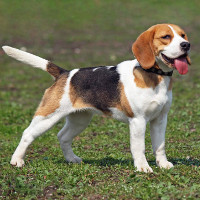
| The Beagle was developed in England in the 1300s, and may have roots stretching back to the Roman occupation. The breed was mainly used to hunt small game on foot, but fell out of favor with the larger Foxhounds in the 1700s. Were it not for farmers, who continued to breed the Beagle to help with vermin and rabbit hunting, the breed might have disappeared. The Beagle was first recognized by the American Kennel Club in 1885 and is ranked among the top five breeds in popularity today. | ||
 |
||
| Standard of the Beagle |
Appearance of the Brittany Beagle |
| The Brittany Beagle is a hybrid between the Brittany Spaniel and the Beagle, and will often have distinctive characteristics of both breeds. Both parent breeds are hunting dogs and are small to medium-sized. This hybrid often has a beautiful Breton coloring of white and orange or roan with a few spots. Larger than the Beagle, your Brittany Beagle will probably have longer, leaner legs than the average Beagle. A Brittany Beagle's tail will probably resemble that of the Brittany Spaniel, which is bobbed or tailless. Brittany Spaniels and Beagles have similar head sizes and expressions, with proportionate muzzles of medium length. Beagle ears are slightly larger than those of the Brittany Spaniel, which will also have long hair on its ears. The Brittany Beagle can resemble either parent, but most closely resembles the Brittany Spaniel in coloring and structure. |
Temperament of the Brittany Beagle |
| The Brittany Beagle is a gentle, temperate mix. Beagles, known for their mischievous and sometimes boisterous behavior, are great fun but can be difficult to manage, whereas the Brittany Spaniel is an alert, happy and independent-minded breed. The Brittany Beagle's parent breeds make this hybrid an excellent family dog that loves children and is friendly to strangers. The Beagle is a pack breed that won't tolerate being left alone, and despite its independent spirit, the Brittany Spaniel won't tolerate solitude either. A mix of both breeds will need the company of the family to prevent negative behaviors and separation anxiety from developing. The Brittany Spaniel and Beagle breeds are intelligent dogs, sometimes stubborn and very driven by their prey. This can make your Brittany Beagle difficult to train, and this hybrid is not recommended for novice dog owners. Many owners resort to food-based reward methods for training, but be careful as this hybrid tends to put on weight. |
Needs and activities of the Brittany Beagle |
| The Brittany Beagle is a hybrid of two breeds with similar exercise needs and intensity levels. The Brittany breed is less intense, but still needs at least an hour's playtime a day, including running. Beagles also like to run, and up to two hours is a good amount of time to fully exercise a Beagle. Brittany Beagles do well in all climates, as long as it's not too extreme, but adapting to apartment life can be difficult if your dog leans more towards the Brittany Spaniel. Homes with secure backyards are much more ideal for this hybrid, which requires daily running. |
Maintenance of the Brittany Beagle |
| The Brittany Beagle is a cross between the moderate-loss Brittany Spaniel and the high-loss Beagle. Chances are your Brittany Beagle will also shed a moderate amount. Brushing your Brittany Beagle frequently will help remove dead and loose hairs from its coat and distribute the skin's natural oils. A Brittany Beagle's skin is loose and moves freely. This will help your Brittany Beagle stay clean and free of larger objects, such as burrs, but frequent brushing will help remove small dirt and debris particles and prevent doggy odors. The Breton parent is prone to ear infections due to the long hair covering the ears. Be sure to check and clean Brittany Beagles' ears with a vet-approved solution to keep his ears healthy. |



 English (United Kingdom)

Comments