 |
Brusselranian |
|
He is not recognized by the F.C.I. |
Origin |
Belgium <> Germany -> U.S.A. | |
Translation |
Francis Vandersteen | |
This breed is also known as |
Griffon Pom |
A brief presentation of the Brusselranian |
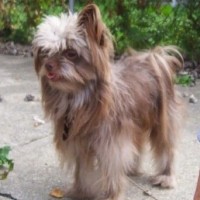
| The Brusselranian is a cross between the Griffon bruxellois and the Spitz Toy / Pomeranian. A small breed of variable appearance, the Brusselranian tends to have the monkey face of the Griffon bruxellois with a combination of the coat and body type of the Spitz Toy / Pomeranian. Because both parent breeds were designed to be companion dogs, the Brusselranian makes a wonderful pet and is known to be loving, cheerful and easy to care for. Although their small size makes them perfect for homes of all proportions, they tend to have lots of energy, so daily exercise is a must. If you're looking for a low-maintenance, easy-to-train small dog with lots of personality, the Brusselranian may be the breed you're looking for. This breed has a long, rough coat that throws seasonally and can appear in colors such as red, black, tan and gray. |
History of the Brusselranian |
| The Brusselranian is an interesting hybrid breed, and while we don't know much about the origin of the breed, we do have a lot of information about its parent breeds, the Spitz Toy / Pomeranian and the Griffon Bruxellois. When these two breeds are combined, we end up with a small Brusselranian, loyal, cheerful, intelligent, easy to train and relatively energetic. These dogs do best in a cooler environment and aren't too fussy about the size of their home, as long as they have plenty of room to run around from time to time. |
A little of the Brussels Griffon |
||
| The Brussels Griffon began life as a working dog. It was bred to hunt and kill vermin in the city's stables, but quickly gained popularity with nobles and workers alike. They were created from breeding with the Affenpinscher, Pug and English Toy Spaniel. Most notable was their almost human face or expressions. In 1883, Belgian breeders created a standard for the Brussels Griffon. Marie Henriette, Queen of Belgium, fell in love with the breed and began breeding them herself. The Brussels Griffon was exported to England in the 1890s, then found its way to the United States in 1899, where it was registered with the AKC. It was officially recognized as a breed in 1900. The number of dogs declined during the two world wars, as people couldn't afford to keep dogs. Fortunately for the Brussels Griffon, the breed was kept alive by dedicated breeders in England. It's a fairly rare dog today, but enjoyed great popularity in the 1950s, and enjoyed a resurgence in popularity in the 1990s when a Brussels Griffon surprised actor Jack Nicolson in a film entitled "As Good as It Gets". | ||
 |
||
| Standard of the Brussels Griffon | ||
A little of the German Toy Spitz / Pomeranian |
||
| The Spitz Toy / Pomeranian is a little cotton ball of joy that was created on the coast of the Baltic Sea, near a region of northern Europe known as Pomerania (from which they take their name). The original Spitz Toy / Pomeranians were actually quite large, dwarfing the adorable little Poms we know today. The breed became popular in Britain with the royal family after Queen Victoria brought one home from Florence, Italy. It didn't take long for their popularity to soar, and eventually the Spitz Toy / Pomeranian made its way to the USA in 1911. They are used for show dogs and companions and come in a wide variety of colors such as black, white, chocolate, cinnamon, brown, orange, red and cream. | ||
 |
||
| Standard of the German Toy Spitz / Pomeranian |
Appearance of the Brusselranian |
| Due to the wide range of colors that parent breeds can enter, this particular hybrid breed can vary considerably in appearance. As a general rule, the Brusselranian is a small dog with a long, wiry coat that can come in many colors such as black, gray, red, orange and tan with white accents. The squashed monkey face of the Brussels Griffon seems to be a defining characteristic of the Brusselranian and is usually associated with the puffy coat of the Spitz Toy / Pomeranian. Large dark eyes hold much intelligence and mischief, while folded ears frame the face, ending just below the eye line. Although the coat is low-maintenance, it is rough to the touch and tends to peel off seasonally. Grooming will be important to ensure that no knots or tangles are created in the coat and to minimize shedding. Because this breed has a thicker coat, colder climates will prevent them from overheating too quickly. |
Temperament of the Brusselranian |
| The Brusselranian takes on the temperament of its two parent breeds in the most excellent way. This little companion dog is quick-witted, loyal, adorable, fun-loving, cheerful and loves to cuddle. He's easy to train and can be quite independent, so he can be safely left at home for a short time if need be. Because the Spitz Toy / Pomeranian can be a little cheerful, the Brusselranian may tend to bark when excited, but he won't talk about it very loudly. This is an ideal dog for apartments or small homes and families who may have children. Just bear in mind that older children may enjoy this dog more, as younger people can irritate the dog with too much handling. The Brusselranian is non-aggressive and enjoys spending time with its family, making it an excellent companion dog for all kinds of living situations. |
Needs and activities of the Brusselranian |
| Because the Brusselranian has fairly energetic parents, it will need a moderate amount of exercise every day. Activities such as a long walk, playing in the yard, chasing toys around the house, tug-of-war and working out are excellent ways to tire out your little friend. A few times a day of this kind of play will be enough to keep your Brusselranian well-behaved and happy. Early training and socialization are very important when it comes to training your dog, as this will ensure that the Brusselranian knows how to behave with other animals and people, and will provide him with a means of releasing productive energy. This breed is fairly easy to train, and training sessions are both physically and mentally stimulating. Despite their cheerful energy, Brusselranians will do well in any size of home and prefer a slightly cooler climate, as their fur is rather thick. If it's too hot or cold outside for outdoor activities, you can always wear your Brusselranian with short periods of play in the house. |
Maintenance of the Brusselranian |
| Although the Brusselranian doesn't require as careful grooming as the Spitz Toy / Pomeranian, it will still shed often due to the fact that both parent breeds shed seasonally. To take good care of your Brusselranian and minimize shedding, it's a good idea to brush him a few times a week with a metal comb and wire brush. Bathing should only be done occasionally, or when your dog becomes particularly dirty after a period of play. Because this breed folds over its ears, it's very important to dry the ears completely after bathing or swimming. This will prevent any additional moisture from becoming trapped inside the ear, leading to infection and inflammation. In addition to brushing and bathing, be sure to trim your dog's nails every few weeks or when you hear the nails tapping against the floor. This will keep the feet in perfect working order and good health. |



 English (United Kingdom)

Comments