
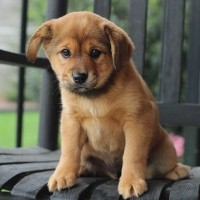
 |
Cava Inu |
|
He is not recognized by the F.C.I. |
Origin |
Great Britain <> Japan -> U.S.A. | |
Translation |
Francis Vandersteen |
A brief presentation of the Cava Inu |
| The Cava Inu is a hybrid breed. Its parents are the Cavalier King Charles Spaniel and the Shiba Inu. They are alert, energetic and happy dogs. He's very well suited to children, but may not be a good dog for new dog owners. He is loyal, alert and can be mischievous. He is generally very sociable once he gets to know people. He is likely to be white or creamy red with yellow or tan markings. He generally needs a moderate coat maintenance routine, his parent breed, the Cavalier King Charles Spaniel, often needs a good amount of grooming and in addition, the parent Shiba Inu can shed constantly when the season is right. Regular brushing can easily take care of fussy fur. It's perfect for a family with a fenced-in backyard. |
History of the Cava Inu |
| Although there isn't much information on the Cava Inu hybrid, we can still learn a lot about this dog by studying its parent breeds. |
A little of the Cavalier King Charles Spaniel |
||
| The Cavalier King Charles Spaniel itself is a relatively new breed, descended from the toy Epagneuls that were the companions of royalty and nobility in the 16th, 17th and 18th centuries. Mary, Queen of Scots, owned a toy Spaniel who walked at her master's side as Mary went to her beheading. Mary's grandson and great-grandson, Charles I and II, owned many dogs of the same breed, and eventually gave their name to the breed. Cavalier King Charles Spaniels arrived in the United States in the 1940s. In the 1950s, the Cavalier King Charles Spaniel Club was formed. It wasn't until 1995 that the American Kennel Club decided to recognize the breed. | ||
 |
||
| Standard of the Cavalier King Charles Spaniel | ||
A little of the Shiba |
||
| The Shiba Inu is thought to be an ancient dog, although the name Shiba Inu was not given to the breed until the 1920s. A dog with incredible senses and excellent hunting ability, this breed was capable of covering mountainous terrain and crossing hills and other areas where humans could not travel. It could hunt wild boar, but was mainly used to flush out small game and birds. Under the Cultural Property Act, the Shiba Inu was declared a national treasure in 1936. During and after the Second World War, however, distemper brought the breed close to extinction. Three variants of the Shiba Inu were bred to give the breed a comeback: the Shinshu Shiba, the Mino Shiba and the Sanin Shiba. In 1954, American service members brought the dog to America. The first Shiba Inu litter was born in the USA in 1979. The American Kennel Club finally recognized the breed in 1993. | ||
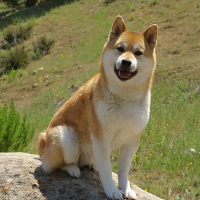 |
||
| Standard of the Shiba |
Appearance of the Cava Inu |
| Cava Inu's parent breeds couldn't be more different in appearance. The Cavalier King Charles Spaniel and the Shiba Inu have little in common genetically. With this combination, there may be surprises in store for the way your adult Cava Inu will grow and mature. Your Cava Inu's coat may be medium-length, wavy and silky if Cavalier King Charles Spaniel genes predominate. A dog with a coat more similar to the Shiba Inu will have a very dense, shorter coat, although the undercoat is soft. Both dogs are smaller in stature, so your Cava Inu will probably be compact and sturdy. His legs will be short and his stance proud and confident. Your puppy's ears may be erect like the Shiba Inu, or they may take on the look of a spaniel, with very long ears that fall to the sides of the face. His muzzle won't be too long and he'll have a perky nose, most often considered black. His eyes are dark and alert, with a cheerful expression. His tail will curve over his back, but the amount and degree of curl will depend on the genes inherited. |
Temperament of the Cava Inu |
| Cava Inus are people-loving, friendly dogs, although some owners find they can be a little shy around strangers. Despite this, the Cava Inu is an alert, bold little dog. He's also loving, gentle and very trainable. Familiar, they are not noisy dogs, barking very little. They are very playful and get on well with other dogs and children, even without early socialization. Training from an early age will benefit the Cava Inu. Historically, the Shiba Inu parent will assume the position of pack leader if he doesn't feel his master is firm and confident. This means that firm but friendly training can only benefit the Cava Inu. Let him know his position by being a firm leader. Don't forget that the Shiba Inu parent is first and foremost a hunter, and for this reason it's advisable not to leave your Cava Inu unsupervised in the vicinity of small animals, even other family pets. Be careful when leaving your hybrid off-leash, as it may chase cars and small animals. |
Needs and activities of the Cava Inu |
| The Cava Inu will be interested in the world around him and will be a game for activity whenever you suggest it. The Cavalier King Charles Spaniel parent is a low- to medium-energy dog, while the Shiba Inu parent can be quite energetic, requiring a regular release of pent-up energy. Providing your hybrid with 45 to 60 minutes of exercise a day should be sufficient, although he'll always welcome more. He'll enjoy a trip to the dog park, and gets on well with other dogs. He'll also enjoy a walk or jog with you. Don't forget that he may be inclined to chase small animals. You should also bear in mind that the Shiba Inu parent may sometimes resist the leash, and may even dislike wearing a collar, preferring the feel of a harness. Give your Cava Inu time outdoors to run around and release pent-up energy that could make him destructive. He's best suited to a home with a fenced-in yard so he can roam without restraint. |
Maintenance of the Cava Inu |
| The Cava Inu has moderate grooming requirements. It's not difficult to care for, but grooming really depends on the type of coat it inherits. Generally, the Cava Inu doesn't shed as much as its Cavalier King Charles Spaniel parent. However, the Shiba Inu parent breed is prone to a lot of shedding during the seasonal moult. For this reason, your hybrid may need brushing at least once a week, but will only need a bath when dirty. Use a soft bristle brush to apply natural oils to his coat, which will keep it soft. You may need to brush him two or three times a week during the moulting season. Brushing your dog's teeth two or three times a week will help prevent tooth decay and bad breath, but daily brushing is optimal for preventing gum disease. Trim your Cava Inu's nails at least every two weeks. It's important to start a grooming regime with your Cava Inu at an early age so that he gets used to it. |



 English (United Kingdom)

Comments