
 |
Cavottish |
|
He is not recognized by the F.C.I. |
Origin |
Great Britain -> U.S.A. | |
Translation |
Francis Vandersteen |
A brief presentation of the Cavottish |
| In recent years, the popularity of specific crosses has increased. The Cavottish is a small hybrid breed created from two purebreds: the Cavalier King Charles Spaniel and the Scottish Terrier. Although these two breeds are quite different individually, when mixed they create a calm, quiet and playful pet. These dogs have an average lifespan of 12 to 15 years and can live well in apartments. However, they don't like cold climates and can also be stubborn. It's important to train and socialize your dog well if you want to raise a confident, obedient dog. |
History of the Cavottish |
| The Cavottish is a new breed that was recently created in the USA by crossing a Scottish Terrier with a Cavalier King Charles Spaniel. Although little is documented about the origins of these dogs, their parent breeds have interesting and ancient histories. |
A little of the Cavalier King Charles Spaniel |
||
| In the 1600s, the Cavalier King Charles Spaniel was a favorite breed of Britain's King Charles I, as well as King Charles II. The old version of the breed almost disappeared when Queen Victoria began breeding dogs that were a cross between the Cavalier, the Pug and the Japanese Chin. Roswell Eldridge, an American visiting England in 1920, was disappointed to find that the new version of the breed was taking over and the original type was disappearing. As he was unable to find the old version of these dogs, he decided to create a competition in 1926 at the Crufts dog show with an award for the most beautiful male and female that were the old version of the Cavalier. For five years, he used the competition to attract attention and motivate the revival of the breed. These dogs went through a difficult period during the Second World War, as it was almost impossible to import stallions. For this reason, breeders were forced to resort to inbreeding, which was the only way to maintain the breed. | ||
 |
||
| Standard of the Cavalier King Charles Spaniel | ||
A little of the Scottish Terrier |
||
| The Scottish Terrier's ancestor, the long-extinct Scotch Terrier, was first described in 55 BC by the Romans, identifying the small dogs as agile hunters who went to ground after their quarry. The Romans named these dogs Terrarii, which is Latin for earth workers. For several centuries, the Terrier group lived and thrived as land dogs in Scotland and England, also making their way to France and parts of Germany. By the 1800s, the Scottish Terrier was firmly established as a small wire-haired Terrier of the Skye group, which differed from the smooth-haired Terriers of England. | ||
 |
||
| Standard of the Scottish Terrier |
Appearance of the Cavottish |
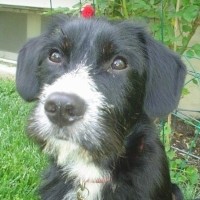
| These cute dogs have a barrel-shaped body and short legs. In general, this breed will have a black coat with white patches and brown feet. They usually have a lot of facial hair. Some other characteristics of this breed will vary with each individual, as they may take on different traits from their parents. Cavalier King Charles Spaniels are small dogs with gentle faces and calm personalities. They have a kind of gentle look on their faces due to the padding under their beautiful eyes. Their ears are long, silky and feathered, and their coat is wavy. Feathers can also be found on their legs, feet and chest. Scottish Terriers are compact and have short legs. Their faces are long and bearded, and bushy eyebrows cover their wide, piercing eyes. They have small, pointed ears that are erect and very high on the head. This breed has large muzzles and a black nose with jaws that meet in a scissor bite. Their chests are broad and the toplines level. Their short, tapering tails point straight up. |
Temperament of the Cavottish |
| The temperament of the Cavottish will vary between that of the Cavalier King Charles Spaniel and the Scottish Terrier. This breed will be cheerful, loyal, courageous, intelligent and independent. They are friendly pets with family and friends, but can be wary of strangers. For this reason, they will bark at people they don't know and make great watchdogs. Cavottish performance around children varies from individual to individual. The Cavalier King Charles Spaniel gets on quite well with children, but the Scottish Terrier does not and so it depends on the trait they develop, as well as how they are raised. Because of their independence and stubbornness, it can sometimes be difficult to train this breed. Obedience training will require constant effort, and the owner will have to prove that he is the leader of the pack. All dogs must be properly trained and socialized, however difficult this may be, to create calm, confident animals that will respect and obey you as their owner. |
Needs and activities of the Cavottish |
| These dogs love to swim and are very playful. They are active indoors and can live happily in any home, including apartments. Cavalier King Charles Spaniels often develop anxiety, especially if they don't get out enough to experience the outdoors. Therefore, take them for a walk every day. You should give the Cavottish between 30 and 45 minutes of exercise every day. However, some dogs may need more or less, depending on the individual. |
Maintenance of the Cavottish |
| These dogs shed a lot and will need regular coat care, such as periodic trimming and daily brushing. The coat of this breed can be different, as they can take on the coat of either parent. The Cavalier King Charles Spaniel is a low-maintenance dog and should be brushed several times a week to keep the coat clean, shiny and tangle-free. They should be bathed if necessary, which may be more often than others as they are quite active and adventurous outdoors. These dogs don't require trimming, but some owners choose to trim the fur around the feet to keep them clean. Scottish Terriers can be more difficult to groom and will need weekly brushing. Use a dog glove, a stiff brush and a wide-tooth face comb, as well as scissors. Bathe them as needed, but not too often, as this can irritate and dry out their skin. Their coats will need trimming once every eight weeks if you choose to keep their fur short, or several times a year if you keep them longer. They can also react badly to flea bites and should be brushed with a flea comb. All dogs need to have their teeth brushed every day, or at least two or three times a week. Clean your dog's ears once a week and trim his nails once or twice a month. |



 English (United Kingdom)

Comments