
 |
Chatham Hill Retriever |
|
He is not recognized by the F.C.I. |
Origin |
Great Britain <> U.S.A. -> U.S.A. | |
Translation |
Francis Vandersteen | |
This breed is also known as |
Chattie
|
A brief presentation of the Chatham Hill Retriever |
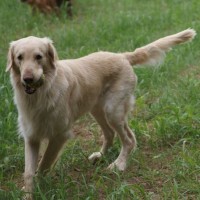
| The Chatham Hill Retriever is an intentional cross between two types of dog originally bred to help hunters find, hunt and retrieve prey, the Flat-Coated Retriever and the American Cocker Spaniel. Both breeds were developed to help hunt and retrieve game birds, so they are both bred to be on the smaller side of the middle, enabling them to pass easily through bushes and thickets to reach birds that had been shot. Although most of these hybrids end up as friendly, affectionate pets and family animals, they are also quite capable of doing the work of their ancestors, finding, hunting and retrieving game birds and other small animals. |
History of the Chatham Hill Retriever |
| The Chatham Hill Retriever is a cross between the Flat-Coated Retriever and the American Cocker Spaniel. This hybrid was first developed as a smaller Spaniel dog that had some of the physical traits and retrieving nature of the Wirehaired Retriever. |
A little of the Flat-Coated Retriever |
||
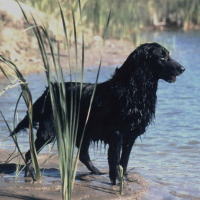
| The Flat-Coated Retriever is a relatively new variety of hunting dog developed specifically for bird hunting in England in the 1800s and was known colloquially as the gamekeeper's dog. The ancestry of this breed of dog is a little confused, but the St. John's dog, thought to be a now-extinct Water Retriever, or their descendants, the Labrador, have made great contributions to the breed, along with Newfoundland, Spaniel and Setter-type dogs. Recognized by the American Kennel Club in 1915, they are friendly, outgoing dogs that excel not only in the work for which they were developed, but because of their easy-going nature, youthful vigor and high intelligence, they are excellent candidates for service too. | ||
 |
||
| Standard of the Flat-Coated Retriever | ||
A little of the American Cocker Spaniel |
||
| Spaniels, in general, are also classified as a type of hunting dog, but they've been helping hunters since long before the invention of the gun. Initially, these dogs were bred to hunt game from deep brush for bowhunters and, in some cases, to retrieve birds from where they had fallen. The first Spaniels were divided into two groups according to where they worked, the Water Spaniels and the Land Spaniels. It was in the 17th century that a distinction was first made between types of land Spaniel, and they began to be classified as Springer or Cocker Spaniel, based entirely on the size of the dog. The larger Spaniels were used to bringing game out for hunting and were therefore called Springers, where the smaller dogs were particularly adept at flushing out woodcock and other such birds for their owners, earning them the name Cocker Spaniel. In 1902, the Cocker Spaniel Club was founded in England. As Cocker Spaniels began to develop in America, they changed considerably, their backs became longer, their heads more domed and their prey considerably smaller. The change was so great that in 1935 a group was formed for those who preferred the traditional look of the English Cocker Spaniel and intended to discourage interbreeding between the original English Cocker Spaniel and the new Americanized version of the Cocker Spaniel. In 1946, the Cocker Spaniels that had developed in America were recognized as a distinct breed, the American Cocker Spaniel, which is the breed most often used to create Chatham Hill Retrievers. | ||
 |
||
| Standard of the American Cocker Spaniel |
Appearance of the Chatham Hill Retriever |
| The Chatham Hill Retriever is a medium-sized dog with a long, somewhat refined head with a rounded skull and round amber or brown eyes that project a gentle gentleness as well as an alert, energetic nature. These dogs are likely to be slightly longer than they are tall, with rounded, pendulous ears that hang down from the sides of the head and may have feathering or longer hair. They have fairly long, straight legs and a long, straight tail that they carry almost straight from their body when alert and let hang down when comfortable, both of which may have light feathers similar to those on the ears. Retrievers can inherit the flat-coated Retriever's lack of dewclaws. This cross will have a soft, dense undercoat that is covered by a straight or slightly wavy layer of fairly short hair that may be made up of the harder waterproof hairs common to the Flat-Coated Retriever or the silky hairs more often seen on the American Cocker Spaniel. Although there are many colors in which they can be born, the most common colors are black, brown and yellow. |
Temperament of the Chatham Hill Retriever |
| This alert, energetic dog is not only an excellent bird-hunting companion, but also an exceptional home and family companion. It's a friendly, outgoing dog, affectionate and playful with family members, and gets along well with most strangers. Although the Chatham Hill Retriever barks to let you know if someone is around, it is generally too gentle and friendly to make a good guard or protection dog. The Wirehaired Retriever is sometimes known as the Peter Pan of dogs, for their exuberant, playful behavior, and this tendency can be passed on to their offspring. These hybrids are generally very affectionate and playful, and make excellent companions for adults and older children. They are unlikely to show aggression, even to the smallest of children, however, they can be too noisy to interact easily with young children, causing bumps or a drop in their enthusiasm. |
Needs and activities of the Chatham Hill Retriever |
| The Wirehaired Retriever has a lot of energy and generally requires a lot of exercise to burn it off. The American Cocker Spaniel, on the other hand, is a little calmer and requires only moderate time devoted to physical activity. The combination of the two is still an active dog, but the exercise requirements are a little less demanding. The Chatham Hill Retriever generally requires around 60 minutes of vigorous exercise a day, although for younger or more energetic individuals, 90 minutes a day may be recommended. In addition to regular walks, these dogs can enjoy alternative activities such as tracking, flyball, Frisbee and swimming. Their exuberance and high energy levels tend to make apartment living an inappropriate choice for this crossbreed. |
Maintenance of the Chatham Hill Retriever |
| Grooming requirements for the Chatham Hill Retriever are generally fairly straightforward, although there may be a few exceptions. Unless your dog hangs out in the wild, jumps in lakes or rolls in things he shouldn't, he should only need a bath every two or three months. These dogs require regular brushing, but the frequency will depend somewhat on the coat the dog has inherited. The flat-haired Retriever's coat only needs brushing once or twice a week, while the American Cocker Spaniel's coat generally needs daily brushing to avoid tangles or mats, and may require occasional clipping to keep it clean and free from dirt and debris. It's very important to check the inside of the ears regularly and keep this area clean and dry, as long, hanging ears predispose this crossbreed to ear infections. |



 English (United Kingdom)

Comments