
 |
Clumber Pei |
|
He is not recognized by the F.C.I. |
Origin |
Great Britain <> China -> U.S.A. | |
Translation |
Francis Vandersteen | |
This breed is also known as |
Chinese Clumber
|
A brief presentation of the Clumber Pei |
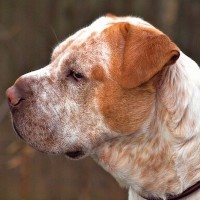
| The Clumber Pei is a cross between a Clumber Spaniel and a Shar Pei. This breed is affectionate, loving and sometimes independent. They can be excellent pets, but stubborn. As such, early training is particularly important for the Clumber Pei. This breed is relatively discreet, but requires moderate exercise to stay healthy. It has an average lifespan of 9 to 11 years, weighs 22.5 to 32 kilos and is 43 to 51 centimeters tall. Clumber Peis come in many color variations, have a short coat and the Chinese hippopotamus snout of the Shar-Pei, but without the wrinkles. Many believe this hybrid breed originated in the late 1990s to early 2000s, but the exact date is unknown. As Clumber Peis are relatively new, they cannot currently join the American Kennel Club's list of purebred dogs. |
History of the Clumber Pei |
| The name Clumber Pei is a combination of the names of its two parent breeds: the Clumber Spaniel and the Shar Pei. It is likely that the Clumber Pei's two parent breeds were mixed from the late 1990s to the early 2000s, making it a relatively new hybrid breed. Currently, the Clumber Pei is not recognized by the AKC. |
A little of the Clumber Spaniel |
||
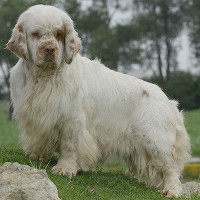
| The Clumber Spaniel is thought to have originated around the time of the French Revolution. Descended from Alpine Spaniel cousins and possibly Basset Hound, Clumber Spaniels were introduced to Europe when Adrien Maurice de Noailles moved his breeding operation from France to Clumber Park, the Duke of Newcastle's estate in England. Admired for excellent retrieving and sense of smell, the breed was introduced to North America in the 1800s, but didn't get a chance to show off its skills, leading to a decline in popularity. Clumber Spaniels were added to the American Kennel Club's list of pure breeds in 1878. | ||
 |
||
| Standard of the Clumber Spaniel | ||
A little of the Shar Pei |
||
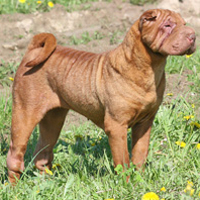
| The Clumber Pei's other parent breed, the Shar Pei, originated in China. The exact origin is difficult to determine due to obscure breeding records. Many believe it to be a relative of the Chow Chow, while others think it is closely related to the Thai Ridgeback. Whatever the case, it is widely believed that the Shar Pei existed as far back as the Han dynasty in 200 BC. Chinese Shar-Peis were used as farm and guard dogs, as well as hunters and fighters. Many died during the Communist revolution in China, but the few Shar Pei that remained were bred in British Hong Kong and Taiwan. In the 1970s, Hong Kong businessman Matgo Law wrote an article urging Americans to save the Shar Pei from extinction. Since then, the population has increased dramatically in North America and was recognized by the AKC in 1992. | ||
 |
||
| Standard of the Shar Pei |
Appearance of the Clumber Pei |
| A Clumber Pei is a muscular, medium-sized, compact dog with a combination of Clumber Spaniel and Shar-Pei facial features. Average weight ranges from 22.5 to 32 kilos, and average height from 43 to 51 centimeters. Their short, thick, straight coats are available in a wide variety of colors and markings, including (but not limited to) black, chocolate, brown, fawn, cream, red, white, apricot (sable and dilute variations) with different colors in markings, spots and/or masks. This breed has a thick neck and a large head for its size. It has the hippopotamus-shaped muzzle and deep jaw of the Shar Pei, but without all the loose skin folds. Clumber Peis tend to have medium-sized hanging ears, as well as wide-set eyes and a dark nose. Their medium-length tails are high and their compact legs are round and arched. |
Temperament of the Clumber Pei |
| Clumber Pei personalities combine the loyal, affectionate nature of the Clumber Spaniel with the protective, intelligent nature of the Shar Pei. This breed is generally friendly, especially with owners and familiar humans. They are eager to please and respond well to food inducements. Clumber Peis are quite playful and will always be delighted to have fun with their owners. This breed can, however, be mouthy and is known for nipping and play biting. As a result, the Clumber Pei may be better suited to families without children or to older children. The Clumber Pei can also be wary of strangers and other dogs. Introductions to new people or pets should therefore be made slowly and thoughtfully. What's more, because Clumber Peis are quite intelligent, they can sometimes be stubborn and independent. As such, early training and socialization are important in developing a well-adjusted Clumber Pei. |
Needs and activities of the Clumber Pei |
| Clumber Peis are somewhat active and require regular, if moderate, exercise, especially as this breed has a high potential for weight gain. A daily walk and/or play session with the owners or other dogs (if the Clumber Pei is friendly with other animals) will suffice. These dogs are not suited to long runs or extreme exercise. As such, this breed can thrive in urban, suburban or rural environments. Clumber Peis do well in any type of climate, but they have a relatively dense coat, so they shouldn't be over-exercised in hot weather. This breed is relatively gentle, so it enjoys spending time with family members inside the house as much as it does outside. |
Maintenance of the Clumber Pei |
| Clumber Peis are not hypoallergenic and therefore not suitable for owners of dogs with allergies. Depending on the parent breed chosen by the Clumber Pei, it may be a moderate to heavy shedder. In either case, regular brushing can help control when and where shedding occurs. The Clumber Pei should be bathed monthly, and owners should pay particular attention to cleaning the skin folds this breed inherits from its Shar-Pei parent. If the coat is longer around the eyes and feet, clipping is recommended. Like all dog breeds, the Clumber Pei should have its teeth brushed daily and its nails trimmed once or twice a month to avoid painful overgrowth. |



 English (United Kingdom)

Comments