
 |
Havanestie |
|
He is not recognized by the F.C.I. |
Origin |
Western Mediterranean <> Great Britain -> U.S.A. | |
Translation |
Francis Vandersteen | |
This breed is also known as |
Havanastie
|
A brief presentation of the Havanestie |
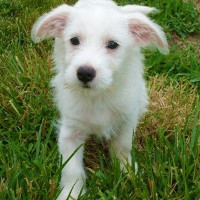
| The Havanastie is a hybrid of the Havanese and the West Highland White Terrier. The mix is bred as a companion and designer dog, and recognized by five registries: the American Canine Hybrid Club, the Designer Breed Registry, the Designer Dogs Kennel Club, the Dog Registry of America and the International Designer Canine Registry. Despite its many registries, little is known about the Havanestie apart from its parent breeds. The deliberate breeding of both parents is to develop a companion dog with the best traits of both parents, often including the confidence and energy of the West Highland Terrier and the gentle disposition and gentle heart of the Havanese. |
History of the Havanestie |
| The Havanestie is a hybrid of the Havanese and the West Highland White Terrier. The hybrid is a specific crossbreed that combines many of the best traits of both parents into a well-balanced companion with great confidence and a gentle nature. |
A little of the Havanese Bichon |
||
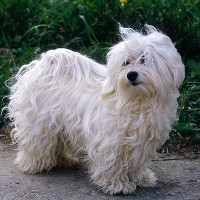
| The ancestors of the Havanese Bichon left Europe in the 15th century when its close cousin, the Maltese, was gaining popularity outside Italy and Malta. The Havanese sailed to the Americas on Spanish ships and settled on the Cuban islands, where the breed thrived for several hundred years in virtual isolation. Slightly larger than its Bichon cousins, the Havana Bichon almost became extinct in the 20th century during and after the Cuban Revolution. Interest in the national breed suffered in Cuba, and only 11 Havanese found refuge in the United States following the revolution. Today, almost all Havanese living outside Cuba can trace their lineage back to the refugees of the mid-20th century. Interest in the breed surged again in the 1970s, and the American Havanese breeding program helped restore the breed. The American Kennel Club officially recognized the Havanese in 1996, and although the Havanese enjoys great popularity, it remains a rare breed. | ||
 |
||
| Standard of the Havanese Bichon | ||
A little of the West Highland White Terrier |
||
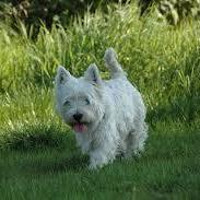
| The West Highland White Terrier, as its name suggests, is a Terrier dog of Scottish origin and shares a close history with other Scottish Terrier breeds, including the Cairn Terrier, the Dandie Dinmont, the Skye , and the Scottish Terrier. This little earth dog is well known for hunting vermin, and derives its white coloring from a tragic 19th-century story in which Colonel Malcolm Poltallach accidentally shot his wheat-colored Westie believing it to be a fox. All future breeding focused on selecting the white coat. The American Kennel Club recognized the West Highland White Terrier as a breed distinct from other Scottish Terrier breeds in 1908. | ||
 |
||
| Standard of the West Highland White Terrier |
Appearance of the Havanestie |
| The Havanestie is a small, well-built dog with a double coat of white hair that resembles the West Highland Terrier, although other coat colors and color combinations are also visible. This hybrid has short, muscular legs with compact paws and a high, erect tail. Longer plumage or hairs along the tail are common. The Havanaestie's head is round with triangular-shaped ears that resemble the West Highland Terrier. If the ears resemble the Havanese, they will be set lower and have a fold with extended feathers. The Havanestie has a large black nose, tight lips and a scissor bite in a blunt muzzle that tapers gradually to the tip. |
Temperament of the Havanestie |
| The Havanestie is active, cheerful and affectionate with its family. The overly sensitive and sometimes needy traits of the Havanestie are tempered by the confident independence of the West Highland Terrier, but the Havanestie's propensity to root itself in the earth is heightened. The Havanestie is exceptionally fond of children, but its small size makes it better suited to older children. The Havanestie is a dog-friendly hybrid and can get along with cats if properly socialized, but don't expect it to get along with the neighbor's cat. The Havanestie is an intelligent, easy-to-train mix. The Havanestie's energy levels are high and this hybrid needs daily exercise for a healthy body and mind. |
Needs and activities of the Havanestie |
| The Havanestie is a medium-energy, medium-to-high intensity hybrid. The West Highland Terrier parent adds speed to the agile, elastic nature of the Havanese, making the Havanestie a fast, capable hybrid. Short bursts of running energy are often exhibited by this hybrid, but its small size means that most exercises can be performed indoors. The Havanestie also requires mentally stimulating activities, so owners can concentrate on games and tricks instead of just running. Stimulating the Havanestie's mind will help prevent destructive and digging behaviors from manifesting themselves. A small yard is ideal for this hybrid, but if the Havanestie gets all its mental and physical exercise, this hybrid will adapt well to apartment living. Havanesties also have a high tolerance to all climates, but extreme temperatures are not tolerated. |
Maintenance of the Havanestie |
| The Havanestie is a hypoallergenic hybrid with low shedding and easy grooming. Weekly brushing with a pin brush to remove dead and loose hairs is all the Havanestie needs to keep its coat healthy and tangle-free. This mix can be prone to ear infections if its ear resembles the Havanese, but its ear is easily cleaned with a vet-approved solution. Havanesties can also develop dermatitis if bathing removes their natural oils. Avoid frequent bathing and use a hypoallergenic dog shampoo if bathing is necessary. |



 English (United Kingdom)

Comments