
 |
Meagle |
|
He is not recognized by the F.C.I. |
Origin |
Germany <> Great Britain -> U.S.A. | |
Translation |
Francis Vandersteen |
A brief presentation of the Meagle |
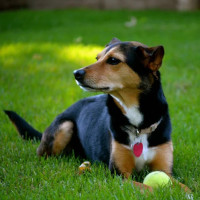
| The Meagle is a hybrid between the purebred Miniature Pinscher, sometimes called Min Pin, and the Beagle, a compact-sized hunting dog. The resulting hybrid is a fun, family dog that loves attention and is naturally curious. The Meagle has an advanced sense of smell and isn't afraid to use it to inspect everything. They can be a little stubborn and need early socialization and appropriate attention to prevent bad behavior from developing. Five hybrid and competitive clubs recognize the Meagle, but the hybrid also goes by the name of Megie in the designer breed registry. |
History of the Meagle |
| The Meagle is a cross between the Miniature Pinscher and the Beagle. Both parent breeds are popular and animated with detailed histories. Unfortunately, the Meagle is not as well known and has no standards. Its lack of standards means that hybrid dogs can vary considerably. The best way to understand the potential type of dog your Meagle may be is to review the background, including health and character traits of the parent breeds. |
A little of the Miniature Pinscher |
||
| The Miniature Pinscher is, as its name suggests, a small dog. The name Pinscher is German for biter, and this breed is the German version of a Terrier. It first developed in Germany several hundred years ago as a vermin hunter and remained relatively isolated until the end of the 19th century. Enthusiasts began to breed and show the Min Pin and the breed's popularity grew rapidly in the 20th century. The Min Pin was imported to the U.S.A. and the American Kennel Club recognized the breed in 1929 as part of the Terrier group, but later reclassified the breed as a Toy. | ||
 |
||
| Standard of the Miniature Pinscher | ||
A little of the Beagle |
||
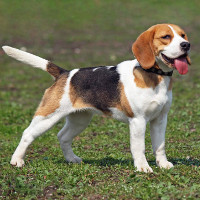
| The Beagle has a mysterious history, with some people believing the breed originated with the Romans, who brought small rabbit-hunting dogs with them as they travelled across Europe. Rabbit dogs bred with native dogs, producing the Beagle's smallest predecessor. However, the modern Beagle, so well known today, was developed in 19th-century England. The Beagle was bred for its scenting and hunting abilities, not its looks, and attracted the attention of American breeders who wanted a small foxhound. In the U.S.A., the Beagle's size was further reduced to its current stature, and the American Kennel Club first recognized the breed as a hunting dog in 1885. | ||
 |
||
| Standard of the Beagle |
Appearance of the Meagle |
| The Meagle is a small dog, smaller than its Beagle parent. The head can be slightly domed or flat, and the muzzle is small. The Meagle's ears hang down and are larger than the Min Pin's but smaller than the Beagle's ears. The eyes are amber to brown and slightly oval with a playful expression. The Meagle has a graceful form with long, slender legs, similar to the Miniature Pinscher. The coat can of course be short to medium or silky, but is generally dark with darker spots on the face. The Meagle's tail is often held straight and carried gaily. |
Temperament of the Meagle |
| The Meagle is a spirited, lively companion for the family, although it can sometimes be mischievous. The Min Pin parent is not known for having great patience with children, but the Beagle parent adores children. The child-friendly personality of the Meagle hybrid may lean towards either of the parent breeds, but early and consistent socialization with children will help this hybrid adapt well. The Meagle is a little more naturally friendly towards strangers than children, but socialization will ensure that the hybrid has healthy relationships with others. The Beagle parent is a pack dog and therefore very friendly with dogs, while the Min Pin parent may not be such a pet-friendly dog. The Meagle will most likely share a parent's disposition towards other pets, but it's not possible to predict with total accuracy. At best, the Meagle will be a good mix of both parents. Meagle energy levels are high and easy to predict, as both parent breeds are equally active. The Meagle's high energy levels require supervision, and its sometimes independent and stubborn nature can make training a little more difficult. |
Needs and activities of the Meagle |
| The Meagle is an active dog with a lot of energy packed into a small form. Daily exercise and plenty of mental stimulation are essential for this lively dog, or he may develop mischievous behaviors. A garden is ideal for the Meagle who loves to run. However, the Meagle needs to be supervised outside, and the yard needs a secure fence. The Meagle is an intelligent dog with a strong potential for wanderlust. They are also hunted by their prey and will find a way to escape to hunt small animals. The Meagle can adapt to apartment living provided it gets daily exercise, and this hybrid is best suited to warmer climates, although temperate environments are also ideal. |
Maintenance of the Meagle |
| Despite its short coat, the Meagle is a moderate shedder and not hypoallergenic. Weekly brushing will considerably reduce the amount of loose, dead hair and help shed it. Dog mittens are an effective tool for brushing, and this activity helps you bond with your Meagle. Meagles can suffer from periodontitis due to tartar and plaque build-up. Brushing your Meagle's teeth two or three times a week and providing hard chew toys will help reduce tartar build-up and bacteria. Meagles' ears are also long and can trap dirt and moisture. While brushing your Meagle, check and clean his ears as needed with a veterinarian-approved product designed to clean ears to prevent infections and foul odors. |



 English (United Kingdom)

Comments