
 |
Miniature Pinschelkhound |
|
He is not recognized by the F.C.I. |
Origin |
Germany <> Norway -> U.S.A. | |
Translation |
Francis Vandersteen |
A brief presentation of the Miniature Pinschelkhound |
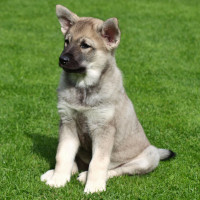
| The Miniature Pinschelkhound is a rare hybrid of the Miniature Pinscher and the Norwegian Elkhound Gray. Size and height can vary considerably depending on the genetic contribution of each parent, so it can be a small to medium-sized dog. Proud and courageous, this new breed is an ideal companion dog and protector of its family. They can be quite stubborn or headstrong, so it's important that the owner is the pack leader, not the Miniature Pinschelkhound. These dogs make good watchdogs because they are alert and will warn you immediately of intruders. They are agile and respond well to training, as long as the training is interesting and you respond positively to their efforts and a reward or two. Generally, they are affectionate and friendly with children and other pets if they have been well socialized as puppies. |
History of the Miniature Pinschelkhound |
| Let's take a look at the parent dog breeds to see what characteristics may influence your Miniature Pinschelkhound. |
A little of the Miniature Pinscher |
||
| The Miniature Pinscher dates back several hundred years, when it was widely used in Germany to rid houses and stables of vermin. Although it resembles a Dobermann, it was not developed from one. The Miniature Pinscher (Min Pin) is a distinct breed and is much older than the Dobermann. In 1895, breeders formed the Pinscher Klub, where the first written breed standard was drawn up. The Stuttgart dog show in 1900 saw the first Miniature Pinscher exhibited, and the breed's popularity soared. Subsequently, after the First World War, breeders worked diligently to improve the breed, and it was in 1919 that the first Min Pins were imported to the USA. This little dog gained in popularity as people loved its elegant appearance and boundless energy. The Miniature Pinscher Club of America was formed in 1929 and the breed was recognized by the American Kennel Club. | ||
 |
||
| Standard of the Miniature Pinscher | ||
A little of the Norwegian Elkhound Gray |
||
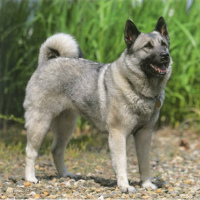
| The rather glamorous heritage of the Norwegian Elkhound Gray goes back over a thousand years, and history records that the Vikings used them for hunting and as guard dogs. Truly an ancient and noble breed, they are closely linked to Norwegian culture. These dogs are adapted to rugged terrain with their impressive thick coats and wolf-like faces. Brave beyond belief, these dogs were used to hunt big game such as bear and moose. They would track the animal and corner it, holding it at bay until the hunter caught up. These dogs first appeared at dog shows in 1877, and breeders went on to create a breed standard. Today, the Norwegian Elkhound Gray excels in dog sports, including agility, obedience, breeding, guarding and search and rescue. Above all, they make wonderful family companions. | ||
 |
||
| Standard of the Norwegian Elkhound Gray |
Appearance of the Miniature Pinschelkhound |
| Miniature Pinschelkhounds can vary considerably in appearance and size, depending on the strength of their parent's genetics. They often take more after one parent than the other. They may have the thick, dense coat and wolf-like face of the Norwegian Elkhound Gray, or they look very elegant and athletic, displaying the black and tan color combination and short coat of the Miniature Pinscher. The face is often very expressive, with large, round eyes, erect ears and a long, pointed muzzle whose teeth meet in a scissor bite. A well-proportioned body supported by strong legs is a distinctive feature, as is the tail, which can be fluffy and curled over the back, or it can be straight and high. The Miniature Pinschelkhound can often resemble a small Norwegian Elkhound Gray or a large dwarf Pinscher. But whatever its size, this dog's grace and beauty are hard to ignore. |
Temperament of the Miniature Pinschelkhound |
| Although temperament varies between dogs of the same breed, the Miniature Pinschelkhound is generally a proud, loyal but feisty dog, and can be an independent thinker, which means they can be a little stubborn. But on the other hand, they are affectionate, devoted and protective of their human family. Although these dogs are highly intelligent, they can be a little stubborn and need a firm hand to train. They can be trainable barkers, but keep this in mind if you're an apartment dweller. This dog responds best to an owner who is the pack leader, who is fair, but firm. Letting this dog be the boss is detrimental to the dog and the relationship it will have with the family. The Miniature Pinschelkhound is a dog with a sense of humor, they love to play and they love to cuddle. These dogs are also very empathetic, they know if you're sad and will respond by snuggling up to you and resting their head in your lap to comfort you. Attractive in appearance and nature, these dogs can challenge the inexperienced owner, but are well worth the effort for a pet with lots of character that will fit in perfectly with the family. |
Needs and activities of the Miniature Pinschelkhound |
| Miniature Pinschelkhounds require daily exercise in the form of walks or free play. They'll be happy to run alongside you or accompany you on a walk around town. This will help socialize your dog and enable him to become a well-rounded dog with good manners. If they've inherited the dense coat of the Norwegian Elkhound Gray, they may find it difficult to cope with hot temperatures. Make sure you don't over-exert them during the heat of the day. The Miniature Pinschelkhound will love a yard, and beyond, to explore, and can be quite the escape artist, so make sure your fence is very secure. These dogs love to play but have an independent sequence, so you won't always be able to retrieve the ball and will have to chase them for it. |
Maintenance of the Miniature Pinschelkhound |
| The care of your Miniature Pinschelkhound may vary according to the coat the dog inherits. If the coat is short and tight, like the Miniature Pinscher's parents, all he'll need is a weekly brushing, an occasional bath and he'll be ready to go. However, if he inherits the thick, dense coat of the Norwegian Elkhound Gray, he'll need frequent brushing, often requiring daily attention to avoid matting. Whatever the type of coat, always use a special dog formula for bathing: a mild dog shampoo is recommended. Other areas to check are the ears to make sure they're clean, the eye area and the toenails to see if they need a quick clip. Brushing your dog's teeth is an important part of pet care, it will keep teeth healthy and oral hygiene standards high. |



 English (United Kingdom)

Comments