
 |
Mini Foxingese |
|
He is not recognized by the F.C.I. |
Origin |
Australia <> China -> U.S.A. | |
Translation |
Francis Vandersteen |
A brief presentation of the Mini Foxingese |
| The Mini Foxingese, a specific cross between a Miniature Fox Terrier and a Pekingese, is a toy breed with an average lifespan of 13 to 15 years, a weight of 2.5 to 4.5 kilos and a height of 18 to 25.5 centimeters. It is a relatively new and unusual hybrid that is not fully stabilized or recognized by the American Kennel Club. Nevertheless, the Mini Foxingese has already earned a reputation as an alert, dignified pocket dog. Its caracoling gait and lustrous coat only serve to underline the breed's regal demeanor. Like their parent breeds, Mini Foxingeses require a great deal of human attention and tend to become attached to a member of their household. |
History of the Mini Foxingese |
| The name Mini Foxingese is a nod to the size of this dog and the names of its parent breeds: Miniature Fox Terrier and Pekingese. Due to the presence of both parent breeds in North America since the 1900s, the Mini Foxingese is thought to have been bred sporadically for almost a century. However, it has only recently been recognized as a designer breed, but not by the AKC. |
A little of the Miniature Fox Terrier |
||
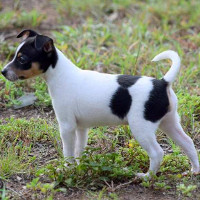
| The Miniature Fox Terrier is one of the few pure breeds native to the USA. It is a robust combination of the Smooth Fox Terrier and several other small breeds, including the Italian Greyhound, Toy Manchester Terrier, Miniature Pinscher and Chihuahua. They were bred to hunt and kill small rodents in the 1900s and became very popular on farms across the country because of this skill. Eventually, Miniature Fox Terriers were adopted by showmen and became common performance animals at carnivals and circuses during the 20th century. At this time, families also began to adopt the small breed as a pet, and it was officially recognized by the American Kennel Club in 2003. | ||
 |
||
| Presentation of the Miniature Fox Terrier | ||
A little of the Pekingese |
||
| The Pekingese is one of the oldest known breeds. It originated in ancient China and is named after the country's capital, Beijing. The Chinese believed that Pekingese possessed spiritual powers and were the manifestation of the mythical dog “Foo”, who protected his owners from evil spirits. As such, it's not surprising that Pekingese were worshipped by the elite classes of imperial China. The Chinese maintained tight control over the breed for much of its history, however, many Pekingese were smuggled out of the country in the 1860s by invading Western European forces during the Second Opium War. After the rest of the world was introduced to Pekingese, it quickly gained popularity, particularly in the UK and North America, where it was recognized by the AKC in 1909. | ||
 |
||
| Standard of the Pekingese |
Appearance of the Mini Foxingese |
| A Mini Foxingese is a small, compact breed that can inherit any combination of physical characteristics from its two breeds. Typically, it is short with a curled tail and hanging ears, like a Pekingese, but athletic and alert like a Miniature Fox Terrier. They generally weigh between 2.5 and 4.5 kilos and reach a height of between 18 and 25.5 centimeters. Mini Foxingese have round, dark eyes and a black or brown button nose. Their muzzles are slightly tapered with a fairly horizontal bite thanks to the Terrier influence. They also have medium-length coats that are straight, silky and come in combinations of colors and patterns common to both parents. Finally, they have a light gait facilitated by their small, round legs. |
Temperament of the Mini Foxingese |
| The Mini Foxingese inherits a pleasant balance between the vigilance of the Miniature Fox Terrier and the regal behavior of the Pekingese. These puppies need a lot of human attention and are eager to please their owners. As a result, Mini Foxingese are highly trainable and make excellent traveling companions. In fact, Mini Foxingese tend to become attached to one person in a household. They may even follow that individual constantly. This can be an endearing trait, however, it also means that Mini Foxingese are prone to separation anxiety. As a result, this breed will do best in environments where its owner is present most of the time. When it comes to other animals, children and adults other than their owners, Mini Foxingese tend to be wary. They may bark or become temperamental with strangers. The best way to ensure that your Mini Foxingese gets along well with others is to expose it to early and consistent socialization. Overall, these loyal, fun-loving pets thrive in loving environments where they have constant companionship. |
Needs and activities of the Mini Foxingese |
| On average, Mini Foxingese need 15 to 30 minutes of light exercise. They enjoy play sessions with their owners and short walks. Due to their size and energy level, this breed is probably not equipped for or inclined towards dog park environments, however, owners should determine this on a case-by-case basis. They have a strong impulse to hunt and roam, so owners need to be particularly vigilant when introducing a Mini Foxingese into unfenced or off-leash areas. Otherwise, Mini Fixingese do well in all types of climates and environments. They're perfect for owners of urban households and/or apartments as long as they have enough of them one-on-one with their favorite humans. |
Maintenance of the Mini Foxingese |
| Mini Foxingese are not a hypoallergenic breed and are therefore not suitable for pet owners with allergies. Their dense coats are of medium length, shed moderately and require occasional grooming. Owners can keep their pets' coats soft, clean and free of debris by using a pin or smooth brush and/or detangler on a weekly basis. Some owners opt for a professional groomer, while others trim or shorten particularly long parts of the coat themselves. This breed also requires a monthly bath in which ears and eyes are meticulously cleaned. Like all breeds, Mini Foxingese must also have their teeth cleaned daily to prevent plaque build-up and other dental diseases. |



 English (United Kingdom)

Comments