
 |
Pocket Pitbull |
|
He is not recognized by the F.C.I. |
Origin |
U.S.A. <> Great Britain -> U.S.A. | |
Translation |
Francis Vandersteen | |
This breed is also known as |
Pitterdale
|
A brief presentation of the Pocket Pitbull |
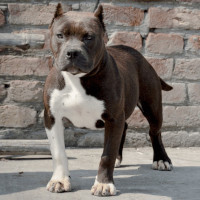
| The Pocket Pitbull is a hybrid dog, developed as a smaller version of the American Pit Bull Terrier. This is usually achieved by crossing an American Pit Bull Terrier with a Patterdale Terrier, a small, durable Terrier from the north of England, although some breeders combine American Pit Bull Terriers with other dogs such as French Bulldogs and Boston Terriers to achieve the smaller size and also call their hybrids Pocket Pitbulls. For this reason, and because some Pit Bull bloodlines can exhibit aggressive or fearful behavior, it's important to do your due diligence when choosing your Pocket Pitbull. These dogs are easy to groom and some individuals can do well in an apartment, but they are also very active and athletic, so most would be happiest in a larger home with a fenced yard to run around in. |
History of the Pocket Pitbull |
| The Pocket Pitbull is a designer dog, a deliberate cross between the American Pit Bull Terrier and the Patterdale Terrier, two Terrier breeds recognized by the United Kennel Club in England, but not yet by the American Kennel Club. This dog, also known as the Pitterdale Terrier, the miniature Pit Bull and even the simplified Pocket Pit, is developed as a smaller version of the American Pit Bull Terrier, as recognized by the United Kennel Club in England. The combination of the two dogs produces a brave, muscular dog that looks and acts a lot like an American Pit Bull Terrier, but measures around two-thirds to half its size. |
A little of the American Pit Bull Terrier |
||
| Although the American Kennel Club does not recognize the American Pit Bull Terrier, it does recognize the American Staffordshire Terrier, a dog sufficiently similar to the American Pit Bull Terrier that some individual dogs are registered with both the UKC as an American Pit Bull and with the AKC as an American Staffordshire, although breed standards for the Pit Bull allow a wider range of sizes and colors than the Staffordshire. | ||
 |
||
| Presentation of the American Pit Bull Terrier | ||
A little of the Patterdale Terrier |
||
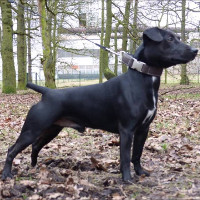
| The Patterdale Terrier is one of many breeds believed to be descended from the Fell Terrier, a small, hardy terrier bred to hunt in packs. The Patterdale was first referenced in the 1930s when a breeder named Joe Bowman began selectively breeding his terriers for hunting ability and game so that they could burrow after fleeing foxes where larger Foxhounds could not. Several contributors in the 1950s and 1960s helped refine the breed, including Brian Nuttall, Cyral Breay, Frank Buck and Tommy Dobson, and in 1995 it was recognized by the United Kennel Club in England. | ||
 |
||
| Presentation of the Patterdale Terrier |
Appearance of the Pocket Pitbull |
| This breed, like the American Pit Bull Terrier it tries to imitate, is a very muscular animal that is slightly longer than it is tall, and although it is considerably smaller than the Pit Bull, it is by no means pocket-sized, measuring just over 30.5 centimeters high at the shoulder and weighing up to 23 kilos. The wide, powerful head and jaws characteristic of the American Pit Bull Terrier are present in the Pocket Pitbull, as are the thick neck and visible, well-defined musculature. Although the Pocket Pitbull is designed to look very much like the Pit Bull Terrier, there may be some minor differences, they are likely to be slightly leaner than the average Pit Bull and may have a slightly more wedge-shaped skull with a narrower muzzle. Ears generally sit high on the head and can be short to medium length, and when not cropped, fold forward or to the sides. |
Temperament of the Pocket Pitbull |
| A well-bred and well-socialized Pocket Pitbull will be an affectionate, playful and loyal dog with a generally easygoing but protective nature. They are generally good with people of all ages, but even though this dog is much smaller than the standard-sized American Pit Bull Terrier, it remains an exceptionally powerful animal and all interactions between dogs and young children must be carefully supervised, to avoid insults or injury to either child or dog. Although these hybrids are generally friendly and easy to live with humans, they may not be so friendly with other dogs and they tend to have a strong prey drive, so they may be happier as the only pet in the house. It's important to do your research when it comes to choosing your Pocket Pitbull as some breeders may use breeds other than the Patterdale Terrier, such as French Bulldogs or Boston Terriers, which can have very different health problems and temperaments, and some Pit Bull bloodlines tend to adopt dominant and aggressive behaviors. |
Needs and activities of the Pocket Pitbull |
| The Pocket Pitbull is an energetic, athletic dog that stays happiest and healthiest when it gets at least one hour of vigorous activity a day, usually divided into two or three shorter exercise sessions. Pocket Pitbulls with white or light fur may be more susceptible to developing skin cancers than other dogs, and should use sunscreen designed for dogs to protect them from harmful ultraviolet rays. In addition to walks or jogs around the neighborhood, these athletic pets can enjoy activities such as agility training or competitive Frisbee, and while some Pocket Pitbulls may find swimming challenging, many will enjoy this exercise too. |
Maintenance of the Pocket Pitbull |
| Regular grooming maintenance for this crossbreed should be exceptionally simple. They only need to bathe a few times a year, unless they get into something particularly messy or smelly, and brushing is a straightforward affair that can be dealt with in a few minutes once a week or so with a smooth brush or grooming glove, although those with a double layer of Patterdale may shed a little more than those who inherit the Pit Bull's single layer. However, this hybrid may be more prone to developing skin conditions than other dogs. So it's important to regularly inspect their skin for rashes or swelling. Pocket Pitbulls with white or light-colored fur may be more likely to develop skin cancers, and should use a sunscreen designed for dogs to protect them from ultraviolet rays. |



 English (United Kingdom)

Comments