 |
Shairn-Inu |
|
He is not recognized by the F.C.I. |
Origin |
Japan <> Scotland -> U.S.A. | |
Translation |
Francis Vandersteen |
A brief presentation of the Shairn-Inu |
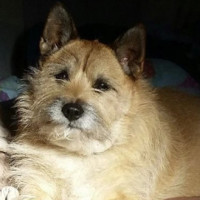
| The Shairn-Inu is a hybridization of the Shiba and the purebred Cairn Terrier. Typically, the Shairn-Inu is a small dog with a rough coat similar to that of its Cairn Terrier parent, but the Shiba parent can give this hybrid more size and weight if its genes are more dominant. The Sharin-Inu has Terrier traits, notably a vocal dog, as well as the possessive traits of the Shiba. This hybrid requires a strong master who can devote time and energy to training, so the Shirn-Inu is not well suited to novice dog owners. However, this hybrid is loyal and affectionate. It's a remarkably healthy mix, sensitive to its owner's emotions, and loves to spend a lot of time playing with children. |
History of the Shairn-Inu |
| The Shairn-Inu is a rare hybrid between the Shiba and the Cairn Terrier. Little is known about this hybrid, and the Shairn-Inu is only recognized by two competitive breed registries, the Designer Breed Registry and the International Designer Canine Registry. Owners and those considering adopting a Shairn-Inu can consult the history, health problems and character traits of the parent breeds to get a better idea of the Shairn-Inu. |
A little of the Shiba |
||
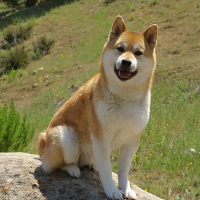
| The Shiba is an ancient Japanese dog that developed at the same time as the Akita. Originally, the Shiba was a hunter that flushed out game. Its name may derive from the brush where it hunted, which is Shiba in Japanese, or from the red color of the brush in autumn. The Shiba remained relatively obscure on the island of Japan and was nearly wiped out during the bombing raids of World War II. After the war, the Shiba arrived in America in the 1950s, but the American Kennel Club didn't recognize the breed until 1992. | ||
 |
||
| Standard of the Shiba |
A little of the Cairn Terrier |
| The Cairn Terrier is a member of Scotland's Skye Terrier lineage, aptly named for its vermin-hunting grounds among the cairns. The origins of the Cairn Terrier were unclear until its official development on the Isle of Skye in the 19th century. The Cairn Terrier was previously classified in the Scottish Terrier group, but fanciers began selecting specific colors, sizes and characteristics during the 1800s, resulting in breed deviations between the Cairn Terrier, West Highland White Terrier and Scottish Terrier. The Cairn Terrier, similar in appearance to the West Highland White Terrier except for coat color, arrived in the United States in the late 1800s and early 1900s. The American Kennel Club officially recognized the breed in 1913. The most famous Cairn Terrier to date is a small female named Terry, who played Toto in The Wizard of Oz. |
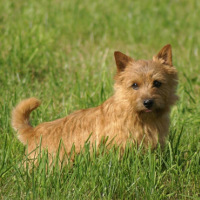 |
| Standard of the Cairn Terrier |
Appearance of the Shairn-Inu |
| The Shairn-Inu is a small hybrid that retains much of the Terrier's appearance. Its coat is rough and generally rust-colored. The Shairn-Inu is a compact dog with straight, sturdy legs and a tail that curls over the back, like the Shiba. Its ears are set high and triangular in shape, but not large. The Shairn-Inu's eyes are brown, round to oval, with a lively, intelligent expression. It has a round, black nose and a long muzzle. The Shairn-Inu's coat color, most often red, can vary to brindle, brown or gray, and may feature cream, brown or black facial and pectoral markings. |
Temperament of the Shairn-Inu |
| The Shairn-Inu has Terrier qualities, notably stubbornness and a tendency to dig or rummage everywhere. However, it's a sensitive breed that won't tolerate being left alone for long. The Shairn-Inu is an affectionate dog that likes to spend time with its owners. It is also affectionate with children and makes an excellent playmate. This hybrid is moderately friendly towards other dogs, but can become aggressive if it feels threatened or perceives a threat against its owners. The Shairn-Inu's prey drive is also acute, and small pets, such as cats or hampsters, can be pursued. Early and appropriate socialization will greatly help the Shairn-Inu adapt to life with other pets. Both parent breeds are considered stubborn, despite their intelligence. Training a Shairn-Inu requires patience and perseverance. This breed is therefore not suitable for novice dog owners or those with little time to devote to their dog's care. |
Needs and activities of the Shairn-Inu |
| The Shairn-Inu is an active dog that needs moderate exercise. It has great play potential and loves to run and jump. However, this is a small breed capable of satisfying all its exercise needs indoors, but it will always appreciate an outing to get some fresh air and explore the neighborhood. The Shairn-Inu has a high tolerance for all types of weather, but should not be left alone outside or left running around in an unsecured yard. Their high intelligence means they need plenty of mental stimulation. Without proper exercise and mental engagement, the Shairn-Inu can develop negative behaviors, such as digging or chewing. |
Maintenance of the Shairn-Inu |
| The Shairn-Inu's coat is easy to care for, even though it is a moderately shedding dog. The Cairn Terrier parent can also give the Shairn-Inu hypoallergenic qualities. The Shairn-Inu's coat can be maintained by weekly brushing with a bristle or spike brush. Grooming practices can significantly reduce the amount of dead or loose hair trapped in the coat, and reduce the amount of shedding. The Shairn-Inu's hair is of medium length, but can be longer around the face. Long hair can trap moisture and dirt, but the Shairn-Inu is not a dog that drools a lot and doesn't tend to smell bad. Both parent breeds have sensitive skin and should only be bathed when necessary. Frequent bathing may remove the natural oils and cause inflammation of the Shairn-Inu's skin. |



 English (United Kingdom)

Comments