 |
Durmitor Shepherd |
|
He is not recognized by the F.C.I. |
Origin |
Montenegro | |
Translation |
Francis Vandersteen | |
En français, cette race se dit |
 |
Berger du Durmitor |
Diese Norm ist in deutscher Sprache sichtbar |
 |
Durmitor-Schäferhund |
En español, esta raza se dice |
 |
Pastor Durmitor |
In het Nederlands, wordt dit ras gezegd |
 |
Durmitor Herdershond |
This breed is also known as |
Durmitorac |
|
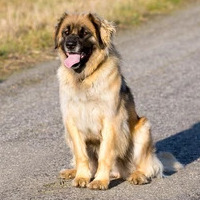
The powerful Durmitor Shepherd is a very old Balkan breed named after the Durmitor Mountains in Montenegro. It is thought to belong to the larger Crnogorac group, which originated from crosses with ancient Greek Molossers and other Yugoslavian dogs, including the Woodland Sheepdog and the Sarplaninac Sheepdog, as well as the Herzegovina Sheepdog and the collie-type herding dogs found throughout the region. Some breeders suggest the Circassian Shepherd Dog as its primary ancestor, while others trace the Durmitorac back to Albanian Molossers. Whatever its origin, this agile and hardy dog is prized for its intelligence and courage. Although highly territorial and moderately wary of strangers, the Durmitorac is by no means an aggressive breed, although it can become excessively aggressive if not properly socialized and trained. The primary role of these dogs is to alert shepherds and chase away predators. However, in a pack of three or four, they can easily subdue a wolf. The breed is neither aggressive towards other dogs nor easily provocative, but it will not back down from a fight if attacked. Working Durmitorac sheepdogs are raised with their flocks from a very young age and consider them brothers and sisters, for whose safety they are willing to sacrifice their lives against a predator. The Durmitorac is renowned for its loyalty to its owner and its relative ease of training. Extremely rare today, it is still found in certain regions of Montenegro and Serbia, where it is used as a livestock guardian and guard dog. Most experts agree that only a handful of purebred specimens remain, due to numerous crossbreedings with the much more widespread Sarplaninac breed. Some working dogs have docked tails, but the majority are not neutered. The Durmitor Shepherd's dense, waterproof coat is medium-length and harsh, with a light, thick undercoat. Its color ranges from sandy, gray, brindle, and brown, almost always with white markings of varying sizes: from a simple white blaze on the chest or muzzle to "white socks" on the legs. A few entirely white specimens exist, but these are considered inbred, as they are descended from the introduction of Sarplaninac Shepherds from Merdzan into the region. The average size is about 66 cm, with females generally being much smaller than males. |



 English (United Kingdom)

Comments