
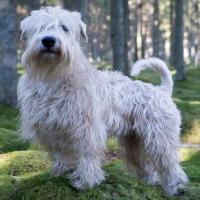
Salish Woolly Dog

He is not recognized by the F.C.I.

Origin
North America
Translation
Francis Vandersteen
En français, cette race se dit
Chien laineux Salish
Diese Norm ist in deutscher Sprache sichtbar
Salish-Wollhund
En español, esta raza se dice
Perro Lanudo Salish
In het Nederlands, wordt dit ras gezegd
Salish wollige hond
This breed is also known as
Woolly Dog
 

The Salish Woolly Dog played an important role in the lives of the Salish people of the south coast of Vancouver Island, the Strait of Georgia, and Washington State, as its wool was used to weave clothing and blankets. With the increasing arrival of European settlers and the introduction of machine-spun sheep's wool, the Salish Woolly Dog population declined in the 19th century until its extinction around 1900.

The Salish Woolly Dog was a small, usually white, long-haired dog with erect ears, a curled tail, a fox-like muzzle, and a thick coat.
When Captain George Vancouver observed the Salish Woolly Dog in the Puget Sound area in 1792, he thought it resembled a larger Pomeranian. According to Spanish naval officers Cayetano Valdés y Flores and Dionisio Alacalá Galiano, during their visit to the Pacific Northwest in 1792, these dogs did not bark, but emitted a pitiful howl.
Today, many researchers compare the Salish Woolly Dog to contemporary breeds such as the Japanese Spitz and the American Eskimo Dog.

A little over 14,000 years ago, domestic dogs descended from two distinct wolf populations: one in Asia and the other in Europe. Between 14,000 and 6,400 BCE, humans began bringing Asian domestic dogs westward and crossbreeding them with European domestic dogs.
The Salish Woolly Dog is more closely related to the earliest Asian domestic dog breeds than to European breeds. In the 19th century, naturalist John Keast Lord believed these dogs originated from a Japanese shipwreck that washed up on the Pacific coast, but he had no evidence to support this. Researchers know that the Salish Woolly Dog was a breed that predates European contact; the oldest remains of this dog have been discovered in Puget Sound and the Strait of Georgia, dating back 4,000 years.

Salish Woolly Dogs lived throughout the Coast Salish territories, including the southern tip of Vancouver Island, the Strait of Juan de Fuca, Puget Sound, the Olympic Peninsula, the Strait of Georgia, and the lower Fraser River. They often lived in packs of 20 to 30 individuals. Their diet consisted of fish and elk tallow (rendered fat) to strengthen their coats and produce wool. To preserve the breed, the Coast Salish people kept the Salish Woolly Dogs separate from other domestic dogs. As a result, these dogs were often confined to small islands around Vancouver Island and the San Juan Islands. On these isolated islands, they were generally left alone during the spring and summer, with their owners returning in the fall to shear them. Among the Twana people of Puget Sound, Salish Woolly Dogs shared wooden houses with their owners, while hunting dogs lived outdoors. Like other domestic dogs, the Salish Woolly Dog likely bred approximately every six months.

It is believed that these dogs were raised for their wool, which the Coast Salish peoples mixed with mountain goat hair to make clothing and blankets. When the dogs' coats were long enough, weavers washed them with white clay to remove dirt. They then used a sharp stone or mussel-shell knives to shear the dogs like sheep, cutting the hair close to the skin. The sheared hair was then preserved with dried clay to extract the oil and eliminate parasites. The dogs could molt up to three times a year.
Although Indigenous oral tradition and settler writings attest to the use of dog hair for blankets, very few examples of dog-hair blankets have been found. Some believe that, because dog hair was so widespread, it was probably used for less important blankets. As a result, these blankets may have been used more frequently and therefore deteriorated more quickly. It is also thought that dog hair was primarily used in woven textiles before 1862, when sheep's wool became widespread in the Coast Salish territories. Although some examples of blankets made from dog hair mixed with other fibers (such as mountain goat hair) exist, researchers are only aware of one blanket made primarily of dog hair. This blanket is preserved at the Burke Museum of Natural History and Culture in Seattle, Washington.

Salish Woolly Dogs most likely belonged to influential families in Coast Salish communities. Among the Indigenous nations of the Olympic Peninsula, these dogs were female-owned and passed down through the maternal line.
These dogs were highly prized in Coast Salish societies, as blankets made from their fur were a vital source of wealth at potlatches. Salish Woolly Dogs were often buried wrapped in a blanket in their honor.

The Salish Woolly Dog population declined throughout the 19th century. The increased presence of Europeans led to crossbreeding between settlers' dogs and Salish Woolly Dogs, decimating the latter's population. In addition, Indigenous populations also declined due to population displacement and diseases brought by colonization. Finally, in the 1820s, fur trading posts introduced inexpensive, machine-made blankets from England. These European blankets made raising these dogs for their fur unnecessary, especially since feeding a flock of dogs required salmon that could have been used to feed humans. By 1900, the long, woolly coat characteristic of the Salish Woolly Dog had disappeared, although a few rare sightings of woolly dogs were reported on reserves until 1940.
Very little material evidence of the Salish Woolly Dog remains today. The artist Paul Kane painted "A Woman Weaving a Blanket" between 1849 and 1856, depicting a Songhees or Saanich weaver and a clearly visible white woolly dog. This painting, along with other sketches of the dog by Kane, is held at the Royal Ontario Museum. In 1859, the naturalist C.B.R. Kennerly collected the skin of Mutton, the "famous Indian dog" of the American ethnologist George Gibbs, for the Smithsonian Institution's National Museum of Natural History. This skin is considered the only surviving specimen of a Salish woolly dog.

Comments

Latest page updates

  • Pungsan dog

    Pungsan dog He is not recognized by the F.C.I. Origin North Korea Translation Francis Vandersteen En français, cette race se dit Pungsan dog Diese Norm ist in deutscher Sprache sichtbar Pungsan dog En español, esta raza se dice Pungsan dog In het Nederlands, wordt dit ras gezegd Pungsan dog This breed is also known as PhungsanKorean PhungsanPoongsan...
  • Sanshu

    Sanshu He is not recognized by the F.C.I. Origin Japan Translation Francis Vandersteen En français, cette race se dit Sanshu Diese Norm ist in deutscher Sprache sichtbar Sanshu En español, esta raza se dice Sanshu In het Nederlands, wordt dit ras gezegd Sanshu   The Sanshu was developed in 1912 in Japan and is not recognized by the AKC/FCI. It is...
  • Alaskan Noble Companion Dog

    Alaskan Noble Companion Dog He is not recognized by the F.C.I. Origin Alaska Translation Francis Vandersteen En français, cette race se dit Chien de compagnie noble d'Alaska Diese Norm ist in deutscher Sprache sichtbar Edler Begleithund Alaskas En español, esta raza se dice Perro de Compañía Noble de Alaska In het Nederlands, wordt dit ras gezegd Edele...
  • Smithfield

    Smithfield He is not recognized by the F.C.I. Origin Great Britain, now Australia Translation Francis Vandersteen En français, cette race se dit Smithfield Diese Norm ist in deutscher Sprache sichtbar Smithfield En español, esta raza se dice Smithfield In het Nederlands, wordt dit ras gezegd Smithfield This breed is also known as Smithfield...
  • Perro Leonés de Pastor

    Perro Leonés de Pastor He is not recognized by the F.C.I. Origin Spain Translation Francis Vandersteen En français, cette race se dit Perro Leonés de Pastor Diese Norm ist in deutscher Sprache sichtbar Perro Leonés de Pastor En español, esta raza se dice Perro Leonés de Pastor In het Nederlands, wordt dit ras gezegd Perro Leonés de Pastor This breed...
  • Pencil-tailed Feist

    Pencil-tailed Feist He is not recognized by the F.C.I. Origin U.S.A., Spain Translation Francis Vandersteen En français, cette race se dit Feist à queue de crayon Diese Norm ist in deutscher Sprache sichtbar Bleistiftschwanz-Feist En español, esta raza se dice Lucha de cola de lápiz In het Nederlands, wordt dit ras gezegd Potloodstaart Feist   The...
  • Moscow Dragon

    Moscow Dragon He is not recognized by the F.C.I. Origin Russia Translation Francis Vandersteen En français, cette race se dit Dragon de Moscou Diese Norm ist in deutscher Sprache sichtbar Moskauer Drache En español, esta raza se dice Dragón de Moscú In het Nederlands, wordt dit ras gezegd Moskou Draak   Preambule The breed was created in the...
  • Hameerpura Sikar Sighthound

    Hameerpura Sikar Sighthound He is not recognized by the F.C.I. Origin India Translation Francis Vandersteen En français, cette race se dit Lévrier de Sikar d'Hameerpura Diese Norm ist in deutscher Sprache sichtbar Hameerpura Sikar Windhund En español, esta raza se dice Lebrel Hameerpura Sikar In het Nederlands, wordt dit ras gezegd Hameerpura...
  • Dhangari Kutta

    Dhangari Kutta He is not recognized by the F.C.I. Origin India Translation Francis Vandersteen En français, cette race se dit Dhangari Kutta Diese Norm ist in deutscher Sprache sichtbar Dhangari Kutta En español, esta raza se dice Dhangari Kutta In het Nederlands, wordt dit ras gezegd Dhangari Kutta This breed is also known as Maharashtra Shepherd...
  • Sarail Dog

    Sarail Dog He is not recognized by the F.C.I. Origin Bangladesh Translation Francis Vandersteen En français, cette race se dit Chien de Sarail Diese Norm ist in deutscher Sprache sichtbar Sarail-Hund En español, esta raza se dice Perro Sarail In het Nederlands, wordt dit ras gezegd Sarail Hond This breed is also known as Bengal GreyhoundSoriala...
  • Soneri Kutta

    Soneri Kutta He is not recognized by the F.C.I. Origin India Translation Francis Vandersteen En français, cette race se dit Soneri Kutta Diese Norm ist in deutscher Sprache sichtbar Soneri Kutta En español, esta raza se dice Soneri Kutta In het Nederlands, wordt dit ras gezegd Soneri Kutta   The Soneri Kutta is a rare and endangered Indian breed of...
  • Marwari Shepherd

    Marwari Shepherd He is not recognized by the F.C.I. Origin India Translation Francis Vandersteen En français, cette race se dit Berger Marwari Diese Norm ist in deutscher Sprache sichtbar Marwari-Schäferhund En español, esta raza se dice Pastor Marwari In het Nederlands, wordt dit ras gezegd Marwari Herder This breed is also known as Rajasthan...
  • Vikhan Sheepdog

    Vikhan Sheepdog He is not recognized by the F.C.I. Origin India and Pakistan Translation Francis Vandersteen En français, cette race se dit Chien de berger Vikhan Diese Norm ist in deutscher Sprache sichtbar Vikhan-Schäferhund En español, esta raza se dice Pastor Vikhan In het Nederlands, wordt dit ras gezegd Vikhan Herdershond   The Vikhan...
  • Ramanathapuram Mandai

    Ramanathapuram Mandai He is not recognized by the F.C.I. Origin India Translation Francis Vandersteen En français, cette race se dit Ramanathapuram Mandai Diese Norm ist in deutscher Sprache sichtbar Ramanathapuram Mandai En español, esta raza se dice Ramanathapuram Mandai In het Nederlands, wordt dit ras gezegd Ramanathapuram Mandai   The...
  • Haofa Tangkhul Hui

    Haofa Tangkhul Hui He is not recognized by the F.C.I. Origin India Translation Francis Vandersteen En français, cette race se dit Haofa Tangkhul Hui Diese Norm ist in deutscher Sprache sichtbar Haofa Tangkhul Hui En español, esta raza se dice Haofa Tangkhul Hui In het Nederlands, wordt dit ras gezegd Haofa Tangkhul Hui   The Haofa Tangkhul Hui is a...
  • Miniature Bullmastiff

    Miniature Bullmastiff He is not recognized by the F.C.I. Origin Great Britain Translation Francis Vandersteen En français, cette race se dit Bullmastiff miniature Diese Norm ist in deutscher Sprache sichtbar Miniatur-Bullmastiff En español, esta raza se dice Bullmastiff Miniatura In het Nederlands, wordt dit ras gezegd Miniatuur Bullmastiff   This...
  • Durmitor Shepherd

    Durmitor Shepherd He is not recognized by the F.C.I. Origin Montenegro Translation Francis Vandersteen En français, cette race se dit Berger du Durmitor Diese Norm ist in deutscher Sprache sichtbar Durmitor-Schäferhund En español, esta raza se dice Pastor Durmitor In het Nederlands, wordt dit ras gezegd Durmitor Herdershond This breed is also...
  • Kopaonik Guard Dog

    Kopaonik Guard Dog He is not recognized by the F.C.I. Origin Serbia Translation Francis Vandersteen En français, cette race se dit Chien de garde Kopaonik Diese Norm ist in deutscher Sprache sichtbar Kopaonik-Wachhund En español, esta raza se dice Perro Guardián Kopaonik In het Nederlands, wordt dit ras gezegd Kopaonik waakhond This breed is also...
  • Kurdish Shepherd Dog

    Kurdish Shepherd Dog He is not recognized by the F.C.I. Origin Kurdistan Translation Francis Vandersteen En français, cette race se dit Berger kurde Diese Norm ist in deutscher Sprache sichtbar Kurdischer Schäferhund En español, esta raza se dice Pastor Kurdo In het Nederlands, wordt dit ras gezegd Koerdische Herdershond This breed is also known...
  • Mojee

    Mojee He is not recognized by the F.C.I. Origin China Translation Francis Vandersteen En français, cette race se dit Mojee Diese Norm ist in deutscher Sprache sichtbar Mojee En español, esta raza se dice Mojee In het Nederlands, wordt dit ras gezegd Mojee This breed is also known as Mojee QuanHeilang QuanMojie QuanChinese black wolfdog   The Mojee (or...
  • Mongolian Xigou

    Mongolian Xigou He is not recognized by the F.C.I. Origin China Translation Francis Vandersteen En français, cette race se dit Xigou de Mongolie Diese Norm ist in deutscher Sprache sichtbar Mongolischer Xigou En español, esta raza se dice Xigou mongol In het Nederlands, wordt dit ras gezegd Mongoolse Xigou This breed is also known as Menggu...
  • Hebei Xigou

    Hebei Xigou He is not recognized by the F.C.I. Origin China Translation Francis Vandersteen En français, cette race se dit Xigou du Hebei Diese Norm ist in deutscher Sprache sichtbar Hebei Xigou En español, esta raza se dice Hebei Xigou In het Nederlands, wordt dit ras gezegd Hebei Xigou This breed is also known as Kangxi Imperial Dog   The Hebei...
  • Shaanxi Hound

    Shaanxi Hound He is not recognized by the F.C.I. Origin China Translation Francis Vandersteen En français, cette race se dit Lévrier du Shaanxi Diese Norm ist in deutscher Sprache sichtbar Shaanxi-Hund En español, esta raza se dice Sabueso de Shaanxi In het Nederlands, wordt dit ras gezegd Shaanxi-Hond This breed is also known as Shaanxi Xian...
  • Laizhou Hong Dog

    Laizhou Hong Dog He is not recognized by the F.C.I. Origin China Translation Francis Vandersteen En français, cette race se dit Chien rouge de Laizhou Diese Norm ist in deutscher Sprache sichtbar Laizhou-Hund En español, esta raza se dice Perro de Laizhou In het Nederlands, wordt dit ras gezegd Laizhou-Hond This breed is also known as Zhuqiao...
  • Tang Dog

    Tang Dog He is not recognized by the F.C.I. Origin China Translation Francis Vandersteen En français, cette race se dit Chien Tang Diese Norm ist in deutscher Sprache sichtbar Tang-Hund En español, esta raza se dice Perro Tang In het Nederlands, wordt dit ras gezegd Tang-Hond This breed is also known as Tong GauTugou   The Tang dog is an ancient,...

© 2026 Groupe Milouchouchou ASBL. Tous droits réservés. En savoir plus

Protected by Copyright01
We use cookies

We use cookies on our website. Some of them are essential for the operation of the site, while others help us to improve this site and the user experience (tracking cookies). You can decide for yourself whether you want to allow cookies or not. Please note that if you reject them, you may not be able to use all the functionalities of the site.

CookieHint and Consent by reDim GmbH

