
 |
Kopaonik Guard Dog |
|
He is not recognized by the F.C.I. |
Origin |
Serbia | |
Translation |
Francis Vandersteen | |
En français, cette race se dit |
 |
Chien de garde Kopaonik |
Diese Norm ist in deutscher Sprache sichtbar |
 |
Kopaonik-Wachhund |
En español, esta raza se dice |
 |
Perro Guardián Kopaonik |
In het Nederlands, wordt dit ras gezegd |
 |
Kopaonik waakhond |
This breed is also known as |
Kopaonik Wolfdog |
|
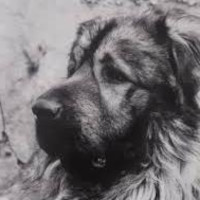
The modern Kopaonik is very different from the ancient Kopaonik, which was thought to be a regional color variant of the large Sylvan Wolfdog, belonging to the original population of the Serbian Tornjak and the Illyrian Mountain Dog. The breed once existed in several varieties, the two main ones being a smaller, lighter group and a larger, more massive variant, used for different tasks. Generally considered extinct in its original form, the modern Kopaonik is descended from crosses of ancient Kopaonik sheepdogs with the Sarplaninac and the German Shepherd. Considered non-purebred by most Serbian authorities, it is an increasingly rare breed, even in its region of origin. Today, the Kopaonik is sadly a forgotten Serbian breed, unknown to most Yugoslavs, primarily due to a lack of information, but also a general lack of interest in its survival. Some historians attribute the Kopaonik's disappearance to the Yugoslav army, due to its post-war breeding programs aimed at improving the breed's docility through the introduction of German Shepherd blood. Others, however, consider the modern Kopaonik to be simply a regional variant of the popular Sarplaninac. In the late 1980s, attempts to revive the old type through selective breeding were reported, but these were unfortunately interrupted by the difficulties of the war in the 1990s. In terms of temperament, modern dogs differ little from the old-type Kopaonik, except for a greater receptiveness to training. Wary of strangers and very territorial, this rare molosser makes an excellent guard dog. The Kopaonik is a strong, muscular breed with a deep chest and robust bone structure. Its head is fairly broad, with wolf-like features and drooping ears. The coat is harsh and dense, with a thick undercoat. Traditionally white with darker markings, it also occurs in solid colors such as sable, red, brindle, black and tan, and brown, although most modern dogs have the characteristic "saddle" coat of the German Shepherd. A wide variety of types still exists, but the average height is around 66 cm, with smaller dogs becoming very rare. |



 English (United Kingdom)

Comments