
 |
Barger Stock Feist |
|
He is not recognized by the F.C.I. |
Origin |
U.S.A. | |
Translation |
Francis Vandersteen | |
En français, cette race se dit |
 |
Barger Stock Feist |
Diese Norm ist in deutscher Sprache sichtbar |
 |
Barger Stock Feist |
En español, esta raza se dice |
 |
Barger Stock Feist |
In het Nederlands, wordt dit ras gezegd |
 |
Barger Stock Feist |
|
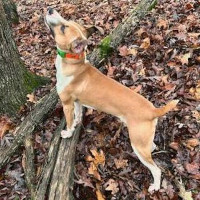
The Barger Stock Feist is a variety of the Feist breed specialized in "treeing" game (forcing prey up a tree); it was developed by Bill and Rita Barger in Harriman, Tennessee. Like many Feists, these dogs vary in appearance; they are classified more by their hunting style. They make excellent companions for hunters, as they are easy to train and eager to please. They also make good playmates for children and generally get along well with other dogs, though they may retain a prey drive toward small animals if not trained and socialized early. Ideally, they should have outdoor space to explore, hunt, and play daily; however, as true companions, they require plenty of attention. The Barger Feist is low-maintenance regarding grooming and training and generally remains healthy. The Barger Stock Feist is a specialized hunting dog from Tennessee, typically measuring 15 to 18 inches (approx. 38–46 cm) at the withers and weighing between 20 and 35 pounds (approx. 9–16 kg). Known as "treeing Feists," these intelligent, short-haired dogs are used to hunt small game such as squirrels and raccoons; they are characterized by a strong prey drive, high energy, and great loyalty. They are often white, brown, fawn, or black with various markings, and feature long legs, a pointed muzzle, and ears that are either upright or drop (button) ears. Extremely intelligent, easy to train, and eager to please, they make excellent, attentive companions, though they do require plenty of exercise. They are used to tree game, often barking loudly to alert the hunter. Specific bloodlines—such as Baldy, Magnum Force, and Doc Holliday—have played a major role in developing this strain. Originating in the Appalachian and Ozark regions, Feists were historically bred by settlers from various small terriers and farm dogs for their agility, keen sense of smell, and hunting efficiency. Unlike show dogs, the Barger Stock Feist is bred primarily for functional ability—specifically treeing game—and is valued in hunting competitions as well as for working roles. Barger Feists are small dogs, measuring up to 18 inches at the withers and generally weighing less than 30 pounds. Females are slightly smaller than males. In general, Feists are lively and agile; they use both scent and sight to track game and tree it. Many "Feist" breeds get along well with other dogs and make good playmates for children, though they tend to view small animals as prey. They serve as effective watchdogs when needed but lack the size or aggression to act as guard dogs. These hardy dogs, accustomed to treeing game, generally require very little coat maintenance. While often intelligent and naturally gifted hunters, they benefit from early training and socialization. They require daily outdoor exercise and thrive best when they have at least a fenced yard to patrol. They are generally devoted companions that crave plenty of attention to remain happy and active. Although their coat is typically black, tan, brown, or a combination of these colors (with or without white markings), the appearance of Barger Feists varies from one individual to another. They have a small head with a rather tapered muzzle, as well as small ears that may be either drooping or erect. Their tail can be naturally short (or absent), and, naturally, they have long legs in proportion to their small size. |



 English (United Kingdom)

Comments