
 |
Eloschaboro |
|
He is not recognized by the F.C.I. |
Origin |
Germany | |
Translation |
Francis Vandersteen | |
This breed is also known as |
Elo |
A brief presentation of the Eloschaboro |
| The Elo dog, originally known by the longer name of Eloschaboro, is an emerging German breed developed by Marita and Heinz Szobries, who combine the Eurasier, Old English Sheepdog, and Chow Chow breeds, to develop a dog with the right qualities to make an outstanding family dog. These friendly, medium-sized dogs are great with children and eager to please, but they tend to be too active to thrive in smaller living spaces, such as apartments. This breed was developed with temperament and behavior in mind rather than appearance. So there's still plenty of physical variation from dog to dog. |
History of the Eloschaboro |
| The Elo German Shepherd Dog is considered an emerging breed, with development of the breed beginning in 1987 by breeders Marita and Heinz Szobries. The two men began their program with the aim of developing a dog specifically for the family, selecting and breeding their dogs for behavior and behavioral traits rather than physical appearance. A German Spitz-type dog known as a Eurasier was mixed with old English Shepherd dogs, often referred to in the region as Bobtails, as the basis for the breed. However, a shortage of Eurasier dogs led to the inclusion of Chow Chow dogs as well as a small amount of Samoyed and Dalmatian. According to a genetic study carried out in Germany, Elo dogs account for around 48% of Eurasier breeds, 23% Bobtail/Old English Sheepdog and 10% Chow Chow, with only a fraction of other breeds. This breed is still a very rare and highly regulated breed that has been registered by the Elo Research Association, an institution created for its development. Some breeders outside Germany have attempted to recreate these dogs in the hope of capitalizing on their rare breed status, but only dogs bred with the explicit permission of the breed's founders are considered Elo dogs. This is an important point to remember when acquiring your dog, as the original breeders were very focused on the temperament and health of the breed, while those looking to cash in might strive harder to make it look like an Elo dog. very different temperament to develop. |
Appearance of the Eloschaboro |
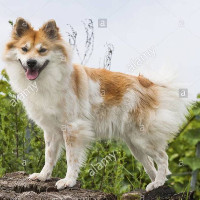
| The Elo breed dog was developed with behavioral rather than physical traits, so there's a lot of variation when it comes to their appearance. They generally stand around the shoulder at 46 to 61 centimeters and are slightly longer than their height, with a long, well-split tail that curves around their back. They have a slightly foxy appearance, with hairy triangular ears and a long, tapering muzzle, although some muzzles are longer and more tapered than others. Their thick, double-layered coat can be available in almost any color, including gray, red, brown or black, usually with a white thorax and belly, although the protective outer layer can be either flat-coated, also known as Glatthaar, with straight fur of generally shorter length on the face and legs, or covered with hard hair, also known as Rauhaar, with long, wavy fur all over the body. |
Temperament of the Eloschaboro |
| Elo dogs tend to have a playful but obedient nature. They are friendly and cheerful with great affection for people of all ages. While all interactions between small children and dogs need to be closely monitored, this breed is generally very reliable, even with smaller children, even if they show restraint with strangers or unfamiliar dogs. While this breed is becoming a family companion, some of the contributions come from working dogs and make this new breed very active, both physically and mentally. Elo dogs that don't get enough mental and physical exercise tend to get bored and can either get into trouble or develop anxious or destructive behaviors. They have very little prey or hunting instinct, which also makes them safer around other family pets. They are naturally eager to please and are generally easy to train, but they can tend to wander, making your recall order particularly important, as their safety may depend on it. |
Needs and activities of the Eloschaboro |
| Elo dogs tend to be quite active and should be offered at least forty-five minutes to an hour of vigorous activity every day, and they can usually manage a little more than that. Although they don't have intense prey, they would tend to roam. These dogs thrive on regular outdoor exercise, but they need to be supervised, as they tend to dig and are also known to be fugitive artists. Their activity levels make these dogs ill-suited to apartment living, and they are much happier in a larger home with a yard. |
Maintenance of the Eloschaboro |
| Both flat-coated and wire-coated varieties have a fairly weather-resistant outer coat that shouldn't be washed too often, as bathing too frequently often strips the coat of its natural oils. Although the coat rarely needs washing or trimming, these dogs shed a lot and brushing is usually a daily affair. When grooming this breed, it's important to brush the whole coat thoroughly to avoid knots forming in the undercoat. Shedding is even more pronounced when the seasons change, and may require brushing more than once a day. |



 English (United Kingdom)

Comments