 |
Bakharwal Dog |
|
He is not recognized by the F.C.I. |
Origin |
Himalayas, India | |
Translation |
Francis Vandersteen | |
This breed is also known as |
Kashmir Mastiff
|
A brief presentation of the Bakharwal Dog |
| The Bakharwal dog breed is a rare and unusual breed of livestock guarding dog that originated with nomadic tribes in the Himalayan mountains hundreds of years ago. These serious guardians are both brave and determined enough to protect their herds from a predatory threat that is far beyond them. Although this breed is very friendly with most humans, it is less so with other dogs and can become quite aggressive. Unlike most dogs, the Bakharwal breed does not eat meat, but feeds on bread, milk and other dairy products. As this breed of dog is extremely rare and difficult to breed, you may have difficulty finding one to adopt into your family if you're not in the Himalayas. |
History of the Bakharwal Dog |
| The Bakharwal is an ancient breed that developed in the Himalayan mountain region. The breed's entire history is lost in time, but most experts believe that the Bakharwal was created around three hundred years ago, with the Gujjar people, a nomadic tribe. Bakharwal dogs were livestock guard dogs, most often used to protect sheep or cows as the tribe moved from place to place. They still play this role today, although there is less transhumance. The breed has remained largely unchanged for hundreds of years, and is one of the rarest sheepdogs in existence. Although they are suspected of being related to the Tibetan Mastiff dog breed as well as a descendant of some of the oldest molosser breeds, such as the Hyrcanian Mastiff, Saih Sag and Tuvan Sheepdog. The Bakharwal dog breed is virtually unknown outside India, and is not yet recognized by official breed registries such as the American Kennel Club or the Federation Cynologique Internationale. As a result, there is little demand for the breed outside its native mountains in India. This, coupled with a less nomadic lifestyle requiring fewer dogs, has reduced the overall demand for these large breeds. During the 1857 uprising in India, many Bakharwal dogs were pressed into service, often on the front lines, resulting in heavy losses for the breed. Unfortunately, this breed of dog is particularly slow to reproduce and produces smaller litters, so a female Bakharwal can only produce one to three pups a year. |
Appearance of the Bakharwal Dog |
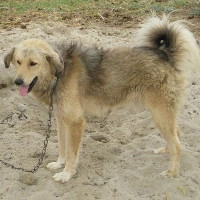
| This dog, like most molosses, is a large, heavily boned dog with a deep chest and plenty of muscle, although it is a little leaner than most Asian molosses. These dogs generally measure over 61 centimetres at the shoulder, weigh between 38.5 and 59 kilos as adults, have a large head and a thick, muscular neck. Their muzzle is slightly short but well built, with a black nose, and they have almond-shaped brown or amber eyes and medium-sized hanging ears. Bakharwal dogs have an exceptionally thick coat that comes in many colors, including tan, beige, black, white and even piebald, both to protect them from the cold in the northern mountains and from other predators. Dogs with piebald coats, or coats that have large areas of white and another color, often have naturally colored skin that harmonizes underneath. |
Temperament of the Bakharwal Dog |
| These dogs have been bred exclusively as livestock guard dogs for hundreds of years, and they take their duties seriously. The Bakharwal is a fearless and courageous guardian, effectively protecting its herd from such intimidating and dangerous threats as bears, lions and wolves. This breed is generally tolerant of people of all ages, especially family members, whom the Bakharwal considers part of its herd, but they are known for their territorial aggression towards other animals, especially other dogs. Although they are generally very affectionate and benevolent towards children, they are also big, mischievous dogs and can be a little too boisterous for the little ones. This dog has also developed to make decisions independently, creating a highly intelligent animal that tends to get bored with repetitive commands and isn't particularly interested in following orders. This can make training the Bakharwal very difficult, so strong leadership and trainer confidence are needed with this dog. |
Needs and activities of the Bakharwal Dog |
| Bakharwal dogs are known to be particularly agile and fast for a molosser breed dog. They require a fairly high level of commitment to exercise or a large backyard to roam in. They tend to prefer outdoor exercise and as they were developed to follow the nomadic Gujjar tribe, they have plenty of stamina, so you'll get your exercise too. If given enough activity and attention, these dogs generally behave well at home. If they don't get enough attention and exercise at home, however, Bakharwal dogs have become quite vocal and destructive. |
Maintenance of the Bakharwal Dog |
| he Bakharwal has an extremely dense double coat that generally only requires bathing a few times a year, but is rather prone to picking up burrs and twigs. These dogs can usually get by with one or two intensive brushing sessions a week, but it's important to make sure you brush and detangle the entire coat, not just the top layers. The density of the coat sometimes makes trimming necessary. You should also bear in mind that this dog will not thrive on a typical dog's diet. Bakharwal dogs are usually fed a combination of bread, milk and other dairy products, and generally don't digest meat well. A busy, active lifestyle should keep you from trimming the nails, but take a look from time to time to make sure the length and condition of the nails are in good health. |



 English (United Kingdom)

Comments