
 |
Uzbekistan Shepherd Dog |
|
He is not recognized by the F.C.I. |
Origin |
Uzbekistan | |
Translation |
Francis Vandersteen | |
This breed is also known as |
Torkuz
|
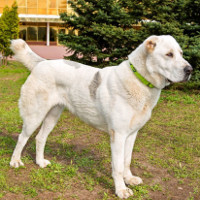
| The mighty Sarkangik is considered a subtype of the Central Asian Ovcharka in the West, although this powerful working dog from Uzbekistan is much older than the modern Russian breed. Situated at a key intersection of one of the most important trade routes in history, Uzbekistan has been a destination for many travelers, explorers, merchants and invaders since the 4th century BC, when Alexander the Great opened the famous route from Europe to Asia. later to be called the "Silk Road" by Marco Polo. The shepherds of Uzbekistan have relied on large native dogs to protect their livestock from predators for over 3,000 years, rarely interfering with natural selection and reproduction. Originally descended from the Alabai, the Uzbek sheepdog has also been influenced by other breeds, including old Persian mastiffs in the 9th century, Mongolian breeders in the 13th century and Russian ovcharkas in the 19th century, as well as dogs from Tajikistan and Iran over the last 100 years. Since these dogs are bred for hard work, resilience and personality, occasional cross-breeding is not considered to compromise the purity of the breed, but simply to broaden the gene pool and ensure the acquisition and preservation of the best possible working qualities. Alongside the Turkmen Alabai, the Uzbek Sarkangik is one of the most appreciated types and favored bloodlines in the C.A.O. community, because these dogs possess reliable temperaments and are closer to the original Asian Mastiff in terms of physical appearance than the Ovcharkas of the Russian army. In addition to its guard duties, the Torkuz Mastiff is also a regular participant in Asia's famous dog-fighting tournaments, in which the dogs' strength, courage and spirit are tested before they are allowed to breed and pass on their genes. Unfortunately, in modern times, certain European and Asian fighting breeds have become popular in Uzbekistan and are said to have reproduced in some native lines, leaving only a limited number of pure dogs. Some C.A.O. breeders regularly buy "aboriginal" dogs from Uzbekistan to enrich their strains, only to discover later that they have imported sub-standard specimens and poor examples. This is a common practice in many Eastern countries, where pure, prized dogs are kept hidden from foreigners, while charming native merchants sell them specimens of dubious ancestry and quality as the real deal. These are large, robust Molossers, well adapted to the region's harsh climate. There are two main types of Uzbekistan Sheepdog, separated by physical build and the functions they perform. The heavier variety is known as the Torkuz, which is a colossal mastiff, with a large, broad head and snout, mainly employed as a guard and fighting dog. The leaner shepherd type is called Sarkangik and is not as large as its heavier counterpart, but is just as strong and powerful, used to drive and protect flocks, rarely used for fighting. Crosses between these variants are very common, as are crosses with Turkmen, Tajik and Russian dogs. Whatever the type, the Uzbek sheepdog is an impressive working molosser, appreciated for its calm character and gentle nature around familiar people, making it a good choice for a family companion for experienced owners. Although naturally territorial and aloof with strangers, this large molosser is not at all vicious or overly aggressive, making a reliable and obedient, yet serious and intimidating watchdog. However, the breed is naturally confrontational with other dogs, so early socialization and responsible handling are of the utmost importance. The Uzbek Volkodav is generally a healthy, resilient breed, benefiting from a moderate level of exercise. Ears and tail can be seen either cultivated or in their natural state in Uzbekistan, but the majority of Sarkandjik dogs shown as Central Asian Shepherd Dogs in the West are modified to fit the standard. The coat is fairly short, but very thick and densely covered, usually a little longer during the winter months. Many colors exist, but most dogs are either white with patches of darker shades or mainly black, brown, gray or fawn with white markings. The average height is around 81 centimeters, although smaller Shepherds, as well as larger Great Danes, can be found. |



 English (United Kingdom)

Comments