
 |
Mi-Ki |
|
He is not recognized by the F.C.I. |
Origin |
U.S.A. | |
Translation |
Francis Vandersteen |
A brief presentation of the Mi-Ki |
| The Mi-ki (pronounced Mee-Kee) is a tiny dog that grows to just 28 centimeters in height and weighs around 7 kilos. They're a hairy ball of fun with a good temperament. Friendly and affectionate, they love people and get on well with strangers and children. This little dog is not intimidated by other dogs, perhaps they don't realize how small they are. They are dogs of character and personality, making excellent companions for families or single people living alone. They love to go out for walks every day and show off their impressive coats. Gathering all the compliments, they'll happily give a kiss or two to their new friends. Like many small dogs, they need a firm hand or they can become bossy and try to take over. Just because they're small, they shouldn't be exempt from training. In fact, keeping them on their toes will benefit them and, because they're so willing to please, you can teach them practically anything. Happy and balanced, they're a ball of fun and joy to have around. |
History of the Mi-Ki |
| The Mi-Ki is a rare breed of small toy dog that was developed in the 1980s. Some people believe they originated in Asia, while others consider the USA to be their birthplace. A breeder named Micki Mackin from the American Midwest has been credited with its development, using the Maltese, Papillion and Japanese Spaniel as parent breeds. There's also a hint of Shih Tzu and Yorkshire Terrier in the breeding, so it's no wonder this little dog is so attractive. Exact details of the dog's development process have not been preserved, so it's difficult to say exactly what its origins are. Their very name is a derivative of Micki Mackin, which gives more than a credible indication of acceptance of this theory. Whatever their unclear origins, the Mi-Ki is rapidly gaining ground as a desirable and lovable companion dog. Since development is still in the initial stages of reproduction, this dog is not recognized as a breed in most official dog groups and continues to struggle for acceptance worldwide. This dog has so far been unaffected by some of the genetic disorders that can haunt other pedigree dogs. Their muzzle is relatively short, which can lead to respiratory problems, but the Mi-Ki is generally healthy. Until there's an agreed breed standard, this beautiful dog doesn't come with the usual breed recommendations, as you could buy one from a puppy mill where there's no history or guarantee of health or history. The Mi-Ki is a rare breed at present, but in the future, as its breed becomes established, it will become a force to be reckoned with. |
Appearance of the Mi-Ki |
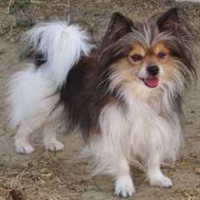
| The Mi-Ki is a small dog, delicate by nature yet fierce. Weighing only 2.7 to 4.5 kilos, they are perfect for carrying when they tire of walking. They have compact but well-proportioned bodies, short legs ending in tiny rounded paws, and long feathered tails that are often carried high over their backs. Their chest is of medium depth, while their head is shaped like a small dome with a well-defined stop. The Mi-Ki has a small but pointed muzzle leading to a scissor or level bite. Their ears are beautifully carried straight or can be dropped and are altered and can resemble wings. This dog has two types of coat, long and fine, silky and soft, with long feathers on the tail, legs and ears, as well as on the face. They also come in a smooth coat that is straight and lies close to the skin. The smooth-coated dog has no beard or moustache hair on the face. Regardless of coat style or color, but solid colors are rare, this dog excels in appearance and temperament. |
Temperament of the Mi-Ki |
| Playful, intelligent and charming, Mi-Kis have a temperament and appearance that would melt the coldest heart. They're well behaved, easy to train and don't bark much. However, they do have a funny yodeling-like meow when they talk to you and express their opinions. Their pretty coat gives the impression that they're about to go on stage, they look so neat. The long-haired version has a long moustache and eyebrows, which looks really cute. But apart from the cuteness, they're a well-behaved dog who's happy and friendly, they love strangers and children. Keen to please, Mi-Ki is easy to train as long as the training is fun and offers an occasional tasty reward. When it comes to food, this dog can be a bit fussy with his food, but offer a variety and let them work to find their dinner so they can gently mock it when they find it. The Mi-Ki is bursting with energy, but when they're tired, they like to be carried around by their owner. They love companionship and are calm and gentle. But keep them well trained and have rules of behavior so they don't think they're the little boss. |
Needs and activities of the Mi-Ki |
| The Mi-Ki is often happy to run around the house, simply checking what the family is up to. The house is like their own racetrack as they move from room to room, so they exercise normally. They like to get out every day and see the world. A walk around the neighborhood will get them admiring glances, and this happy little dog loves meeting strangers and other dogs. They're good with children too, so a walk every day is a great socialization exercise for your dog. They're fun to play with at home and will happily chase a ball or find a hidden toy. The Mi-Ki is suited to apartment living or a house with a yard where they can reign supreme. They're very people-oriented, so they'll want to know everything you do. Happy to please, they're perfect for practicing tricks. Give them a job to do at home and they'll be a happy dog. |
Maintenance of the Mi-Ki |
| Mi-Ki don't shed much and their coat is hypoallergenic, which is an added benefit for allergy-prone households. But they do need their coats brushed regularly to avoid matting. The smooth-haired variety is easier to groom than their long-haired counterparts, but your dog will love his grooming session and all your attention. Those beautiful butterfly ears should be checked regularly to ensure their health, as should their teeth, which should be brushed and checked throughout the week. A little manicure and pedicure will give your pooch that special feeling. When bathing this small dog, be sure to use a mild dog shampoo to avoid stripping oil from the coat. These oils help keep hair silky and matte-free. Mi-Ki is relatively low-maintenance, which is a blessing for such a cute dog. |



 English (United Kingdom)

Comments