
 |
Silken Windhound |
|
He is not recognized by the F.C.I. |
Origin |
U.S.A. | |
Translation |
Francis Vandersteen | |
This breed is also known as |
Longhaired Whippet
|
A brief presentation of the Silken Windhound |
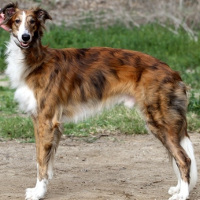
| The Silken Windhound is very similar to the Borzoi. It is basically a smaller version of the Borzoi and was developed in the USA as a greyhound. The Silken Windhound weighs between 10 and 25 kilos, which is considerably less than the Borzoi. He loves to run and chase cats and squirrels. They are highly trainable and eager to please their owners. He is generally a clean and gentle dog. He likes to be indoors, preferably on the sofa with you. The Silken Windhound loves children and other dogs. His silky coat needs weekly grooming, and he sheds but not excessively. |
History of the Silken Windhound |
| The typical sighthound is a large or giant breed, with the exception of the Whippet, which is a medium-sized breed. Barzoi breeder Francie Stull of Kristull Kennel imagined a medium-sized sighthound similar to the Whippet, but with a coat similar to that of the Barzoi. She began crossing the Borzoi with Whippets and Whippet-based Lurchers that came from strong lure currents and showed bloodlines. The first official litter of Silken Windhounds was born in 1985. The Silken Windhound was officially recognized in 1998. In 1999, the International Silken Windhound Society was formed. This club maintains a genealogical database and DNA-verified registrations. The official breed standard was adopted in 2001. The United Kennel Club recognized the Silken Windhound in 2011. The Silken Windhound is now found not only in the USA, but also in the Bahamas, Canada, Finland, Austria, Italy, Germany, Mexico, Slovenia, Japan, Sweden, Switzerland, New Zealand, Norway, the UK, South Africa, the United Arab Emirates and the Netherlands. Most European dog registries do not yet recognize the Silken Windhound as a breed. Breed clubs across Europe are starting to grow and are beginning to lobby for the Silken Windhound to be recognized as a thoroughbred. The American Kennel Club does not recognize the Silken Windhound as a breed. The International Silken Windhound Society is on the verge of having the Silken Windhound accepted into the AKC's grassroots service, the first step towards its official recognition by the AKC, which allows it to enter and participate in events. |
Appearance of the Silken Windhound |
| The Silken Windhound is a medium-sized sighthound. It has a long, silky coat and is an elegant dog. He has an athletic build and appears graceful and well-balanced. He is exceptional at running, like most sight hounds. His coat is silky and soft to the touch, and should never be profuse or woolly. It can't be so dense as to hide the graceful outline of his body. The coat can be straight, curly or wavy, although excessive curl is undesirable. Its long coat should be only moderately long so as not to impair its luring ability. The Silken Windhound is available in all colors and patterns. He naturally has short hair on his face, head, feet, front legs and hock. He has longer hair and feathers on the backs of his front legs and ears. Its coat should never be cut excessively. |
Temperament of the Silken Windhound |
| The Silken Windhound is a very friendly and affectionate companion. He loves meeting new people and should never show shyness or aggression. He's happiest when he's with his family and participating in activities with people. He's a gentle dog who's not too barky. He needs daily exercise, especially running. The Silken Windhound is a very fast dog. The Silken Windhound is independent and intelligent. It has a strong prey drive and is a sight-hunter, chasing cats and other small animals. If bred with small pets such as cats, ferrets, hamsters and guinea pigs, it will generally do well, although the Silken Windhound should not be left alone with smaller animals, even if it knows them well. Although the Silken Windhound is not naturally a shy dog, it's always important to socialize him with people and other dogs. Start early to make sure he's a well-adjusted adult. |
Needs and activities of the Silken Windhound |
| A yard is certainly an asset, as they love to run, but they'll live in a nice apartment with extra walks and outings to the local dog park. The Silken Windhound doesn't seem to have any problems in any weather. They glory and frolic in the snow, splash in puddles, run in the wind and bask in the sun. They will adapt their exercise and exposure according to the temperature outside. Don't let a Silken Windhound roam without proper fencing, as this is a Greyhound with a hunting instinct. You may run after something. This breed must be able to run, but needs a fenced-in area for safety. Silken Windhounds like to run, like all sighthounds, and should go for a walk or jog every day. If properly exercised, they will happily nap at their owner's feet or on the sofa. They need to go outside to walk and run in dog parks or large open areas, but they are not as energetic as the Border Collie or other herding breeds. This breed is a good jogging companion if the dog is well conditioned, but wait until a puppy is a year old or more before starting long, hard exercise. |
Maintenance of the Silken Windhound |
| The Silken Windhound has an elegance that requires grooming several times a week. The soft, silky texture of its coat can easily tangle, creating knots and mats if not taken care of promptly. It can be groomed with a smooth brush or a steel brush and comb. It should also be washed every eight to twelve weeks with a mild shampoo or baby shampoo. If there's excessive tangling in the hair behind his ears, sprinkle baking soda behind his ears. It prevents excessive tangles from forming. His ears should be cleaned weekly to prevent infection. Silken Windhounds generally dislike having their nails trimmed. It's important to keep to a precise schedule for nail trimming so that he gets used to it. If trimming is too demanding, nail clippers can be used. Routine dental care is also important to keep gums and teeth healthy. |



 English (United Kingdom)

Comments