Stephens Cur

He is not recognized by the F.C.I.

Origin
U.S.A.
Translation
Francis Vandersteen
This breed is also known as
Stephens Stock Mountain Cur
Stephens Stock
Stephens Stock Cur

A brief presentation of the Stephens Cur

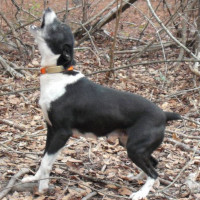
The Stephens Cur is a medium-weight scent hound weighing between 20 and 25 kilos. Originating in southeastern Kentucky from the Stephens family who created the breed, they were developed for a specific purpose: hunting squirrels and raccoons. They have strength and tenacity, and can also tackle larger game such as mountain lions and wild boar. Dedicated and loyal, this canine is also lively and affectionate with children and family members. Although it is sociable with other dogs, it should not be trusted with small animals, which it may regard as prey. Elegant in appearance, easy to train and generally happy, the Stephens Cur needs plenty of exercise. As the owner, you need to assert your leadership and dominance from the outset of your partnership to avoid any behavioral problems. This dog is only aggressive in the field, when hunting, but he needs to be socialized from his earliest days to become a calm, happy dog. His nickname "Darkie" refers to the rich, dark color of his coat, which suits him like a glove.

History of the Stephens Cur

This beautiful breed is also known as the Stephens Stock Cur. Originally a strain of the Cur group that developed from the Mountain Cur, this versatile hunting dog has mixed origins. It is thought to be descended from the dogs brought by European settlers when they arrived in the New World. Pioneers appreciated a good dog that could put meat on the table and help protect family and livestock. These early dogs were the ancestors and had been around for over 200 years. The World War was not kind to the breed, however, and by the 1940s, the Mountain Cur was almost extinct. Fortunately, four people stepped in to start restoring breeding programs and developed the Stephens Cur. These people were Hugh Stephens (hence the name of the new breed) from Kentucky, Carl McConnel from Virginia, Woody Huntsman from Kentucky and Dewey Ledbetter from Tennessee. These men organized the Original Mountain Cur Breeder Association and developed the breed. The Treeing Tennessee Brindle and Mountain View Cur were developed from the strain developed by Hugh Stephens. In 1998, the Stephens Cur was recognized by the United Kennel Club. The Stephens Cur is known as a tenacious hunter, a dog that can carry its weight and more. Thanks to its ability to feel both the ground and the wind, this dog is at home in the countryside, doing what it loves: scouring the land and hunting. The breed is to the credit of those great individuals who saved what has become a fine, exceptional dog.

Appearance of the Stephens Cur

The Stephens Cur has a rectangular body shape and a generally athletic appearance, being long and lean in form. Often weighing up to 55 pounds, it has a deep chest, a long flat back and slender but sturdy legs with rounded, well-padded paws, enabling it to move quickly in a fluid gait. Slim and elegant, the Stephens Cur has a pointed muzzle and teeth that meet in a scissor bite. With its dark, square-shaped nose and deep, large, round liquid eyes, it doesn't miss much with its alert posture and watchdog attitude. With his fine nose and eyes that continually scan the landscape, nothing escapes this devoted dog. Its arched neck, well-defined facial features and medium-sized floppy ears make it an elegant dog. The tail is set low and of medium length. Sometimes, the tail is docked by just a few centimeters. This is truly the image of the athletic hunting dog who loves to come home after a hard day's work to relax with his family.

Temperament of the Stephens Cur

The word cur once had a pejorative meaning, often given to a mangy mongrel of unknown parentage. Today, the word cur refers to a type of dog. In modern times, the Cur has gained respectability and is pedigreed or known as a purebred dog. The Stephens Cur has gained popularity for its strong work ethic as much as for its elegant appearance. This small, dark dog can sneak quietly everywhere, but once on a trail, he'll tell you all about it in a loud, melodious voice. They may be small, but they're aggressive on the hunt. Fast and furious, they are efficient hunters. But when they get home, they forget their aggression. They turn into gentle, playful and kind dogs, although you can't trust them with small furry animals. Their hunting instinct is very strong. By socializing him from an early age and using positive training methods, you get a dog you can be proud of. He is courageous, courteous and exceptional as a breed. The Stephens Cur has performed well in raccoon hunting trials. This dog is registered with the Canadian Kennel Club and the American Kennel Club. Good with children and people of all ages, it can be quite wary and reserved when visited by strangers.

Needs and activities of the Stephens Cur

The Stephens Cur is well suited to the terrain of southern Kentucky, and is a dedicated and ambitious dog on the trails. Although some dogs of this breed can be small, they have a great attitude and confidence. They make excellent walking companions, but it's best to keep them on a leash in built-up areas. Be aware that they can be independent and stubborn as soon as they catch a scent, which is why they are suited to rural areas. On the plus side, they respond well to training and are eager to please, so you can control this instinct if you train them correctly. They need a daily walk, and will always have energy to play with children. The Stephens Cur is an active dog who enjoys walks, runs, games and training, as long as these are positive activities. He can be wary of other people, especially strangers. Keep this dog busy, however, and you'll have a friendly, devoted family companion.

Maintenance of the Stephens Cur

With a short, smooth coat that suits his athletic body, little Darkie, as the Stephens Cur is affectionately known, has an enviable appearance. Weekly brushing is hardly necessary, but it's good bonding time. If your smart dog is a working dog, you may need to check his coat to make sure there are no thorns or cuts on his skin. This is an active dog who will go wherever the hunter wants him to go, no matter how difficult. That's why it's important to check his body often to make sure he's not injured and that he's in good health. The Stephens Cur doesn't need a bath; often a wipe with a damp cloth will suffice. Once in a while, when he really needs it, you can resort to a bath, but be sure to use the gentlest dog shampoo possible to avoid stripping the natural oils from the coat. These oils are necessary to protect and maintain the texture of the coat, which protects the dog from the elements. Also check his paws, as he can traverse difficult terrain, and finish with a check of his ears and eyes, and perhaps a quick trim of his nails if your active dog hasn't worn them out already. Maintenance is simple with this gentle dog.

Comments

Latest page updates

  • Telomian

    Telomian He is not recognized by the F.C.I. Origin Malaysia Translation Francis Vandersteen A brief presentation of the Telomian The Telomian is a very rare breed of dog, and the only one native to Malaysia to have been bred outside the country. They were originally bred by the indigenous people of Malaysia to combat parasites such as snakes, rats,...
  • King Wheaten -- Cavalier King Charles Spaniel X Irish Soft Coated Wheaten Terrier

    King Wheaten He is not recognized by the F.C.I. Origin Great Britain <> Ireland -> U.S.A. Translation Francis Vandersteen A brief presentation of the King Wheaten The King Wheaten is a small dog with a heart this big and a playful disposition. Borrowing the energy and soft-coated waves of the Irish Soft Coated Wheaten Terrier and the size and...
  • Spanierd -- English Springer Spaniel X German Shepherd

    Spanierd He is not recognized by the F.C.I. Origin Great Britain <> Germany -> U.S.A. Translation Francis Vandersteen A brief presentation of the Spanierd The Spanierd is a hybrid dog. Its parent breeds are the English Springer Spaniel and the German Shepherd. They have an affable personality. He's known for entertaining family and friends with his...
  • Alaskan Goldenmute -- Alaskan Malamute X Golden Retriever

    Alaskan Goldenmute He is not recognized by the F.C.I. Origin U.S.A. <> Great Britain -> U.S.A. Translation Francis Vandersteen This breed is also known as Alaskan GoldenGoldenmuteAlaskan Gold Retriever     A brief presentation of the Alaskan Goldenmute The Alaskan Goldenmute is a descendant of two great dog breeds: the Alaskan Malamute and the Golden...
  • French pointing dog Pyrenean type

    French pointing dog Pyrenean type FCI standard Nº 134 Origin France Translation Mrs. Peggy Davis Group Group 7 Pointing Dogs Section Section 1.1 Continental Pointing Dogs « Braque » Type Working With working trial Acceptance on a definitive basis by the FCI Tuesday 18 January 1955 Publication of the official valid standard Tuesday 01 August 2023 Last...
  • French pointing dog Gascogne type

    French pointing dog Gascogne type FCI standard Nº 133 Origin France Translation Mrs. Peggy Davis Group Group 7 Pointing Dogs Section Section 1.1 Continental Pointing Dogs « Braque » Type Working With working trial Acceptance on a definitive basis by the FCI Monday 17 January 1955 Publication of the official valid standard Tuesday 01 August 2023 Last...
  • Vucciriscu

    Vucciriscu He is not recognized by the F.C.I. Origin Sicily Translation Francis Vandersteen En français, cette race se dit Vucciriscu Diese Norm ist in deutscher Sprache sichtbar Vucciriscu En español, esta raza se dice Vucciriscu In het Nederlands, wordt dit ras gezegd Vucciriscu This breed is also known as Sicilian Vucciriscu Sicilian Butcher...

© 2026 Groupe Milouchouchou ASBL. Tous droits réservés. En savoir plus

Protected by Copyright01
We use cookies

We use cookies on our website. Some of them are essential for the operation of the site, while others help us to improve this site and the user experience (tracking cookies). You can decide for yourself whether you want to allow cookies or not. Please note that if you reject them, you may not be able to use all the functionalities of the site.

Ok