
 |
Welsh Hound |
|
He is not recognized by the F.C.I. |
Origin |
Great Britain, U.S.A. | |
Translation |
Francis Vandersteen | |
This breed is also known as |
Welsh Foxhound
|
A brief presentation of the Welsh Hound |
| As its name suggests, the Welsh Hound is a hunting dog with a strong attachment to Wales. A true hunting dog, the Welsh Hound is a working breed whose purpose was to hunt foxes. But this is not the kind of hunting that farmers do to control crop-damaging vermin, as much as fox hunting. It used to be common to see packs of hounds crowding at the heels of a fox, followed by runners. But in the 20th century, this type of hunting became socially unacceptable and illegal. This leaves our friend the Welsh hound as an aimless dog. Their lively nature and need to socialize in packs can present a considerable challenge to an inexperienced owner. This is not a breed that sits around on a sofa. Woe betide the owner who fails to exercise and entertain their Welsh Hound properly. A dog is likely to find its own amusement in barking, chewing or digging. That said, although the breed is rare, the Welsh Hound is gaining in popularity, particularly in the USA. The Welsh Hound was recognized by the United Kennel Club on January 1, 2006. |
History of the Welsh Hound |
| The Welsh Hound has been around for two or three centuries, but despite its relatively recent origins, the exact nature of its heritage is the subject of much debate. There are two main theories on the ancestry of the Welsh Hound. The first concerns the Celtic Hound, a dog that has existed in Wales since the 5th century. It is thought that Celtic dogs were crossed with a smooth-coated breed of dog, probably related to the Saint-Hubert dog. These crosses were mated with English hunting dogs to create the breed we know as the Welsh Hound. However, there is another argument that the Welsh Hound is a direct descendant of a breed that no longer exists, the Segussi. At this point, anyone interested in further research into the Welsh Hound finds themselves going round in circles, since Segussi's main claim to fame is as the foundation of the Welsh Hound. Whatever the truth of their origin, the Welsh Hound reached a peak of popularity in the 19th century. Their history is similar to that of foxhunting. As the sport fell into disuse and became illegal, the numbers of this dog dwindled. |
Appearance of the Welsh Hound |
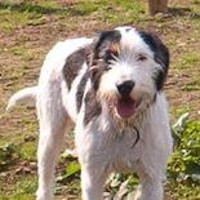
| The appearance of a Welsh Hound is similar to that of a Foxhound, but instead of a smooth covering, it has a stiff, medium-length coat. As befits a dog that moves quickly over rough terrain, the Welsh Hound has an athletic yet robust build. Like many dogs bred for work, they have a good-length muzzle, allowing them to breathe easily and pant as required by the demands of rigorous exercise. They have floppy ears that hang over the cheek, but do not have the excessive length of some scent hounds. The Welsh Hound is a robust dog with a straight tail that is carried high but never curled. The tip of this tail is a landmark for hunters to follow. Their coat is coarse, offering protection from the ferns and broom that the dog may encounter while hunting. That said, while a coarse coat is the norm, the occasional Welsh Hound with a smooth coat is always welcome. The most typical coloring is white with patches of red, fawn, black or bronze. |
Temperament of the Welsh Hound |
| When a dog is created as a working breed, the most successful dogs are chosen for selective breeding. This accentuates the traits considered desirable in the breed. In the case of the Welsh Hound, these include high energy, teamwork and a loud bark. The typical Welsh Hound is therefore happiest when part of an extended guard dog family in a pack. They are a happy dog and largely accept whatever circumstances they find themselves in, provided they receive plenty of exercise and mental stimulation. As sociable dogs, they don't do well if kept alone or confined for long periods. Their nature is such that they need constant social interaction and expect to be active most of the day. The other implication of their natural love of hunting is that they tend to have a stubborn streak. When they're on the trail of an interesting scent, they're likely to devote themselves fully to it and go where the will takes them. This can make training a challenge, especially for an inexperienced owner. On the positive side, the Welsh Hound is not an aggressive breed. It is a sociable dog and thrives in the company of other dogs, which is great for those who have the opportunity to have a large household of dogs. |
Needs and activities of the Welsh Hound |
| The Welsh Hound is a highly intelligent dog, but it's also very energetic and requires plenty of activity every day. These dogs are social and like to spend time playing with other dogs. Daily visits to the local dog park are a great way to run and play with other dogs if they don't have another dog at home. Dog meets also work well if you don't have a dog park nearby. The Welsh Hound is not a good choice for apartment living, as they are very vocal and bark incessantly when left alone for too long. They will also become destructive if not given the opportunity to stretch their legs. |
Maintenance of the Welsh Hound |
| The Welsh Hound has a dense, shedding coat, which means it's not a hypoallergenic breed and needs regular grooming to keep it in good health. Their coat requires weekly brushing with a smooth brush or even a natural bristle brush. A metal comb may be needed to remove tangles from their medium-length coat. They shed seasonally. During these periods, be sure to brush them more often to prevent hair from gathering around the house. They have a hard coat that should repel dirt, so they shouldn't need to be bathed often. When bathing, be sure to use a hard coat shampoo and don't over-condition their coat, as this will soften it too much. Being a dog with hanging ears, make sure you clean their ears every week. Dry their ears carefully to avoid infection. Trim the hair between the pads of their feet and trim their nails if necessary. |



 English (United Kingdom)

Comments