 |
Antebellum Bulldog |
|
He is not recognized by the F.C.I. |
Origin |
U.S.A. | |
Translation |
Francis Vandersteen | |
This breed is also known as |
Altamaha Plantation Dog
|
A brief presentation of the Antebellum Bulldog |
| The Antebellum Bulldog is a newcomer to the breed stakes. They were developed recently as a recreation of Bulldogs that were found in the rice plantations of the Altamaha River in Georgia before the Civil War. The Antebellum is described as a working dog, a companion dog and they happily accept both roles. They are generally white or white with spots, with a solid body and massive head. They have a loyal character and although they have a tenacious sequence, they can be trained and socialized to become great dogs. Although they are loving and very loyal to their family members, they can have problems with other pets. They do best in a one-dog family to avoid behavioral problems. Training requires an experienced owner to overcome their tendency to try to dominate. Fair and firm handling with consistency is required, and the Antebellum must respect its owner if it is to thrive and learn. |
History of the Antebellum Bulldog |
| When the plantation system took over the economy of the South, massive estates were mainly operated by slaves. Wild hogs and cattle would feed on these crops, resulting in massive losses for plantation owners. Owners and workers risked injury when they tried to drive these beasts away. The Bulldog was therefore the solution, and was employed in the southern states of the USA during the 1600s. The Altamaha River became the leader of the rice-producing colonies, although after the Civil War, plantations suffered and other industries such as timber took over. This reduced the need for Bulldogs, and they all but disappeared from Altamaha, with only a few kept by locals for hog hunting and protection. By the 20th century, Southern Bulldogs such as those found on the Altamaha River were all but extinct. Extinction loomed for the breed after the end of the Second World War. Many attempts were made to restore the breed, but it wasn't until Cole Maxwell became interested in the breed that the largest Bulldog capable of sniffing out a pig was developed. He worked with Animal Research Foundation to produce a dog that could withstand the Georgia heat and had the physical capacity to work long, hard hours. This new breed they called the Antebellum Bulldog. Numerous breed crosses were necessary to obtain the large white Bulldog with the longer nose. The breed remains rare today, although its popularity is slowly increasing. There are around a hundred Antebellums in existence, and the future of this amazing dog remains uncertain. For now, it's the involvement of the Maxwell family that is driving the progress of this new breed. |
Appearance of the Antebellum Bulldog |
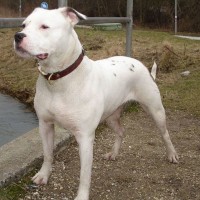
| The Antebellum Bulldog resembles the American Bulldog in appearance, but is larger, with a longer nose and a bigger, more massive head. The longer muzzle helps prevent the respiratory problems Bulldogs often have. The Antebellum is strong and long-bodied, with a muscular build and can weigh up to 68 kilos. This is a serious breed of dog. Large, well-padded legs, a slightly wrinkled face with a slight jowl and high folded ears give them an impressive if not fearsome appearance, but they're a gritty, tolerant breed. Their coat is short and soft underneath, and is generally white or white with a few spots. The Antebellum has small, round eyes that lack nothing, and are usually brown but they can have one or both eyes that are blue in color. |
Temperament of the Antebellum Bulldog |
| Born as a working dog, the Antebellum Bulldog has the energy of an athlete, but has been bred to have fewer of the aggression problems often found in this type of breed. They are incredibly devoted to their family, although they tend to bond strongly with one person. However, this trait doesn't prevent them from forming strong bonds with all members, as they are protective and affectionate towards all. They would sacrifice their lives to protect you without hesitation. Socialization is important from birth to teach them to be discriminating protectors. The Antebellum may take some time to warm up to a new person, but most will end up being quite accepting. This tough dog is actually quite the cuddly puppy and loves nothing more than a cuddle. If you think you can handle 45+ kilos of muscle snuggled up against you, then you're well suited to this breed. They make great pets when raised correctly, although as a puppy, their weight and enthusiasm can weigh down a young child. Antebellum Bulldogs tend to have problems with other pets, including the cats they've been raised with. They can be aggressive with dogs of the same sex or over territorial issues. Be aware that this dog will chase other non-dog animals and attack and kill them. Training and socialization are essential and can reduce these problems, but some are never entirely reliable. |
Needs and activities of the Antebellum Bulldog |
| The Antebellum Bulldog is an active breed of dog, requiring plenty of hard exercise every day. They have great stamina and enjoy long walks, which are ideal for socializing and learning good behavior. They need an outlet for their energy or destructive behavior, hyperactivity, excessive barking and aggression can occur. The Antebellum loves a large, secure yard where they can run around safely in an enclosed space. An apartment won't have enough space for this dog, but a house with a large yard is fine. This breed tends to have a dominant character and will question authority, so it needs a strong, decisive and consistent leader it can respect. This trait, combined with a tendency toward stubbornness, can make training the Antebellum difficult. An experienced owner who can maintain authority is the best owner of this powerful but devoted dog. |
Maintenance of the Antebellum Bulldog |
| Antebellum Bulldog care is very simple, just a weekly brushing and rubbing with a soft, damp cloth will keep this short coat shiny. Although their coats are short, they can be heavy excretors, so weekly brushing will help eliminate those loose hairs. Routine matters such as brushing teeth and trimming nails take a few minutes. It's important to check your dog's ears, as this is an area where infection can spread and is difficult to move. Never prick anything inside the ear, simply wipe gently with a damp cloth to remove dirt and wax build-up. Other than that, the antebellum is a low-maintenance, ready-to-pamper subject. |



 English (United Kingdom)

Comments