
 |
Fennec |
|
He is a wild animal |
Origin |
Sahara | |
Translation |
Francis Vandersteen | |
This breed is also known as |
Sand Fox
|
| The possession of this animal is not authorized |
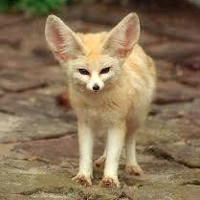
| The Fennec (Vulpes zerda), also known as the Sand Fox or Saharan Sand Fox, is a small fox of the genus Vulpes and family Canidae. The fennec has very long ears (up to ten centimeters long), a fairly long nose, long whiskers and a relatively long, flat, bushy tail. It's nicknamed the pocket fox because of its tiny size. In fact, it's the smallest canid on Earth. It measures between 20 and 40 cm. Its average weight is 1.7 kg, compared with 6 kg for most other fox species. Its average height is around 20 cm (with around 15 cm more when ears are added). Its coat ranges from pale brown to almost white, and it closely resembles the dwarf fox to which it is related, apart from its erect ears, each as large as its face. Its tail is 18 to 30 cm long. At night, the fennec's long ears enable it to hear the smallest noises made by its prey, so it doesn't have to search far and wide in the desert. The fennec is a formidable hunter, cunning and swift. It is perfectly adapted to the arid climate, and its large, highly vascularized ears, compared with those of a fox, are a cooling factor. The hair under its paws prevents it from slipping on the sand, allowing it to approach its prey in silence. During the day, the surface temperature of the sand is 70°C. But the fennec can dig down to a depth of two meters, bringing the temperature down to around 30°C. The plantar surface of the fennec is covered with thick hair that protects it from the heat of the sand. The fennec digs very quickly and, when pursued, hides in the sand. Its burrow is lined with soft materials such as fur and feathers. The fennec generally sleeps during the day and comes out at night to search for food. When a sand wind picks up, young fennecs seek shelter with their parents, who sometimes hide them under their long, bushy tails. Like the fox, the fennec yelps or barks, i.e. it utters a series of small cries or growls, but in the event of danger, it is capable of producing a more intense sound. The fennec is omnivorous. It feeds mainly on mice, small birds, lizards, sand fish (Scincus scincus) or insects, and supplements this diet with fruit. The fennec will sometimes drink from waterholes, although this seems unnecessary. The ability of fennecs to go without water for indeterminate periods of time is a result of their adaptation to their desert habitat and their diet - some insects on the fennec's menu are 70% water. What's more, the fennec's renal system concentrates urine far more than that of humans, resulting in maximum waste elimination and minimum water loss. The fennec is monogamous, and pairs remain together for life. The breeding season takes place between January and February. The female gives birth to a litter of 1 to 6 young between March and April, after a gestation period of 50 to 53 days. The cubs are blind at birth, opening their eyes after 2 weeks. They start playing in the den at 4 weeks, and go outside to play after 5 weeks. They are cared for by both parents. The young reach sexual maturity between 6 and 9 months, when they reach adult size. Lifespan in the wild is 10 years. The fennec inhabits the deserts of northern Africa, the Qattara Depression and as far south as Saudi Arabia. Most fennecs are found in Algeria, where they are the mascot of the Algerian national soccer team. The fennec's habitat is a burrow, dug in the sand or in small caves. It can be found on the steppes. |



 English (United Kingdom)

Comments