
 |
Sheltie-Kee |
|
He is not recognized by the F.C.I. |
Origin |
Great Britain <> Germany -> U.S.A. | |
Translation |
Francis Vandersteen |
A brief presentation of the Sheltie-Kee |
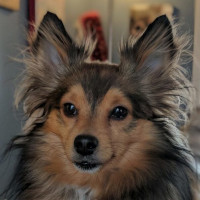
| The Sheltie-Kee is a 50/50 mix between the German Wolfsspitz / Keeshond and the Shetland Sheepdog. It's a breed that combines the outgoing, friendly personality of a Nordic breed with the intelligence, hard work and obedience of a herding breed. When these two aspects are combined, the result is the Sheltie-Kee, a dog that gets on well with everyone, is extremely intelligent and has an extremely high energy level. The Sheltie-Kee's appearance varies according to which of the parent breed's genes are strongest, but the average appearance consists of a thick, long-haired coat, large ears, a curled tail and bright, intelligent eyes. This is a small to medium-sized breed, between 11 and 20.5 kilos, which, although very adaptable, will need plenty of exercise and constant, firm training that makes it clear what is expected of it. If you're looking for an active companion dog that will keep you on your toes, but is friendly and affectionate towards all humans and animals, the Sheltie-Kee may be just the dog for you. Bear in mind that this is a vocal dog that sheds a lot, so be prepared for frequent, noisy conversations, and get yourself a really good vacuum cleaner. |
History of the Sheltie-Kee |
| The Sheltie-Kee is a relatively new hybrid breed that originated in the USA in the early 2000s. It is a blend of the Shetland Sheepdog and German Wolfsspitz / Keeshond breeds, both of which have rich and interesting histories. To learn more about the Sheltie-Kee and why it was created, we can look at the history of the parent breeds. From their origins, we can learn which dogs are part of the Sheltie-Kee's ancestry and which traits will be most predominant in its personality. |
A little of the Shetland Sheepdog |
||
| The Shetland Sheepdog is a breed made up of dogs such as the Pomeranian, the larger Collie and the Spaniel King Charles. It has gone by many different names in the past, such as “Fairy Dog” and “Miniature Collie”, but its current name comes from its place of origin, the Shetland Islands. Being a small region, it's not surprising that the locals wanted little dogs with big personalities that could help them guard sheep and houses. Visitors to the Shetland Islands naturally fell in love with these magnificent dogs and brought them back as souvenirs to their respective countries, and so the Shetland Sheepdog toured the world. Eventually, the breed reached the United States, where the American Kennel Club accepted it as an official breed in 1911. Since then, the Sheltie has been used as a show dog, farm worker and companion animal. | ||
 |
||
| Standard of the Shetland Sheepdog |
A little of the German Wolfsspitz / Keeshond |
| Best known for its spectacular spots and fluffy coat, the German Wolfsspitz / Keeshond is quite astonishing. Created in the late 1700s, the German Wolfsspitz / Keeshond originated in Amsterdam. These Dutch dogs earned their living riding the barges that shuttled up and down the Rhine, acting as watchdogs and companions for the barge captains. While their frequent travels made them famous in the Amsterdam area, the German Wolfsspitz / Keeshond's popularity really took off after the political unrest in Holland at the end of the 18th century. These little dogs became something of a symbol of the patriotic movement, but when the patriots were defeated, the German Wolfsspitz / Keeshond went down with them and almost died out. Fortunately, the breed was saved in the 1920s when a baroness took an interest in this unique breed and restored it to its former glory. A few years later, the American Kennel Club accepted the German Wolfsspitz / Keeshond as an official breed and, since then, German Wolfsspitz / Keeshond are exhibited and live as companion dogs. |
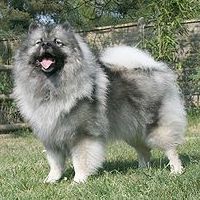 |
| Standard of the German Wolfsspitz / Keeshond |
Appearance of the Sheltie-Kee |
| As the Sheltie-Kee is a hybrid breed, its appearance will vary considerably, even within the same litter. The Sheltie-Kee combines the characteristics of both the Shetland Sheepdog and the German Wolfsspitz / Keeshond. Its coat is thick, long and double-layered, with a tendency to shed seasonally throughout the year. This magnificent coat can come in a number of different colors and will become particularly thick around the neck and tail, as in the German Wolfsspitz / Keeshond. As for the tail, the Sheltie-Kee can have either a full tail that curls over its back, or a feathered tail that resembles that of the Sheltie. Whichever of the breed's genes is stronger, the Sheltie-Kee has large, upright ears and brilliant brown eyes that reveal its intelligence. |
Temperament of the Sheltie-Kee |
| If you're looking for a dog that sees the bright side of every cloud and loves to play with anything that moves, then the Sheltie-Kee may be the breed for you. This playful dog is full of energy and never seems to have a bad day. Combine the energetic nature and intelligence of the Sheltie with the outgoing, free-spirited personality of the German Wolfsspitz / Keeshond, and you've got a fun breed full of surprises. They're eager to please their owners, which makes training very easy and, thanks to their quick wit, the Sheltie-Kee quickly learns new tricks. This is both a good thing and a bad thing, as this same intelligence can sometimes get the Sheltie-Kee into trouble. Because of its high energy, playful nature and natural herding abilities, this hybrid may have a habit of herding animals or children smaller than itself; it will also tend to be very noisy, whatever the situation. That's why it's important to start socializing and training at an early age, so that your Sheltie-Kee can learn how to behave and act around others. |
Needs and activities of the Sheltie-Kee |
| Combining the German Wolfsspitz / Keeshond's love of walks with the Sheltie's sheer adoration of running, you can be sure that the Sheltie-Kee will be a ball of energy who needs plenty of physical activity to keep out of trouble. Activities that can provide excellent training for this breed include a spirited jog, a long walk, a visit to the dog park, obedience training and a game of fetch in the garden. Training will actually be a huge benefit for this dog, as it is a working breed that loves to perform tasks for its master. By teaching him tricks and exercising his mind, the Sheltie-Kee will be much happier than he would be with one or two walks a day. Because of its high energy level, this breed needs a living space where it can get plenty of exercise. |
Maintenance of the Sheltie-Kee |
| Thanks to the Sheltie-Kee's thick, luxuriant coat, a fair amount of brushing will be needed to minimize shedding and avoid knots in the fur. Grooming the coat at least three times a week with a wire comb and pin brush should be ideal to help your Sheltie-Kee look and feel its best. In addition to regular brushing, it's also important to trim your dog's nails every two weeks and clean his ears once a month, to keep them healthy and free from irritation or infection. The Sheltie-Kee should only be bathed every two months or so, as it doesn't give off unpleasant odors. Dental care, such as tooth brushing or special dog treats, is another good hygiene habit you can practice with your dog. |



 English (United Kingdom)

Comments