
 |
Sheltie Tzu |
|
He is not recognized by the F.C.I. |
Origin |
Great Britain <> Tibet -> U.S.A. | |
Translation |
Francis Vandersteen |
A brief presentation of the Sheltie Tzu |
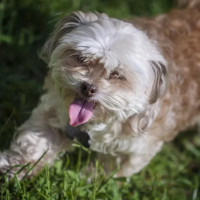
| If you like small furry dogs, you'll love the Sheltie Tzu. This designer dog is a cross between a Shetland Sheepdog and a Shih Tzu. They generally weigh between 7 and 11 kilos and measure between 25.5 and 40.5 centimeters. They are excellent family dogs who love children and other pets, including cats. They are generally easy to train, but can be difficult to house-train, so you need to be consistent and patient. Their coat can mat easily and they need to be brushed often, but they don't shed much and are very healthy dogs that can live into their teens. |
History of the Sheltie Tzu |
| Since the Sheltie Tzu is a newly conceived breed, you need to look at the history of its parent breeds. |
A little of the Shetland Sheepdog |
||
| The Shetland Sheepdog originated in Scotland's Shetland Islands in the 1800s, from the King Charles Spaniel, Northern Spitz, Pomeranian and Border and Scotch Collies. They were bred to herd sheep, horses and other farm animals, but others preferred to keep these gentle-natured dogs as pets. Before 1917, members of the British navy brought the Shetland Sheepdog back to England after traveling to the Shetland Islands for training. They arrived in the United States in 1908, but were not recognized by the American Kennel Club until three years later. Today, the Shetland Sheepdog is the 24th most purchased breed in the United States. | ||
 |
||
| Standard of the Shetland Sheepdog |
A little of the Shih Tzu |
| The Shih Tzu has been around since the Tang dynasty, when it was bred in China as a companion and guard dog for royal families. They are friendly, alert dogs that don't need much exercise but do require intensive grooming. They were bred from the Tibetan mountain dog, the Pekingese and the Lhassa Apso and date back to the sixth century. They quickly became popular with the common people, but almost disappeared during the Chinese revolution. Only a handful of Shih Tzus remained, from which the modern Shih Tzu is descended. The breed began to become popular in other countries such as England, Norway and the United States in the 1900s, but was often confused with the Lhasa Apso, which closely resembles the Shih Tzu. It wasn't until 1938 that standards were established to distinguish these two breeds. However, they were not recognized by the American Kennel Club until 31 years later, in 1969. The breed is now the 20th most popular in America. |
 |
| Standard of the Shih Tzu |
Appearance of the Sheltie Tzu |
| The Sheltie Tzu is a small, furry dog with a round head, floppy ears and an alert expression, and its muzzle can be short or long, depending on which parent your dog is named after. Most have medium to long coats that are silky, dense, straight and soft. They can have just about any color combination, such as black and white, brown and black, white and chocolate, tan and red, white and blue, silver and tan, or any combination of these colors. They are small dogs, usually between 25.5 and 40.5 centimeters, with black noses and brown or blue eyes. |
Temperament of the Sheltie Tzu |
| Both parent breeds are adorable, friendly dogs that get on well with children and other pets. They even enjoy playing with cats and other small pets like rabbits and guinea pigs. However, they should not be left alone with young children or pets. The Shih Tzu breed has potty training problems, so your Sheltie Tzu may be difficult to train. It's essential that you use positive reinforcement and be consistent with training from the outset. This breed is intelligent and alert, but can be stubborn. Although they love attention, they don't seem to be afraid of being alone, so you don't have to worry about separation anxiety. |
Needs and activities of the Sheltie Tzu |
| The Sheltie Tzu loves to play and run as much as the next dog, but can sometimes be a bit lazy. In fact, this breed tends to become overweight if it doesn't get enough exercise. It's recommended that your Sheltie Tzu gets at least 45 to 60 minutes of activity a day. This might involve running in a fenced yard, chasing other dogs in a dog park, taking a few brisk walks around the neighborhood, playing a long game of fetch or even taking a hike in the woods. This breed can also enjoy herding, agility or obstacle courses. |
Maintenance of the Sheltie Tzu |
| Grooming your Sheltie Tzu can be a chore, as the double coat of the Shetland Sheepdog and the long silky coat of the Shih Tzu mean that their coats tangle easily and are difficult to brush. You need to use the right tools, including a stainless steel comb, a detangling tool and a high-quality bristle brush that will penetrate their thick undercoat. The best thing to remember is that if you brush your dog often enough, the hair won't get damaged. Many Sheltie Tzu owners have their dogs professionally groomed and keep their coats short to facilitate maintenance. Trim your hybrid's nails every two weeks and brush its teeth every day if possible. This dog's ears should also be checked regularly for moisture build-up; keep them dry so that yeast and bacteria don't find refuge in the warm ear canal. |



 English (United Kingdom)

Comments