 |
Shiba Pin |
|
He is not recognized by the F.C.I. |
Origin |
Japan <> Germany -> U.S.A. | |
Translation |
Francis Vandersteen |
A brief presentation of the Shiba Pin |
| The Shiba Pin is a lovely combination of the Miniature Pinscher and the Shiba. Both breeds are small, so your Shiba Pin will also be a small dog. In fact, these dogs generally stand no taller than 38 centimeters and weigh around 9 kilos on average. Although they are small dogs, they are very brave and will try to protect you and your family from any danger. This breed loves children and other animals, but they can be snippy if frightened or frightening, so they need to be supervised when around small children. They can be difficult to house-train, so you need to be strict and patient. |
History of the Shiba Pin |
| As the Shiba Pin hasn't been around very long, it's best to look at the history of the Shiba and the Miniature Pinscher. |
A little of the Shiba |
||
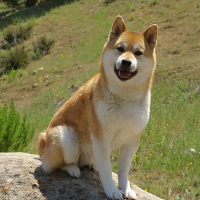
| The Shiba was developed in Japan in 7000 B.C. from the Spitz to flush out birds and other small game, and was sometimes used to hunt wild boar. Originally, there were three sizes of Shiba. The large size is now called the Akita, the medium size is known as the Kai, Shikoku, Hokkaido or Kishu, and the small size is the Shiba. Although they were not known as Shiba until the late 1920s, they have always been the same dog. Japan named the Shiba a natural product under the Cultural Property Law because of its hunting abilities, and it was very popular. However, they almost became extinct after the Second World War due to distemper. Fortunately, many soldiers brought Shiba back to the United States and built up a new stock. They were recognized by the American Kennel Club in 1992 as the 44th most common dog in America. | ||
 |
||
| Standard of the Shiba |
A little of the Miniature Pinscher |
| The Miniature Pinscher originated in Germany over 2,000 years ago, and although it resembles the Dobermann Pinscher and shares its name, it is not related. They were bred from German Pinschers, Terriers, Dachshunds and Italian Greyhounds to get rid of rats and other vermin in stables and farms. In the late 19th century, the Pinscher Klub was developed in Germany, but was later renamed the Pinscher-Schnauzer Klub. In the early 1900s, the Miniature Pinscher was shown at the Stuttgart Dog Show, and 19 years later arrived in the United States. The American Kennel Club accepted the breed into its club in 1925, and the Miniature Pinscher Club of America was founded in 1929. Today, the breed is the 68th most popular dog breed in the United States. |
 |
| Standard of the Miniature Pinscher |
Appearance of the Shiba Pin |
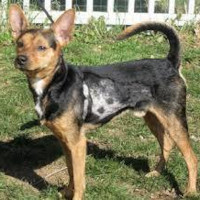
| This breed is small and hairy, with large, pointed ears that are usually erect but can also hang down. It has a short to medium coat that can be a variety of colors, including gray, piebald, cream, fawn, red, white, sable, black, chocolate, brindle, or a mixture of these colors. Although small, they have long legs and a long tail that can curl over the back or hang down, depending on the dog's mood. They are a sturdy breed with a stocky body, but should be handled with care and supervised around children. |
Temperament of the Shiba Pin |
| Both the Miniature Pinscher and the Shiba are friendly, outgoing breeds that love to play and spend time with their families. However, they are aloof with strangers and need to be socialized early and introduced to your guests. The Shiba Pin is an intelligent dog who learns quickly, but can be a little stubborn when it comes to potty training, so you need to be patient and follow the rules. As long as your dog receives sufficient physical and mental stimulation and is properly trained, he shouldn't have any problems with separation anxiety. |
Needs and activities of the Shiba Pin |
| The Shiba Pin needs around 45 to 60 minutes of exercise a day to stay happy and healthy. Dogs that don't get enough physical and mental stimulation can become bored and end up with behavioral problems. Some may even become aggressive. Your Shiba Pin is good at many different sports, such as flyball, agility training and hunting. However, he'd also love to play with other dogs at the local dog park, run and swim at the beach, learn new tricks, go for walks or even hike. If you have a fenced-in yard, your Shiba Pin will also enjoy playing in the yard for a few hours a day. |
Maintenance of the Shiba Pin |
| Your Shiba Pin should be brushed thoroughly at least three or four times a week to prevent excessive shedding and maintain a healthy coat and skin. You can bathe your dog when necessary, but not too often as this can dry out the skin. If your dog has a thick coat like the Shiba, you may need to use a plucking tool or metal comb to reach the undercoat. You'll also need to clean your dog's teeth at least once a week to prevent dental disease. Trim your dog's nails, if necessary, with nail clippers. |



 English (United Kingdom)

Comments