 |
Silkyhuahua |
|
He is not recognized by the F.C.I. |
Origin |
Australia <> Mexico -> U.S.A. | |
Translation |
Francis Vandersteen |
A brief presentation of the Silkyhuahua |
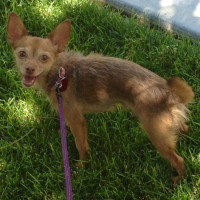
| The Silkyhuahua, also known as the Silky Chi, is a toy-sized designer dog, a cross between a purebred Australian Silky Terrier and a purebred Chihuahua. They weigh between 2.5 and 4.5 kilos and generally reach a height of 25.5 centimeters. They have a thick, silky, double coat. Common colors are cream, white, black, salt-and-pepper, gray and brown. They are lively, affectionate little dogs that make excellent companions, but they can be stubborn and aggressive, so early socialization and training are important. These dogs are not suitable for families with young children or who leave their dogs alone for long periods. Silkyhuahua need attention and companionship, and will let you know by barking or digging if they don't get enough. They are lively dogs that are moderately easy to groom. |
History of the Silkyhuahua |
| The Silkyhuahua is a designer breed developed by crossing an Australian Silky Terrier and a Chihuahua. |
A little of the Australian Silky Terrier |
||
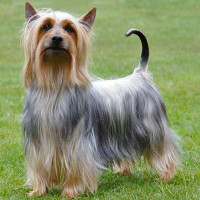
| The tenacious Australian Silky Terrier was born in Australia in the 1890s. This breed was developed as a companion dog, but was also very good at killing vermin. It was developed by crossing native Australian Terriers with imported Yorkshire Terriers. Two different standards were established - one in Sydney in 1906 and the other in Victoria in 1909 - but these were later consolidated into a single standard in 1926. Originally, they were called Sydney Silky Terriers, but in 1955 they were renamed Australian Silky Terriers. They arrived in the United States with the American soldiers who were based in Australia during and after the Second World War. It was here that they became known as Silky Terriers. They were recognized by the American Kennel Club in 1955. | ||
 |
||
| Standard of the Australian Silky Terrier |
A little of the Chihuahua |
| Chihuahuas are the world's smallest breed of dog, but probably the biggest in personality. Named after the Mexican state of Chihuahua, they are thought to be descended from an ancient breed known as the Techichi. Toltec sculptures dating from the 9th century AD depict a dog similar in appearance to the Chihuahua. Another theory is that small hairless dogs from China were brought to Mexico by Spanish traders. They were crossed with small indigenous dogs. The Aztecs would have raised and sold these small dogs as food. They were also used as hot-water bottles for the sick. They were brought to the United States by American tourists in Mexico. There are two varieties: the smooth-haired, short-haired Chihuahua and the long-haired, long-haired Chihuahua. The breed was registered by the American Kennel Club in 1904. |
 |
| Standard of the Chihuahua |
Appearance of the Silkyhuahua |
| The Silkyhuahua, also known as the Silky Chi, is a designer dog and is a cross between a purebred Australian Silky Terrier and a purebred Chihuahua. Common colors are cream, white, black, salt and pepper, gray and brown. They are small dogs, weighing between 2.5 and 4.5 kilos and generally reaching a height of 25.5 centimeters. They have a thick, silky double coat. Coat length depends on the parent breed your dog is most inspired by: the Australian Silky Terrier has a long, smooth coat, while the Chihuahua can have a short or long coat. Silkyhuahuas have almond-shaped brown eyes with an alert, curious expression, and ears that can be floppy or pricked. They have short legs and a long tail. |
Temperament of the Silkyhuahua |
| The Silkyhuahua is a tiny but dynamic little dog that is friendly and affectionate, and loves to be with its family. These dogs are best suited to families with older children, as the Silkyhuahua can snap if treated roughly. These dogs will get along with other pets in the home, but early socialization and training will be essential. Their hunter ancestry means they will pursue other dogs that can be considered prey. Their size means they can't do much damage, but surprisingly, they make good watchdogs. This breed will not be happy if left alone for long and will develop destructive habits such as digging and barking. It's best suited to a home where there's often someone at home, and to owners who take their dog out with them. They can be difficult to train because they're a bit stubborn, especially when it comes to potty training. Plenty of rewards and praise will pay off in the end. They are lively, energetic dogs who love to take part in all activities. |
Needs and activities of the Silkyhuahua |
| Although a toy breed, the Silkyhuahua is a lively, energetic dog that needs daily exercise. Even if he doesn't need a lot of exercise, activities that stimulate him physically and mentally will help him behave better. He'll love walks around the neighborhood, to the dog park or the beach. Keep him on a leash along the way to prevent him from attacking another dog or bird. Your dog will love participating in dog sports or playing games with you at home. He'll also be more than happy to accompany you in your daily activities. These dogs will adapt well to apartment living, provided they get daily outdoor exercise. They are sensitive to heat and cold, so be careful not to exercise them in high temperatures in summer, or let them get too cold in winter. |
Maintenance of the Silkyhuahua |
| Weekly brushing should be more than enough to keep your Silkyhuahua looking its best. However, this will depend on whether your dog has short or long hair. If they are long, brushing may need to be increased to twice a week to prevent tangling. Longer coats may also need trimming from time to time. The Australian Silky Terrier is hypoallergenic while the Chihuahua is not, which may depend on which parent breed your dog is most inspired by. In any case, these dogs are not prone to excessive shedding. They also don't have a strong dog smell, so they don't need regular bathing. Try to brush your dog's teeth every day to keep them healthy, and check his ears for dirt. Nails should be trimmed if necessary. |



 English (United Kingdom)

Comments