 |
Ski-Collie |
|
He is not recognized by the F.C.I. |
Origin |
U.S.A. <> Great Britain -> U.S.A. | |
Translation |
Francis Vandersteen |
A brief presentation of the Ski-Collie |
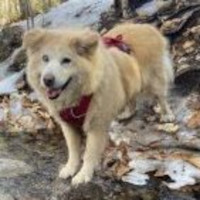
| The Ski-Collie is a hybrid of the American Eskimo Dog and the Collie Rough. This hybrid mix combines two pure breeds that have both been bred for agricultural/breeding tasks in their respective countries. Both parent breeds bring intelligence, gentleness, love, protection and loyalty, resulting in a hybrid that will make an excellent watchdog as well as a loyal and affectionate pet, capable of slipping into your heart and life easily and quickly. And, although they don't necessarily agree, they're not really meant to be on your lap, but will happily snuggle up to you on the sofa or in your bed when you want them to. |
History of the Ski-Collie |
| The Ski-Collie is a hybrid of the American Eskimo Dog and the Collie Rough. Little information is available on this hybrid, so we'll have to glean its history from that of its parent breeds. Since there is no information on where and when the hybrid was developed, we can assume that the Ski-Collie originated in the USA in the late 1900s or early 2000s, when interest in mixing purebred dogs for a multitude of reasons became more popular. |
A little of the American Eskimo Dog |
||
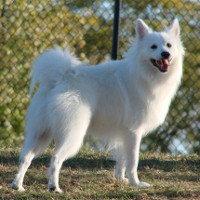
| The American Eskimo Dog, once a popular circus performer, is a descendant of several European Spitz breeds, including the Keeshond, white German Spitz, white Pomeranian and white Italian Spitz, under the name American Spitz. It was after the First World War that the name was changed to American Eskimo Dog to distinguish the breed from the German breeds of its heritage. Bred as a guard dog, the American Eskimo Dog was officially recognized by the American Kennel Club in 1994 and is the 122nd most popular dog breed in their registry. | ||
 |
||
| Presentation of the American Eskimo Dog |
A little of the Collie Rough |
| The Collie, better known as the TV star "Lassie", is a working dog breed that was developed for herding and driving cattle. Although the exact place of origin is unknown, the Collie is thought to have arrived in the British Isles with the Romans over 2,000 years ago. It is thought that the breed we know today as the Collie probably originated in Scotland and northern England in earlier centuries. While the breed was used to herd and drive various animals in the past, today it is used for police work, tracking, guarding, sentries and couriers for the armed forces, as well as for a variety of services to disabled people. The Collie was officially recognized by the American Kennel Club in 1885 and is the 37th most popular dog breed on its register. |
 |
| Standard of the Collie Rough |
Appearance of the Ski-Collie |
| The Ski-Collie is a hybrid of the American Eskimo Dog and the Longhaired Collie, and as such can adopt traits from either or both of its parent breeds. Your Ski-Collie hybrid will measure between 38 and 66 centimeters at the shoulders and weigh between 9 and 34 kilos. It can have a short or long coat, dense and thick or fine, hard and rough, the most common colors being sable (like Lassie's color), tricolor, blue merle, white, pure white or white and cream. It can have a long tail that hangs or curls over its back. Its head is wedge-shaped, with dark brown eyes (or merle eyes if it has a merle coat) and triangular ears that are held upright or can fold back towards the head. Its body can be compact or have a broad, strong chest. |
Temperament of the Ski-Collie |
| Your Ski-Collie hybrid is a mix of the American Eskimo Dog and the Collie Rough, and may have the personality and temperament traits of one or both of its parent breeds. Your Ski-Collie hybrid can be friendly, alert, gentle, intelligent, independent, energetic, loyal, responsive, protective and social. He'll need proper socialization from an early age to get along with children, the family cat, other dogs and strangers, but expect him to be a little wary of strangers until he feels there's no danger to his human family. He's fairly intelligent, which makes him easy to train. He has a moderate appetite for prey and a tendency to wander, hence the importance of keeping him on a leash when outside the house, fenced garden or other safe place. Its personality and temperament make it an ideal dog for new owners or novices. |
Needs and activities of the Ski-Collie |
| Your Ski-Collie hybrid is an energetic dog who will need to exercise for at least 1 to 2 hours every day. This exercise may include several daily walks or jogs, playtime in a dog park or fenced yard, interactive games of fetch, frisbee, flyball, agility training or obedience training. He has a moderate to high hunting/prey drive and a moderate tendency to wander. These characteristics make it very important to keep him on a leash when he's outside the house, fenced yard or other secure enclosure, unless part of your day's exercise program includes a chase down the street, neighborhood, woods or lake in search of a small animal or interesting scent that has caught his eye. He can adapt to life in an apartment or condominium, provided his exercise needs are met on a daily basis. He can also adapt to life in a family home with or without a fenced yard, in an urban or rural environment, in any climate, taking the necessary extra precautions for extreme temperatures. |
Maintenance of the Ski-Collie |
| Your Ski-Collie hybrid falls into the high-maintenance category, as it sheds constantly and is not hypoallergenic. Brushing frequency will depend on the length of his thick double coat, but he'll probably need brushing at least two or three times a week, and vacuuming the house more often. He's in the low category for drool and dog odor. His ears should be checked weekly and cleaned if necessary with a cotton ball and a dog-approved ear cleaner. Expect to have his nails trimmed at least once a month, unless he's able to maintain them as part of his normal daily exercise routine. He should have his teeth brushed at home two or three times a week to prevent the development of periodontal disease and the accompanying tooth loss. |



 English (United Kingdom)

Comments