
 |
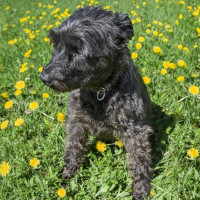
Smooth Scottish Fox Terrier |
|
He is not recognized by the F.C.I. |
Origin |
Great Britain <> Scotland -> U.S.A. | |
Translation |
Francis Vandersteen |
A brief presentation of the Smooth Scottish Fox Terrier |
| The Smooth Scottish Fox Terrier is a hybrid breed that combines two different parent breeds of the Terrier group: the Fox Terrier Smooth and the Scottish Terrier. This hybrid was probably created for the independent, confident nature of the Scottie and the friendly, family-oriented nature of the Fox Terrier Smooth. Terriers are known to be stubborn, independent dogs, so having a breed that loves family yet is smart enough to take care of itself is a very appealing idea. The Smooth Scottish Fox Terrier is a small to medium-sized dog, measuring up to 41 centimeters and weighing around 10 kilos as an adult, with a coat that can be short or medium long and available in many color varieties. This is not a very noisy dog and, thanks to its well-balanced energy levels, this breed can adapt very well to apartment living, provided it can get out for daily exercise. According to its parent breeds, the Smooth Scottish Fox Terrier is excellent with children, but tends to need supervision when playing with other dogs. It's an excellent companion for those looking for an intelligent, playful breed that doesn't require a lot of work to train properly. |
History of the Smooth Scottish Fox Terrier |
| The Smooth Scottish Fox Terrier has two parent breeds with a rich history. As Terriers, the Scottie and the Fox Terrier Smooth have been around for many years and are loved for a multitude of reasons. From this, we can get an idea of why the Smooth Scottish Fox Terrier hybrid came into being and what makes it unique. |
A little of the Fox Terrier Smooth |
||
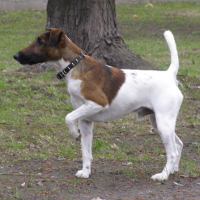
| The Fox Terrier Smooth is a classic breed that has changed very little since its inception in the late 1700s. It is thought that this particular branch of the Terrier is most likely descended from a combination of Greyhounds, Bull Terriers and Beagles, which gave the Fox Terrier Smooth its piebald color and agile body. Although this breed has done everything from Best in Show to circus sideshow, its original purpose was to ride in hunters' saddlebags until the fox was shot; the Fox Terrier Smooth was then let loose to finish the job and bring the fox back. The American Fox Terrier Club was formed in 1885, and the Fox Terrier Smooth actually became one of the first specialized breeds to become part of the American Kennel Club at the time. Although not as popular today, and certainly not as popular as its cousin the Wire Fox Terrier, the Fox Terrier Smooth is still a favorite of shows and families around the world. | ||
 |
||
| Standard of the Fox Terrier Smooth |
A little of the Scottish Terrier |
| The Scottish Terrier may be just one of many Terrier breeds native to Scotland and England, but what sets it apart is its interesting coat and rather moderate energy level. The Scottie was created to hunt and kill vermin, and is particularly adept at quickly digging holes to reach these creatures with ease. John Naylor brought the Scottie to the United States in 1883, where he began introducing the breed. It wasn't long before the American Kennel Club registered him in 1884. Since then, Scotties have enjoyed their role as show dogs and loyal companions for people all over the world. He's quite popular thanks to his courageous, fearless and sophisticated attitude, as well as his fantastic beard and skirt combo that's hard to ignore. |
 |
| Standard of the Scottish Terrier |
Appearance of the Smooth Scottish Fox Terrier |
| Both the Fox Terrier Smooth and the Fox Terrier Scottish are small to medium-sized dogs with the typical Terrier body type: low body, clean body lines, triangular ears, long muzzle ending in a black nose, and round, intelligent eyes. All these traits will be found in one way or another in the Smooth Scottish Fox Terrier. The coat can be short or medium-length, depending on which of the parent breed's genes are most evident, and can be seen in a number of different colors, the most common being brindle, black and piebald. Long-haired versions will most likely have the beard detail of the Scottie, while the short-haired version will lack the characteristic feathers, but will be easier to maintain. The tail is always long and tends to stand up when excited or alert. Overall, the Smooth Scottish Fox Terrier's appearance is marked by elegance, grace and a playful sense of eccentricity. |
Temperament of the Smooth Scottish Fox Terrier |
| Smooth Scottish Fox Terriers tend to approach life with a very serious outlook, but they also know how to have fun. As both parents have very different personalities, the Smooth Scottish Fox Terrier's personality can vary considerably. However, its typical temperament seems to be affectionate with a hint of reserve, independent, playful and highly intelligent. It's a family-oriented breed and enjoys spending time with its humans much more than the average Scottie, taking after the Fox Terrier Smooth. Although it's a small breed and not very noisy, it will let you know if something suspicious is going on and won't be afraid to protect you if things get crazy. This breed makes an excellent pet for households with older children and perhaps another pet. It is easy to train but tends to be stubborn. The Smooth Scottish Fox Terrier is therefore best suited to slightly more experienced owners. |
Needs and activities of the Smooth Scottish Fox Terrier |
| This breed is a moderately active dog. Since the Scottie is less energetic than the average Terrier, perfectly happy to lounge around the house, and the Fox Terrier Smooth is more active, the Smooth Scottish Fox Terrier will need mental and physical exercise for around two hours a day. To tire out your Smooth Scottish Fox Terrier, you can go for a long walk or jog, and play quickly in the yard or park. Training is a great way to tire your dog mentally and spend time bonding, as Terrier breeds are very intelligent and quickly understand what you're trying to teach them. |
Maintenance of the Smooth Scottish Fox Terrier |
| Depending on your Smooth Scottish Fox Terrier's coat type, it's a low- to moderate-maintenance breed. If you have the short-haired version, all you have to do is brush him twice a month with a long-haired brush and trim his nails to keep his legs healthy. For the long-haired version, grooming can become a little more complicated. For a more sophisticated, cleaner look, you'll need to call in a professional groomer or know how to use clippers at home. The Scottie has a classic beard and skirt cut that people everywhere love. If your Smooth Scottish Fox Terrier has this type of coat, you may want to go for a similar look. Otherwise, the coat can be kept long throughout for a more relaxed, natural look. This type of coat should be brushed weekly with a short bristle brush and trimmed with scissors if it becomes too long around the legs. Nails should also be trimmed twice a month. Bathing, for both types of coat, is only necessary when it is particularly dirty, as the Smooth Scottish Fox Terrier does not inherit a bad dog smell from either of its parents. |



 English (United Kingdom)

Comments