
 |
Spangold Retriever |
|
He is not recognized by the F.C.I. |
Origin |
Great Britain -> U.S.A. | |
Translation |
Francis Vandersteen |
A brief presentation of the Spangold Retriever |
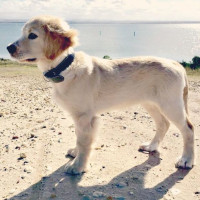
| The Spangold Retriever is a hybrid dog. Its parent breeds are the English Springer Spaniel and the Golden Retriever. Spangold Retrievers are big dogs with big hearts. He loves his family members of all ages, but is particularly kind to children. It's not a very active dog, so those who prefer to spend time lounging around will find the Spangold Retriever just right for them. However, it will need daily activity to stay healthy and happy. Highly intelligent, the Spangold Retriever is easy to train and domesticate. They are also good watchdogs. They shed moderately and therefore require moderate maintenance. They are probably best suited to a home with a fenced-in yard. |
History of the Spangold Retriever |
| The Spangold Retriever is a hybrid dog. Although not a rare hybrid, little is known about its exact origins. To understand the history of the Spangold Retriever, we can study the origins of its parent breeds to better understand the hybrid breed. |
A little of the English Springer Spaniel |
||
| All Spaniel dogs are thought to have originated in Spain in one way or another, and were taken by the Roman conquerors, who then dispersed them throughout Europe. Welsh artifacts mention the Spaniel in 300 A.D., so we can say that the Spaniel has been around for a long time. The Spaniel was used to flush out small birds before the invention of the rifle. However, even after the invention of the rifle and its widespread use, the Spaniel was still praised for its ability to flush prey out of the open. Throughout the 19th century, they were used as hunting companions throughout Europe. In 1913, the first English Springer Spaniel was exported to Canada. In 1923, the American Kennel Club registered its first English Springer Spaniel. | ||
 |
||
| Standard of the English Springer Spaniel |
A little of the Golden Retriever |
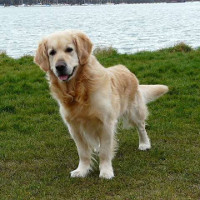
| The Golden Retriever as we know it was developed in Scotland on the estate of a man known as Lord Tweedmouth. Lord Tweedmouth bred a wide variety of animals and kept detailed records of his breeding program. A waterfowl hunter himself, Tweedmouth describes in his breeding notes that he hoped to breed a superior retriever. He wanted the Retriever to have a superb nose, but he also wanted a dog that was closer to the actions of its human hunting partner than most other hunting breeds available at the time. He wanted this superb hunting and retrieving dog to be loyal and good-tempered outside the hunt. Lord Tweedmouth bred his hunting dog, Nous, to the now extinct Tweed Water Spaniel. The Tweed Water Spaniel was known for being extremely calm and loyal, but also for being an excellent retriever, characteristics inherited by the Golden Retriever. He bred the resulting puppies to wavy-coated or flat-coated Retrievers and a Red Setter. The result was the Golden Retriever we know today. |
 |
| Standard of the Golden Retriever |
Appearance of the Spangold Retriever |
| The Spangold Retriever is a large dog. At maturity, they weigh around 29.5 kilos. Females may be slightly smaller. Coloration depends largely on the breed of the dominant parent. It can be black with white markings, fawn with white markings or red with white markings. It can also have a light, cream-colored coat, spotted with red, like the English Springer Spaniel's parent breed. The coat is dense and medium to long. Its tail is long, carried low, and may have a few feathers. He may also have feathers on his paws and feet. He will probably have floppy ears, which can be a problem requiring special care. His feet are large and may be webbed. |
Temperament of the Spangold Retriever |
| The Spangold Retriever is a gentle, loyal dog. They get on well with children of all ages. They are highly intelligent and easy to train. Although he enjoys lounging with his family, he needs adequate daily exercise. If he doesn't get enough exercise, he can suffer from anxiety and depression. He is very affectionate, but is also known to bark when he thinks something is wrong on his territory. This characteristic makes him an excellent watchdog. However, he is not aggressive towards other people or animals. In fact, he's very welcoming to strangers, and has been known to make friends with everyone he meets. Although he can adapt to life in an apartment, he'll probably be happiest in a home with somewhere he can run and play. Don't forget that he's a hunter and will probably do best in a home with a fenced garden. |
Needs and activities of the Spangold Retriever |
| The Spangold Retriever has a tendency to become lazy if left to its own devices. However, this can lead to behavioral problems in the dog. He needs 45 minutes to an hour of daily exercise to avoid developing separation anxiety or depression. In addition, providing the Spangold Retriever with toys that offer mental stimulation will help keep him happy. A daily walk and playtime in a fenced-in area is sufficient exercise for the Spangold Retriever. He'll also enjoy outings to the dog park, and if you like hiking, the Spangold Retriever will certainly be able to follow you. The Spangold Retriever is an excellent hunter, and exercises that simulate tracking will provide both physical and mental stimulation. |
Maintenance of the Spangold Retriever |
| The Spangold Retriever has a tendency to shed, which requires a lot of maintenance. Brush him two or three times a week to prevent tangling and to rid his coat of excess hair. Brush him daily in spring and autumn, when all dogs tend to lose their seasonal coat. If he has English Springer Spaniel floppy ears, you'll need to clean his ears weekly with a damp cotton pad to remove excess dirt. Make sure there's no redness or unpleasant odor in his ears - both are signs of a possible ear infection. Brush his teeth two or three times a week to prevent tartar build-up and bad breath. However, if you want to prevent tooth decay, brush his teeth every day. Trim his nails every two or three weeks, unless he wears them out on his own. |



 English (United Kingdom)

Comments