
 |
Spanador |
|
He is not recognized by the F.C.I. |
Origin |
U.S.A. <> Canada -> U.S.A. | |
Translation |
Francis Vandersteen | |
This breed is also known as |
Cockador
|
A brief presentation of the Spanador |
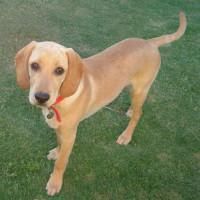
| A stunning example of a family pet that's particularly appealing to children, the Spanador combines the playful nature of the Labrador Retriever with the active, inquisitive nature of the Cocker Spaniel. Affectionate and gentle, Spanadors will melt your heart the moment you meet them. Most Spanadors are smaller and more compact than Labradors, making them attractive medium-sized dogs. Their fur doesn't grow particularly long and can come in a variety of colors, black and red being the two most commonly used. Although their Spaniel-like floppy ears add to their appeal, some dogs will be prone to ear infections. Owners should therefore be sure to stay on top of the situation and clean the ear canals regularly. |
History of the Spanador |
| The Spanador is thought to have been developed in the USA towards the end of the 20st century. The specific crossbreed dog movement began to take off in the 1970s, and the Spanador quickly met the demand for a new breed that was a good companion dog and neither too big nor too small. Although Spanador's story isn't long and colorful yet, read on to learn more about his parents. |
A little of the American Cocker Spaniel |
||
| Spaniels have traditionally been bred for hunting, especially alongside armed hunters in pursuit of birds. They were widely used for this purpose in Europe, and were admired for their work ethic and endurance. Over time, Spaniels were classified into different groups, and the Cocker was named for its ability to hunt woodcock well. It wasn't until the early 1900s that the English Cocker Spaniel and the American Cocker Spaniel were separated into two breeds, the American Cocker Spaniel being the smaller and more refined of the two. The American Cocker Spaniel is a popular pet, particularly in the United States, and is also a very successful show dog. | ||
 |
||
| Standard of the American Cocker Spaniel | ||
A little of the Labrador Retriever |
||
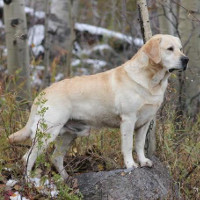
| The Labrador Retriever originated in Canada in the 1800s and, although most people would assume they come from the Labrador region, they actually originated in Newfoundland. It was the crossing of the Newfoundland dog with smaller water dogs that resulted in the production of this popular breed. As with the Cocker Spaniel, Labradors were first and foremost used as hunting aids, most often chasing birds and waterfowl. Although we now recognize three official colors (black, yellow and chocolate), all early Labradors would have been black. Not only do Labradors continue to work as hunters, they also excel as service dogs, especially as guardian dogs, and are among the most popular family pets. | ||
 |
||
| Standard of the Labrador Retriever |
Appearance of the Spanador |
| Spanadors generally resemble a smaller Labrador with a face and ears more reminiscent of a Spaniel breed. They are built in good proportions and their medium-sized rectangular body should be lean and well muscled, with a good abdominal tuck and visible waist. They have attractive faces with large, hanging ears. Their circular eyes are brown in color and represent a benevolent expression. The Spanador's coat can be a choice of colors, including black, brown, red and cream. White patches are not unusual and tend to appear on the chest, legs and face. Their coat is straight and tends to be much shorter than that of the Cocker Spaniel, although feathers frequently appear on the tips of their ears. Mature Spanadors are shorter than Labradors, reaching heights of 45 to 50 cm. Their weight is generally between 12 and 21 kg. |
Temperament of the Spanador |
| The Spanador is one of those zany, playful dogs that immediately brightens up any room it wanders into, and can lift its owner's spirits after a bad day. They have a zest for life and need no encouragement to go for a hike or join in a game of fetch. While this trait is undeniably endearing, some owners who enjoy a quiet life may find their exuberance a little too much. Kind and affectionate, Spanadors just want to love and be loved, and will generally try to make friends with everyone they meet. They maintain close ties with their family and establish good relationships with all the children in the house, who quickly become their playmates. Those who take more after their Cocker Spaniel parent may be a little more aloof with new people, especially if they were not thoroughly socialized in their first months. |
Needs and activities of the Spanador |
| Spanadors are active dogs, especially when they're young. They're enthusiastic about everything, even going outside to get the paper. These dogs love life and show it. They'll love to be your jogging or walking companion, although they use a leash, as they have an avid curiosity and can wander off ignoring your calls if they're not restrained. Spanadors love water, so if you're near the sea or a river, they'll be in their element splashing and swimming. They'll benefit from a secure, enclosed yard where they can play freely, playing with their dog toys or with their family. A young Spanador should be introduced to exercise slowly, allowing his legs and muscles to strengthen before embarking on more challenging journeys. This will save pain as they age. The Spanador is not really suited to apartment living, unless it's an older dog who will hopefully be gentler by then. They're very active and noisy otherwise, but that's what makes this dog so attractive. |
Maintenance of the Spanador |
| The Spanador has a medium to long coat, depending on the genetic influence of the parent dogs. It sheds moderately and at certain times of the year, particularly during summer assaults. Good brushing will be necessary on a weekly basis, although he may need it twice a week in summer. Be prepared to vacuum often at this time to pick up any loose hairs. Using a comb will help remove excess hair and prevent matting. Your Spanador may have longer hairs or bangs around the legs, ears and chest, a gift from the American Cocker Spaniel parent. Comb or brush them to avoid tangles. This dog only needs a bath when it really needs one, i.e. when it has an unpleasant smell or has rolled around in the mud. Use a dog shampoo that's gentler on the skin, as these dogs can be itchy. Be sure to rinse well and remove all soap scum. Check his ears for infection and clean them if necessary, and brush his teeth two or three times a day. Finish the grooming with nail clippers if necessary, and remember to praise them profusely for being so gentle. |



 English (United Kingdom)

Comments