
 |
Standard Wauzer |
|
He is not recognized by the F.C.I. |
Origin |
Great Britain <> Germany -> U.S.A. | |
Translation |
Francis Vandersteen |
A brief presentation of the Standard Wauzer |
| The Standard Wauzer is a hybrid dog. Its parent breeds are the West Highland White Terrier and the Schnauzer. They are small dogs, weighing less than 13.5 kilos at maturity. It requires only moderate grooming and can inherit the hypoallergenic gene from its West Highland White Terrier parent. He's an excellent family pet and, with plenty of socialization, does well with other pets. He's happy in an apartment or house with a garden that gives him plenty of room to play. He's easy to train, and will need daily exercise to stay healthy. |
History of the Standard Wauzer |
| The Standard Wauzer is not a commonly conceived breed; however, this is due to the fact that it is more recently developed than some other hybrid breeds. This particular hybrid breed is thought to have been in existence for almost 40 years. However, the Standard Wauzer has become increasingly popular over the last 10 years. Unfortunately, there are no accurate records of how the hybrid was developed, so a study of the history of parent breeds is in order. |
A little of the West Highland White Terrier |
||
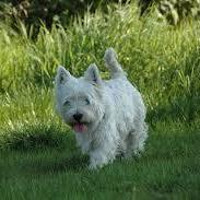
| The West Highland White Terrier, also known as the Westie, is thought to have originated in the Scottish Highlands in the 1600s. This dog was bred to hunt mice or rats. It is distantly related to the Dandie Dinmont, Skye, Scottish and Cairn Terrier. However, in 1906, the Westie was officially recognized as its own breed by the Kennel Club of England. According to legend, the Westie is white because Colonel Malcolm of Poltallock mistakenly shot one of his West Highland Terriers while hunting. When he realized what he had done, the colonel bred only white West Highland Terriers so that the dog could never again be mistaken for a fox. | ||
 |
||
| Standard of the West Highland White Terrier |
A little of the Schnauzer |
| The Schnauzer originated in Germany. Traces of the breed have been found in paintings by Rembrandt, and a 1501 tapestry depicts a dog closely resembling the Schnauzer. The Schnauzer was bred to work with livestock, guard farm property and rid the farm of mice and rats. Schnauzers often accompanied their owners to market as a means of protection. In the 1800s, breeders began introducing the gray Wolfspitz and black German Poodle into the breeding process. At one time, the Schnauzer was considered a wire-haired Pinscher. In 1879, owners began showing the Schnauzer. During the First World War, the Schnauzer was used by the army to assist Red Cross volunteers and carry messages to the various battalions. It is thought that the Schnauzer was first brought to the United States in the early 1900s. It could have made its way with German families who emigrated to the U.S., or it could have been brought back to the U.S. with those who had fallen in love with the breed while serving in WWI. He was registered by the American Kennel Club in 1945. |
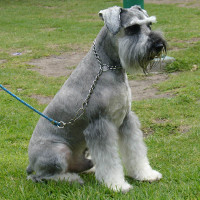 |
| Standard of the Schnauzer |
Appearance of the Standard Wauzer |
| The Standard Wauzer is a small dog. At maturity, it will weigh no more than 13.5 kilos pounds. It has a double coat. The undercoat is dense. The topcoat is long and hard. It's often white, but if the Schnauzer is the dominant parent, it can be different colors. It can be brindle, red or black. It can also be silver or gray. They are generally small and stocky. It usually has the short legs of the Westie parent. He may have straight ears. However, if he has the long, floppy ears of the Schnauzer, you may need to give them a little more care. His eyes are generally brown. He may also have longer hair around the eyes. They may or may not inherit the Schnauzer parent's characteristic beard. |
Temperament of the Standard Wauzer |
| The Standard Wauzer is a gentle, lovable little dog. They are friendly and rarely meet strangers. In fact, he needs attention. He doesn't like to be left alone for long periods and can be prone to separation anxiety. He loves to cuddle and to be entertained. You'll love watching his antics and he loves nothing more than to make you laugh. He's a wonderful companion, and will want to join you in most family activities. He has lots of energy and can keep up. He's very intelligent, so it's a good idea to invest in toys that stimulate his mind. He's great with children and other dogs. With early socialization, he can get along with other pets (cats, ferrets, etc.). Remember that he tends to regard small animals as prey, so be careful when introducing your Standard Wauzer to new pets. However, if he grows up with these animals, he's unlikely to regard other animals as anything other than a companion. |
Needs and activities of the Standard Wauzer |
| The Standard Wauzer is a very energetic little dog, needing plenty of activity to keep it happy and healthy. Left to its own devices, the Standard Wauzer can become somewhat lazy and put on weight. He'll enjoy almost any activity you can throw at him, as long as he's with his family. Short, brisk walks around the neighborhood are the ideal activity for you and the Standard Wauzer. He'll also appreciate trips to the dog park. However, make sure he's fully obedience-trained before letting him off the leash. He may have a tendency to chew and dig, so include this in the activities you offer the Standard Wauzer. Give him chewable toys and play tug-of-war with him to prevent him from tearing up your property. If you place your Standard Wauzer in a fenced-in play area, be sure to set the fence posts deep enough in the ground to prevent him from digging his head out of the ground. |
Maintenance of the Standard Wauzer |
| The Standard Wauzer requires a moderate amount of maintenance. It needs daily brushing to maintain a healthy coat. You may choose to mow its coat. In this case, you'll still need to brush him two or three times a week. Give him a bath every six to eight weeks. Choose an all-natural shampoo so as not to irritate his skin. You may need to trim the hair around his eyes to prevent him from having difficulty seeing. If his ears are straight, simply clean them when you bathe him. If his ears are floppy, you'll need to clean them once a week. Use a damp cotton ball to wipe his ears. Check for odor or redness at this time. These symptoms are a sign of ear infection. Brush his teeth every two or three days to prevent bad breath and tartar build-up. Brush his teeth every day to prevent tooth decay. Trim his nails every two to four weeks. |



 English (United Kingdom)

Comments