
 |
Toy Rat Doxie |
|
He is not recognized by the F.C.I. |
Origin |
U.S.A. <> Germany -> U.S.A. | |
Translation |
Francis Vandersteen |
A brief presentation of the Toy Rat Doxie |
| The Toy Rat Doxie is a small to medium-sized hybrid breed whose origins are both German and American. At 20.5 to 46 centimeters, they may not look like imposing ferrets, but Toy Rat Doxies have excellent noses and strong hunting instincts, making them excellent hunters even when their owners don't need them. Despite their love of hunting, they are only moderately active and, combined with their size, make excellent pets in homes of all sizes. Affectionate but independent, intelligent but stubborn, this small breed is best suited to more experienced dog owners, but with the right training can become a perfectly adorable companion for one-person households and families. |
History of the Toy Rat Doxie |
| It's still not clear exactly when the Toy Rat Doxie became the hybrid breed it is today, but both the Dachshund and Rat Terrier have long histories as hunters in their respective countries of origin. |
A little of the Rat Terrier |
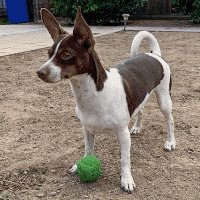
||
| Shortly after the birth of the Dachshund in Germany, Rat Terriers gained popularity in the United States. In the mid-to-late 19th century, various European Terriers, such as the Manchester and Smooth Fox, were crossed to produce a dog capable of helping control vermin populations, and many were used on rural farms. During their development, they were also bred with Italian Greyhounds and Beagles to improve their overall speed and hunting skills. The end result was a well-balanced little dog that was not only an excellent hunter, but also intelligent, cooperative and infinitely affectionate. | ||
 |
||
| Presentation of the Rat Terrier |
A little of the Dachshund |
| The Dachshund, or badger dog in German, is the result of German breeding in the 18th and 19th centuries, which aimed to create a dog not only of the right shape and size to hunt animals from the den, but also one with a solid constitution and fearless attitude. In the 1800s, Doxies were finally bred as pets, giving rise to the later-recognized miniature version, which deviates a little from the standard in terms of size. Both are now recognized and more regularly kept as companions, but many still employ them as hunters in Germany, where their size is not measured in weight or stature as in America, but rather by the circumference of their chest, the most determining factor in the size of the hole they can squeeze into. |
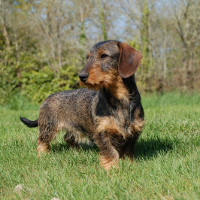 |
| Standard of the Dachshund |
Appearance of the Toy Rat Doxie |
| Given the various genetic influences they have accumulated over time, the only universal attributes of most Toy Rat Doxies are that they are relatively short and light, with more length than height, with a maximum height of around 46 centimeters and only 16 kilos. Most of them also have a longer muzzle, a slightly curved medium tail and a muscular but athletic build that runs the length of their elongated body. Coat length varies from short to medium, and can be straight, wiry or wavy. Colors range from white to red, brown and black, often with a combination of two or more colors. |
Temperament of the Toy Rat Doxie |
| While the Dachshund is known for being stubborn, noisy and generally independent, the Rat Terrier is obedient, eager to please and quite affectionate, making the Toy Rat Doxie a mild-mannered dog with a good general temperament and only occasional problems, such as frequent barking, which can usually be resolved with a little training. They are incredibly intelligent, but without direction, their intelligence and curiosity can sometimes turn into mischievous behavior, so it's important to give them an adequate amount of attention and play/activity time. So it's important to give him enough attention and time to play and have fun. |
Needs and activities of the Toy Rat Doxie |
| The Toy Rat Doxie has a moderate to above-average activity level, which means owners need to allow it regular exercise. As they are highly intelligent and have a hunting instinct, creative games that make them run, think or both are particularly rewarding and help prevent mischievous behavior, 45 to 60 minutes a day should suffice. |
Maintenance of the Toy Rat Doxie |
| On the whole, Toy Rat Doxies need little grooming as their generally short coats are not prone to abnormal shedding, and a weekly brushing should suffice. Their nails are notoriously fast-growing, so owners should trim them regularly to prevent splitting. Dental problems are also semi-common, so regular brushing and dental check-ups will keep their mouths healthy and prevent any future problems. Ear cleaning and care are more often reserved for dogs whose lineage has highlighted the soft, pendulous ear type, as they are more prone to infections. Although these are generally resilient dogs that can live in a variety of environments, they often require outdoor jackets in colder climates. Owners should also be aware that, due to their elongated silhouette, Toy Rat Doxies can be prone to spinal problems, so excessive use of stairs or areas requiring frequent jumping can become problematic over time. These scenarios can easily be resolved with ramps or by lifting the dog and remembering to support both ends. |



 English (United Kingdom)

Comments