 |
Ultimate Mastiff |
|
He is not recognized by the F.C.I. |
Origin |
France <> Italy -> U.S.A. | |
Translation |
Francis Vandersteen |
A brief presentation of the Ultimate Mastiff |
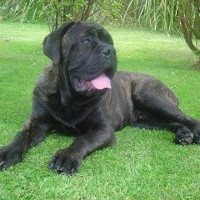
| The Ultimate Mastiff is a large, muscular hybrid dog created by crossing a Bordeaux Mastiff and a Neapolitan Mastiff. These massive dogs can live up to 12 years and measure between 63.5 and 76 centimeters. The Ultimate Mastiff is best suited to experienced, dominant owners. They are very stubborn and hard-headed, so it takes a lot of patience and perseverance to train them. Despite their size and strength, these dogs are very affectionate, loyal and get on well with children and other animals, although some are aggressive towards dogs. They are very protective of their families and make perfect property guardians. |
History of the Ultimate Mastiff |
| The Ultimate Mastiff is a hybrid of a Bordeaux Mastiff and a Neapolitan Mastiff. |
A little of the Bordeaux Mastiff |
||
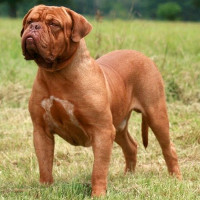
| The Bordeaux Mastiff has been known to exist in France for over 600 years. The breed is descended from Molossus, the ancient Roman Mastiff, and is related to the Mastiff, Neapolitan Mastiff and Bullmastiff. The Bordeaux Mastiff was very popular among French aristocrats for guarding estates and hunting big game. The breed suffered greatly during the French Revolution, due to its connection with the aristocracy, but was later considered a farmer's and butcher's dog. The first breed standard was drawn up in Paris in 1896, and the Dogue was named after its native Bordeaux. The first Bordeaux Mastiff was imported to the USA in 1959, where the breed became famous 30 years later, thanks to its appearance in the Tom Hanks comedy "Turner and Hooch". It wasn't until 2008 that the Bordeaux Mastiff was recognized by the American Kennel Club. | ||
 |
||
| Standard of the Bordeaux Mastiff |
A little of the Neapolitan Mastiff |
| The Neapolitan Mastiff's origins go back thousands of years; it's thought that the first Mastiff-type dog was created around 5,000 years ago in Tibet. These dogs helped in combat and were also used as guards. Subsequently, little is known about the history of the Neapolitan Mastiff, until its appearance in Italy. It is known that the breed originated in Naples, in southern Italy, from which it takes its name. Breeders in this region wanted to create a massive dog for protection, but one that would also be an affectionate member of the family. They worked to create a large dog with thick, loose skin. The dogs began to take part in shows and, in 1946, journalist Piere Scanziana discovered these dogs and worked to make them better known. Thanks to him, the first breed standard was drawn up and the breed was recognized by the Italian National Dog Register. They were given the name Mastino Napoletano and in the early 1970s, these dogs became popular in Europe. The Neapolitan Mastiff is thought to have arrived in the United States in the 1880s. The breed was recognized by the American Kennel Club in 2004. |
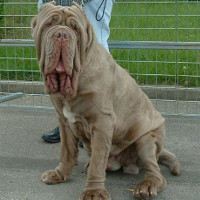 |
| Standard of the Neapolitan Mastiff |
Appearance of the Ultimate Mastiff |
| Ultimate Mastiffs are large, powerful dogs, characterized by their broad chest, muscular body and serious expression. They measure between 63.5 and 76 centimeters and weigh between 54 and 81.5 kilos. The coat of this hybrid is short and silky, and comes in a variety of colors, including black, gray, blue, fawn, cream and isabella. The head is large, broad and wrinkled, with a dewlap and a broad, tapering muzzle. Its eyes are oval and set wide apart, and its nose is long. Its ears are large and protruding. The Ultimate Mastiff's shoulders are prominent and broad, with strong, powerful legs and a large, hanging tail. |
Temperament of the Ultimate Mastiff |
| The Ultimate Mastiff is very affectionate, loyal and protective of its family and territory. They get on well with children and other pets, as they are very caring and gentle with their family. Nevertheless, they can be aggressive with dogs, especially of the same sex. These dogs are stubborn, and when bored can become destructive. So it's important to maintain a dominant attitude towards your Ultimate Mastiff and to be persistent in training it. These dogs are very calm indoors, and like to curl up in a comfortable spot. They also like to play, run in a yard and swim. They rarely bark and are not inclined to roam. |
Needs and activities of the Ultimate Mastiff |
| Don't be fooled by this dog's quiet personality, the Ultimate Mastiff needs a good dose of physical activity to stay fit and healthy. These dogs have the potential to gain weight, so daily activity is a must. However, it's important to bear in mind that his bones and joints are delicate, so intense exercise is not recommended, especially during his puppyhood. A 30-minute walk twice a day, preferably in the morning or evening when the weather is cool, will be well received. Similarly, a little time to run and play off-leash in a park or yard will be good for his fitness. These dogs also love to swim, so taking him to a pond or lake will be much appreciated. It's important not to let him get into the habit of fighting or playing rough, as this can be dangerous when he's an adult, due to his size and strength. The Ultimate Mastiff is best suited to life in a house with a fenced garden; he doesn't tend to roam, but his protective temperament can cause problems. Likewise, hot, humid weather doesn't suit him; cool climates are recommended, so if it's hot outside, bring your dog indoors. |
Maintenance of the Ultimate Mastiff |
| The Ultimate Mastiff sheds moderately, so weekly brushing is recommended to remove loose hair and distribute skin oils properly. His coat is short and silky. You can use a damp cloth or wipe to remove dirt easily. You'll need to bathe him from time to time if he smells bad. It's important to check his ears every week, to make sure there's no redness or infection, and to clean them with ear cleaner and absorbent cotton. It's especially important to clean and dry his ears after swimming. You'll need to trim his nails every month, if he doesn't wear them out. Brush his teeth two or three times a week to eliminate bad breath, bacteria and tartar build-up. |



 English (United Kingdom)

Comments