 |
Weimarrott |
|
He is not recognized by the F.C.I. |
Origin |
Germany -> U.S.A. | |
Translation |
Francis Vandersteen |
A brief presentation of the Weimarrott |
| The Weimarrott is a well-balanced cross between two legendary German breeds, the Weimar Pointer and the Rottweiler, from which it takes many of its characteristics. Given the size of their parent breeds, Weimarrott are also quite large, standing at around 61 centimeters, with an athletic, muscular build that can reach almost 45 kilos, but is generally well below average. They are often a perfect blend of the two breeds in terms of color, taking on the black and brown pattern of the Rottweiler, but with the washed-out look that earned the Weimar Braque its nickname of gray ghost, and can also range from pure black to light gray, brown and tan. As both parent breeds were bred for hunting and security, Weimarrottts are generally moderate-to-high-energy dogs with above-average strength and intelligence that can be mastered through training, making them exceptional companion and service dogs. |
History of the Weimarrott |
| While the Weimarrott is a new breed, both the Weimar Pointer and the Rottweiler have a rich German history. |
A little of the Weimaraner |
||
| The Weimaraner is the result of highly selective breeding begun in the early 19th century by the Weimar court, with the aim of isolating the characteristics of an ideal all-round working dog. Its athletic, slender body gives it excellent speed and agility and, combined with a sharp nose and webbed paws, makes it a prime candidate for hunting all types of game. The Weimaraner is also highly intelligent and loyal, which not only makes it easy to train, but also earns it the nickname Gray Ghost, a play on words about its almost metallic coat and tendency to stay close to its master. Recognized by the American Kennel Club in 1943, this courageous breed belongs to the sporting dog group. | ||
 |
||
| Standard of the Weimaraner |
A little of the Rottweiler |
| The Rottweiler has an even deeper heritage, dating back to the first century AD. The breed is thought to have evolved when the Romans settled in the Black Forest region of Germany. Initially descended from ancient Mastiffs, Roman dogs were crossed with ancestors of Bernese Mountain Dogs, Appenzels and Entlebuchs to create a breed that could be used for hunting and herding cattle, as well as for protection. The region came to be known as "das Rote Wil", meaning "red tiles", and over time, "rot wil" dogs came to be known by this name. While their numbers came close to extinction in the mid-19th century, when trains displaced breeding, their resurgence in popularity has since flourished, as evidenced by their frequent use as guard dogs, guide dogs, search and rescue dogs and police dogs. |
 |
| Standard of the Rottweiler |
Appearance of the Weimarrott |
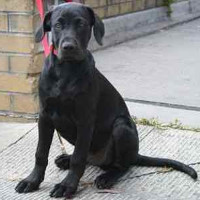
| The Weimarrott is a large, athletic dog with a short to medium silver coat, long ears and an S-shaped tail that is normally cropped, while the Rottweiler is medium-sized, stocky, with a square face and a medium-length black and brown coat. The Weimarott is a powerful, medium-sized dog with a short to medium coat and a square face. Their build is generally muscular, especially in the legs, giving them both the stocky appearance of the Rottweiler and a little more height like the Braque de Weimar. Their short coats range in color from solid black to mousey gray, and many have a combination of the black and tan of the Rottweiler, but with the almost metallic sheen characteristic of the Weimaraner. |
Temperament of the Weimarrott |
| The Weimar Pointer is an intelligent, loyal breed, making it both obedient and easy to train. They are generally known as excellent family dogs, as they are affectionate, playful and tend to get on well with children. On the other hand, they are only moderately good with other dogs, so proper socialization is necessary for multi-dog households or those who use public spaces for exercise. Because of their size and power, Rottweilers are best suited to homes with experienced dog owners, but overall they make excellent pets. Despite their public reputation, Rottweilers can be very loyal and affectionate if raised correctly, but they need to be socialized from an early age to get the best results in dog-laden situations. They are surprisingly gentle with children, and in the middle of the scale in terms of trainability. Based on parental traits, the Weimarrott will need obedience training to ensure it listens to your commands at all times. Regular interaction with other dogs in the class will also help your hybrid become more receptive to meeting other dogs. He can be an excellent partner and family dog, provided he's given the chance to succeed. |
Needs and activities of the Weimarrott |
| Both the Rottweiler and the Weimarrott are relatively active breeds, requiring several doses of daily exercise to keep them healthy and happy. The ideal for the Weimarrott is a few kilometers or a few hours of exercise twice a day, and they generally do best in larger homes or where there's space to run around. As both parent breeds are equally intelligent, mental stimulation will also help prevent your hybrid from becoming bored or frustrated, so frequent interaction or play-based toys are also helpful. Take advantage of obedience training and make frequent visits to the dog park, where your Weimarrott can burn off energy and exercise its social skills at the same time. |
Maintenance of the Weimarrott |
| Both the Weimaraner and the Rottweiler have short coats and rarely shed. Brushing with a long-haired brush once a week is all that's needed to keep their coats healthy. Baths are only occasionally necessary, as both breeds do very well at staying clean, but owners should take care to clean and dry their ears, as folded ears are more likely to accumulate moisture and become infected. As both breeds are working dogs that are often on their feet, nail care is essential, especially as Rottweilers have particularly fast-growing nails. Teeth care should be considered in the same way, as Rottweilers are somewhat prone to tooth and gum problems, so regular brushing is encouraged. They are also prone to obesity, which can easily be tempered by a healthy diet and regular exercise. |



 English (United Kingdom)

Comments