
 |
Cardigan Pembroke Corgi |
|
He is not recognized by the F.C.I. |
Origin |
Great Britain -> U.S.A. | |
Translation |
Francis Vandersteen |
A brief presentation of the Cardigan Pembroke Corgi |
| The Cardigan Pembroke Corgi is a hybrid developed by breeding the Welsh Corgi Cardigan with the Welsh Corgi Pembroke. Not much information is available on the hybrid, but more information is available on the parent breeds. The two breeds are closely related, being called cousins in some research. They both originated in the UK, although the Welsh Corgi Cardigan, dating from 1200 BC, is a much older breed than the Welsh Corgi Pembroke, dating from 1200 BC. The two parent breeds were bred for the same purpose, namely herding and tracking, both being prized for their ability to guard livestock and avoid the inevitable kicks generated by this activity. Breeding between the two related breeds took place in the first half of the twentieth century, which explains why they are so similar. The two parent breeds share not only appearance and aptitude traits, but also temperament traits, each being affectionate, alert, gentle, intelligent, affectionate and loyal, with the Pembroke adding cheerfulness, friendliness, independence, liveliness, vivacity and playfulness to the biological mix. Both dogs shed constantly, but require little grooming maintenance. |
History of the Cardigan Pembroke Corgi |
| The history of your Cardigan Pembroke Corgi can be traced back to two parent breeds, one dating back to 1200 BC and the other to 1200 AD. Both parent breeds were developed for herding, hunting and tracking in different parts of the UK. The two breeds were crossed in the early 20th century, a practice that was abandoned in an attempt to purify the specific Cardigan and Pembroke breeds. This cross brought the two breeds closer together, which is why they are so similar, even in temperamental traits. Both of the Corgi's parent breeds are perfectly suited to herding cattle without injuring them or themselves. The fact that they are short-legged and built so close to the ground means they can avoid the injuries that would inevitably occur if one of those unfortunate cattle kicks hit them. Today, they are still used for herding in some regions, but they are also used in agility and obedience competitions, as well as in shows. They make excellent companions for young and old alike, and are perfect with children and cats whose place they know in the home. They have become excellent companions and guard dogs in both the UK and the USA. The Cardigan Pembroke Corgi hybrid is recognized by the American Canine Hybrid Club, the Designer Dogs Kennel Club and the International Designer Canine Registry. |
A little of the Welsh Corgi Cardigan |
||
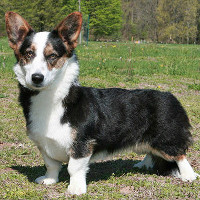
| The Welsh Corgi Cardigan is the older of the two Corgi breeds, believed to have been brought to the Welsh high country now known as Cardiganshire by Celtic warriors around 1200 BC. Initially, the Cardigan was prized for its ability to flush out prey, but several hundred years later, other skills became even more valuable. The Cardigan became prized for its unique herding skills, which involved pinching the heels of cattle to move them in the right direction. The Cardigan's ground-level construction may seem to make this task virtually impossible but, in reality, this trait helped them avoid the inevitable kicks thrown at them by the animals that were the focus of their attention. | ||
 |
||
| Standard of the Welsh Corgi Cardigan |
A little of the Welsh Corgi Pembroke |
| The Welsh Corgi Pembroke is the most common. This breed is descended from the Schipperke, Spitz, Pomeranian, Swedish Vallhund and Keeshond. The Welsh Corgi Pembroke was born in the 1100s in Pembrokeshire, Wales, hence its name. Little is known of their history, but it is thought that they were used to herd cattle, ponies and sheep. King George VI and Queen Elizabeth II both had Welsh Corgi Pembroke. They were registered with the AKC in 1934 and are the 18th most popular dog breed in the United States. |
 |
| Standard of the Welsh Corgi Pembroke |
Appearance of the Cardigan Pembroke Corgi |
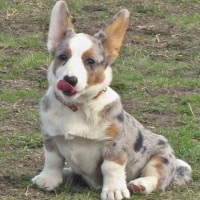
| The Cardigan Pembroke Corgi is a cross between the Welsh Corgi Cardigan and the Welsh Corgi Pembroke and, as such, can adopt the physical attributes of either or both parent breeds. As the two breeds are closely related and look very similar, your hybrid dog will probably have a body that's longer than it is tall, and short legs. The coat will be fairly smooth, dense with a weather-resistant double coat and a color that can be any shade of red, fawn, sable, brindle, black or blue with or without markings. Depending on which Corgi parent has the dominant genes in the biological pool, your dog could be heavier and stockier like the Cardigan or smaller and more finely boned like the Pembroke, and have a tail that may reflect the low, broad tail of the Cardigan or the shorter tail of the Pembroke. The head and face will be more fox-like if Pembroke is dominant, and the ears will be more prominent if Cardigan is the dominant gene. The eyes can be round or oval, giving the face an expression of intelligent gentleness. Other appearance traits will be similar between the two parent breeds, with the Pembroke contributing a finer bone structure than the Cardigan. The coat is dense, double, relatively smooth and weather-resistant. |
Temperament of the Cardigan Pembroke Corgi |
| Your Cardigan Pembroke Corgi hybrid will have a temperament that reflects the similarity of the two parent breeds, the Welsh Corgi Cardigan and the Welsh Corgi Pembroke. Your dog will be wary but polite of strangers, but will bond closely with his owners and human family members. He'll generally get on quite well with children, cats and other animals if he knows they belong there, but he'll probably apply his herding experience to any stranger who turns up unannounced or uninvited. He's quite intelligent and therefore easy to train, unless he inherits the independence brought by the Pembroke parent. Because he's so intelligent, you'll need to keep him mentally stimulated to avoid boredom and some of the unacceptable behavior that can accompany it. It's vital to establish who's in charge as early as possible in the relationship with this hybrid, as is the case with parent breeds. The Pembroke parent brings higher energy levels to the mix, but this should be easily manageable in daily walks and other exercise challenges that your pet will love. |
Needs and activities of the Cardigan Pembroke Corgi |
| Your hybrid will need adequate daily exercise, unless he's doing what he was bred to do on a ranch or farm. He'll do well on long daily walks combined with agility and obedience exercises, ball retrieving games, Frisbee and fetch. He will need mental as well as physical challenges to avoid boredom and the unacceptable behaviors that can sometimes develop. He loves to be with his human family and is ready to help with any task. He can live in apartments, condos and family homes, with or without fences, provided he gets proper exercise. He should not go out without a leash, as he has a great tendency to roam and hunt, as he has been bred to do. They can live in both rural and urban environments, and can adapt to most climates. |
Maintenance of the Cardigan Pembroke Corgi |
| Your Cardigan Pembroke Corgi hybrid sheds constantly, but is considered to require little grooming. He will need brushing at least once a week, and more often during periods of natural seasonal shedding. This is important for people in your household who suffer from asthma or other respiratory problems. He doesn't need to be bathed or shampooed unless necessary, as frequent shampooing removes some of the oils needed for his weather-resistant coat. As with many canine and hybrid breeds, regular dental assessments and teeth cleanings will be necessary to avoid periodontal disease and resulting tooth loss. Regular eye examinations and ear checks will help reduce the risk of infection and disease. |



 English (United Kingdom)

Comments