 |
Muggin |
|
He is not recognized by the F.C.I. |
Origin |
China <> Germany -> U.S.A. | |
This breed is also known as |
Carlin Pinscher |
A brief presentation of the Muggin |
| According to the American Canine Hybrid Club, the cross between the Miniature Pinscher and the Pug is called a Muggin, which is a playful dog with a happy disposition. Very loving, the Muggin will form a close bond with its favorite human and want to stay by its side at all times. Although the hybrid is small, it will have lots of energy and require a lot of activity. Fortunately, the Muggin generally gets on well with children and other dogs, making it a good pet. As they bark frequently, living in an apartment may not be ideal for the breed. The Muggin can be difficult to train and may be best left to an experienced parent. |
History of the Muggin |
| The hybrid known as the Muggin is a new breed of dog with no detailed history. The two breeds bred to create the hybrid have a long history. |
A little of the Pug |
||
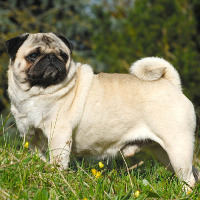
| There has been some speculation about the origins of this breed, which seems to come from the Orient. China is its birthplace, where brachycephalic breeds have always been popular. Dutch East India Company merchants introduced it to Europe. It was very popular in the Netherlands in the 1500s. The Pug was introduced to England when William III came to the throne. Until 1877, only the fawn variety was seen in Britain, until a pair of blacks were imported from the Orient. | ||
 |
||
| Standard of the Pug | ||
A little of the Miniature Pinscher |
||
| By the beginning of the 20th century, the number of Miniature Pinschers was already high, and by 1925, the stud book already contained 1,300 entries for this breed. From the many color varieties, as with the German Pinscher, black dogs with lighter markings and red to brownish solid colors were selected. | ||
 |
||
| Standard of the Miniature Pinscher |
Appearance of the Muggin |
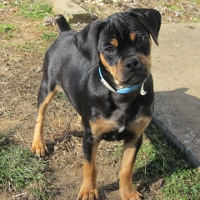
| The Muggin's appearance will depend on the characteristics it inherits from its parent breeds. It may inherit the short muzzle and curly tail of the Pug, or the longer or shorter muzzle of the Miniature Pinscher. The Pug will have small, thin ears, while the Miniature Pinscher's ears are set high on its head. The Muggin can be seen in many colors, including cream, black, brown, gold and white. Muggins can also have a combination of colors such as black and tan. The Muggin's coat is generally short and fine, and hybrid dogs often shed. |
Temperament of the Muggin |
| The Muggin will be affectionate and gentle towards its human, taking the opportunity to curl up next to you while you read or watch TV. Part of its affection will include lots of licking of its favorite humans. The hybrid may bark a few times when it hears a strange noise or meets a new person, but once determined it fears no danger, it will relax and its gentle nature will show. Separation anxiety occurs in the Muggin, who will be nervous that you won't come back when you leave. Having another dog to spend time with will help alleviate this for him. The Muggin will do well with children, although if handled roughly, it could nip. |
Needs and activities of the Muggin |
| While the Pug is rather inactive, the Muggin often follows in the footsteps of its Miniature Pinscher parent, having a higher activity and energy level. Your Muggin will probably be delighted to go for regular walks once or twice a day with the children, as its hobbies are both indoors and outdoors. If you notice that your Muggin is acting out, it may be a sign that he needs more physical activity and stimulation, both mental and physical, to get his energy out and avoid boredom. Muggins tend to be overweight, and exercise will be important to help them maintain a healthy weight. The hybrid will do very well in an apartment if taken outside for walks and hobbies. |
Maintenance of the Muggin |
| Muggins shed regularly and more heavily in spring and winter. Daily brushing of your Muggin will be necessary, as well as regular cleaning of your floors and furniture. The Muggin's short coat is easy to brush with a stiff bristle brush. The hybrid should only be bathed when necessary, as washing your Muggin too often can lead to dry skin problems. To remove discarded fur, you can wipe your dog with a damp cloth. As with all dogs, his teeth should be brushed at least twice a week to ensure long-term dental health. Your Muggin's nails should be trimmed as needed, and his ears checked weekly for infection. |



 English (United Kingdom)

Comments